How Much You Need To Start A Water Refill Business In Kenya
Investing in a water refill business in Kenya is a very noble idea that has potential to give you good returns if you plan and execute your plan well. And entrepreneurs knowing this have ventured into the purified water business to tap into the demand and make good returns. You may be also thinking to venture into the purified water vending business but don’t know what’s the cost implication of starting one. If that is you no need to worry much. In this post we shall be breaking the numbers down. Read on to see how much you need to start a water refill business in Kenya.
Why is investing in a water refill business in Kenya a worthy business venture to consider
What is the reason for the increase in water vending businesses in urban centers across Kenya? Why is a water refill business a viable business venture in Kenya? This is because the demand for purified water among the urban center dwellers and generally middle-income earners in Kenya who are also very health conscious due to their education level and exposure know the dangers of consuming contaminated water. This is one of the major reasons why purified water especially water sold at water refill stations also known as water vending stations has been in high demand.
How to Start a Successful Water Refill Business in Kenya: Initial Investment Breakdown
Understanding how much you need to start a water refill business in Kenya requires careful consideration of several cost components. For a basic setup, entrepreneurs should prepare to invest between Ksh 150,000 and Ksh 300,000, while larger operations can require upwards of Ksh 2 million. The significant variation in costs depends on factors such as location, equipment quality, business scale, and additional services offered.
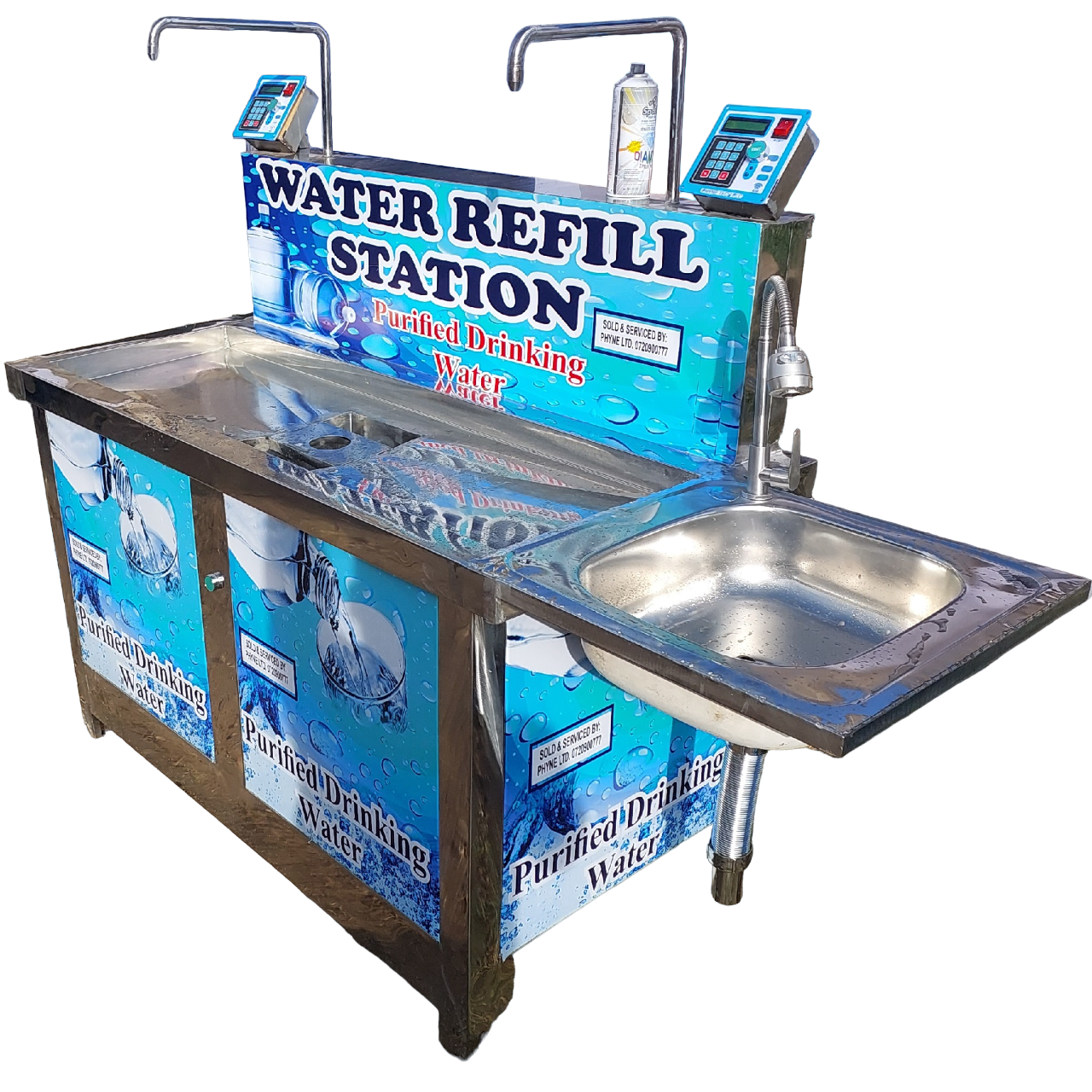 The water ATM represents the most significant single expense in your initial investment. High quality water vending machines in Kenya typically cost between Ksh 90,000 and Ksh 130,000 for single or multiple tap configurations. Vinsol water ATMs, recognized as some of the best water station machines in Kenya, offer advanced features including coin and mobile money payment options, automated dispensing systems, and built-in purification monitoring. These machines are designed to withstand Kenya’s diverse climate conditions and provide reliable service with minimal maintenance requirements.
Storage infrastructure forms another crucial component of your startup costs. Stainless steel storage tanks, which offer superior durability and hygiene standards, typically cost between Ksh 25,000 and Ksh 50,000 depending on capacity. Plastic alternatives are available for Ksh 15,000 to Ksh 30,000, though we recommend investing in stainless steel for long-term reliability and compliance with health regulations. The storage capacity you choose should align with your projected daily sales volume and local demand patterns.
The purification system represents perhaps the most critical investment for ensuring water quality and customer satisfaction. Reverse Osmosis (RO) systems, which are considered the gold standard for water purification, range from Ksh 150,000 to Ksh 400,000 depending on capacity and features. Vinsol water refilling machines incorporate advanced multi-stage purification processes including sediment filtration, activated carbon treatment, and UV sterilization to ensure consistent water quality that meets KEBS standards.
Essential Equipment and Infrastructure for Your Water Station Business
Beyond the primary components, several additional equipment pieces are necessary for establishing a comprehensive water refill operation. UV sterilization units, which provide an additional layer of protection against bacteria and viruses, typically cost between Ksh 30,000 and Ksh 60,000. These units are particularly important for maintaining water quality standards and ensuring customer confidence in your product.
Backup power solutions are essential for maintaining continuous operations, especially in areas prone to power outages. A reliable generator capable of powering your entire water station typically costs between Ksh 40,000 and Ksh 80,000, depending on capacity and fuel type. Solar power alternatives are becoming increasingly popular, with complete solar setups ranging from Ksh 100,000 to Ksh 200,000, offering long-term operational cost savings.
Water testing equipment ensures ongoing quality control and regulatory compliance. Basic testing kits cost around Ksh 10,000 to Ksh 20,000, while more comprehensive laboratory-grade equipment can reach Ksh 50,000 or more. Regular water quality testing is not only a regulatory requirement but also crucial for maintaining customer trust and preventing health-related issues that could damage your business reputation.
Site preparation and installation costs vary significantly based on location and existing infrastructure. Basic civil works including plumbing, electrical connections, and protective housing typically cost between Ksh 30,000 and Ksh 70,000. For locations requiring extensive site preparation or specialized construction, these costs can increase substantially. Knowing where to buy water vending station machines in Kenya is also a crucial consideration, as proximity to suppliers can affect installation and maintenance costs.
Tips for Starting a Profitable Water Station Business in Kenya
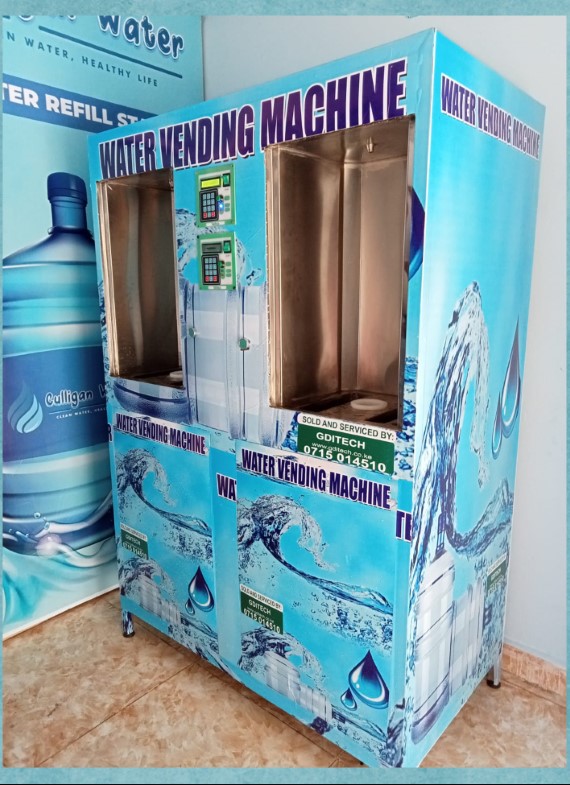 Location selection stands as the most critical success factor for any water refill business. High-traffic areas such as residential estates, market centers, schools, and office complexes offer the best potential for consistent customer flow. We recommend conducting thorough market research to identify areas with limited access to clean water or where existing water sources are unreliable or expensive. Areas with frequent water shortages often present excellent opportunities for water vending businesses.
Customer convenience should drive every operational decision. Vinsol water station machines are designed with user-friendly interfaces that accommodate various payment methods including coins, notes, and mobile money platforms like M-Pesa. This flexibility ensures that customers can access your services regardless of their preferred payment method, significantly expanding your potential customer base.
Pricing strategy requires careful balance between profitability and market competitiveness. Most successful water refill businesses in Kenya charge between Ksh 2 and Ksh 5 per liter, depending on location and local market conditions. Premium locations with limited competition can support higher pricing, while areas with multiple water sources may require more competitive rates. Regular market analysis helps maintain optimal pricing that maximizes both volume and profit margins.
Quality consistency builds customer loyalty and drives repeat business. Implementing rigorous maintenance schedules for your Vinsol water refilling machines ensures consistent water quality and reduces the risk of equipment failure. Regular cleaning protocols, filter replacement schedules, and preventive maintenance not only extend equipment life but also maintain the high standards customers expect from professional water vending operations.
Guidelines for Starting a Successful Water Vending Business in Kenya:
Licensing and Legal Requirements
Operating a water refill business in Kenya requires comprehensive compliance with various regulatory frameworks. The licensing process begins with business registration through the relevant government authorities, providing legal recognition and intellectual property protection. This fundamental step typically costs between Ksh 5,000 and Ksh 15,000 and establishes your business as a legitimate entity capable of entering contracts and conducting commercial activities.
County-level permits form the next crucial layer of regulatory compliance. The county business permit, obtained from your local county government, authorizes commercial operations within that specific jurisdiction. Costs vary by county but typically range from Ksh 3,000 to Ksh 10,000 annually. The county health certificate ensures your business meets required hygiene and sanitation standards, with inspection fees typically costing between Ksh 2,000 and Ksh 5,000. Additionally, a public health certificate issued by approved government facilities under the Ministry of Health is mandatory before establishing your water refill operation.
Pro Tip: In Nairobi county you can apply for a single unified business permit instead of many permits.
The Kenya Bureau of Standards (KEBS) plays a central role in water business regulation. A KEBS license is mandatory for businesses selling purified drinking water, with fees typically ranging from Ksh 10,000 to Ksh 25,000 depending on business scale. The KEBS Standardization Mark demonstrates that your water meets required quality standards and serves as a crucial marketing tool for building customer confidence. Obtaining this certification requires documented compliance with various standards including KS EAS 153 for drinking water, KS EAS 12 for mineral water, and KS 459 Part 9 for hygiene protocols.
Water quality testing by accredited laboratories represents both a regulatory requirement and operational necessity. Initial comprehensive testing typically costs between Ksh 15,000 and Ksh 30,000, with ongoing periodic testing required to maintain certification. These tests verify compliance with national standards for parameters including bacterial content, chemical composition, and physical characteristics such as turbidity and pH levels.
Additional Operational Costs and Considerations
 Beyond initial setup and licensing, successful water refill businesses must account for ongoing operational expenses. Monthly electricity costs typically range from Ksh 8,000 to Ksh 15,000 depending on machine capacity and local utility rates. Water sourcing costs vary significantly based on your chosen supply method – municipal water connections may cost Ksh 3,000 to Ksh 8,000 monthly, while borehole operations require initial drilling costs of Ksh 150,000 to Ksh 400,000 plus ongoing maintenance.
Staff requirements depend on business scale and operational model. Smaller operations often function with minimal staffing, requiring only periodic maintenance and restocking visits. Larger installations may require dedicated attendants, with monthly salary costs ranging from Ksh 15,000 to Ksh 25,000 per employee. All staff members must obtain medical certificates, costing approximately Ksh 1,000 to Ksh 2,000 per person annually.
Marketing and branding investments are crucial for establishing market presence and customer recognition. Initial branding costs including signage, promotional materials, and customer education campaigns typically range from Ksh 20,000 to Ksh 50,000. Ongoing marketing activities including social media promotion, community engagement, and customer retention programs require monthly budgets of Ksh 5,000 to Ksh 15,000.
Insurance coverage protects your investment against various risks including equipment theft, damage, and liability claims. Comprehensive business insurance policies typically cost between Ksh 20,000 and Ksh 40,000 annually, providing essential protection for your water refill business assets and operations.
Environmental and Regulatory Compliance
Environmental considerations play an increasingly important role in water business operations. The National Environment Management Authority (NEMA) requires compliance with waste disposal regulations, particularly regarding filter replacement and system maintenance waste. Environmental Impact Assessments (EIA) may be required for larger operations or those in environmentally sensitive areas, with costs ranging from Ksh 50,000 to Ksh 150,000 depending on project scope.
Water abstraction permits become necessary when sourcing water from boreholes or other non-municipal sources. The Water Resources Authority (WARMA) issues these permits at costs typically ranging from Ksh 10,000 to Ksh 30,000, depending on abstraction volume and location. These permits ensure sustainable water use and prevent conflicts with other water users in your area.
Trade licenses may be required depending on your location and specific county requirements. These licenses typically cost between Ksh 2,000 and Ksh 8,000 annually and authorize commercial trading activities within the county jurisdiction. Some counties have specific requirements for water vending businesses, including additional health inspections and specialized permits.
Quality management systems become increasingly important as your business grows. Implementing comprehensive quality assurance protocols ensures consistent water quality and regulatory compliance while building customer trust. These systems typically require initial investment of Ksh 15,000 to Ksh 30,000 for documentation, training, and implementation, with ongoing maintenance costs of Ksh 3,000 to Ksh 8,000 monthly.
Return on Investment and Profitability Analysis
Understanding the financial returns potential helps justify the initial investment required for starting a water refill business in Kenya. Well-positioned water stations typically achieve break-even within 12 to 18 months of operation, with monthly revenue potential ranging from Ksh 50,000 to Ksh 200,000 depending on location, pricing, and customer volume. High-traffic locations can generate daily sales of 500 to 2,000 liters, translating to substantial monthly revenues.
Profit margins in the water refill business typically range from 40% to 60% once operational costs are covered. The recurring nature of water consumption ensures steady cash flow, with many customers developing regular purchasing patterns that provide predictable revenue streams. Seasonal variations may affect demand, with higher consumption typically observed during dry seasons and lower demand during rainy periods.
Operational efficiency improvements can significantly impact profitability. Vinsol water refilling machines incorporate advanced monitoring systems that track sales volume, water quality parameters, and maintenance requirements, enabling data-driven optimization of operations. These insights help identify peak demand periods, optimize pricing strategies, and schedule maintenance activities to minimize downtime.
Expansion opportunities present additional revenue potential for successful water refill businesses. Many entrepreneurs begin with single-location operations before expanding to multiple sites, leveraging operational experience and customer relationships to grow their business portfolio. Franchising models and partnership opportunities can accelerate expansion while sharing operational risks and capital requirements.
How Much You Need To Start A Water Refill Business In Kenya: Summary
Starting a water refill business in Kenya requires careful planning, adequate capital, and thorough understanding of regulatory requirements. The initial investment for how much you need to start a water refill business in Kenya ranges from Ksh 150,000 for basic setups to over Ksh 2 million for comprehensive operations including bottling facilities. Key cost components include water ATMs (Ksh 90,000-130,000), purification systems (Ksh 150,000-400,000), storage infrastructure (Ksh 15,000-50,000), and various licensing requirements (Ksh 25,000-60,000 total).
Success in the water refill business depends heavily on location selection, equipment quality, regulatory compliance, and customer service excellence. The recurring nature of water consumption provides stable revenue streams, while profit margins of 40-60% offer attractive returns for well-managed operations. Environmental considerations, quality management systems, and ongoing compliance requirements add operational complexity but ensure sustainable business practices.
The Kenyan water vending market continues expanding, driven by urbanization, health consciousness, and infrastructure challenges. Entrepreneurs who invest in high-quality equipment, maintain rigorous quality standards, and focus on customer convenience position themselves for long-term success in this growing industry. With proper planning and execution, water refill businesses offer excellent opportunities for sustainable entrepreneurship and community service.
Ready to Start Your Water Refill Business? Choose Vinsol for Premium Equipment
At Vinsol, we are the preferred manufacturers and installers of high quality water vending machines in Kenya, serving entrepreneurs across the country with comprehensive water business solutions. Our Vinsol water ATMs represent the pinnacle of water vending technology, incorporating advanced purification systems, flexible payment options, and robust construction designed for Kenya’s demanding operating conditions.
We understand that choosing the right equipment partner is crucial for your business success. Our team provides end-to-end support including site assessment, equipment selection, professional installation, and ongoing maintenance services. Whether you’re planning a single water station or multiple locations, our experienced professionals work with you to design optimal solutions that maximize profitability while ensuring consistent water quality.
Contact us today to schedule a consultation and discover how our proven water vending solutions can transform your entrepreneurial vision into a thriving business. Visit our showroom to experience firsthand why Vinsol water station machines are recognized as the best quality water station machines in Kenya, and let us help you join the ranks of successful water refill business owners across the country.