How to Start a Dairy Milk Dispensing Business in Kenya in 2026 Using a Vinsol Milk ATM
Kenya’s milk ATM industry has quietly become one of the most resilient small-business opportunities in the country. With millions of households buying fresh milk daily and the formal dairy supply chain still out of reach for many, milk dispensing machines have stepped in to fill a real gap, and entrepreneurs who moved early are reaping steady returns. This guide walks you through how to start a dairy milk dispensing business in Kenya in 2026 using a Vinsol Milk ATM.
If you’re thinking about, venturing into milk vending business but don’t know how to go about it, we are here to help you navigate every step. From picking the right location to understanding what it truly costs and how much you can realistically earn this guide is your cheat code. Whether you’re putting in KSh 100,000 or scaling up to KSh 300,000, this is a business with a clear path to profitability.
Why Milk ATMs Are a Smart Business Choice in 2026
 Kenya produces over 5 billion litres of milk annually, yet distribution to last-mile consumers remains fragmented. Milk ATMs, also known as fresh milk dispensing machines, bridge that gap by allowing entrepreneurs to buy in bulk from dairy farmers or cooperatives and retail it directly to households at prices consumers trust.
Here’s what makes the model compelling in 2026:
- Urban and peri-urban populations are growing, driving consistent demand for affordable, fresh milk.
- Government crackdowns on unpasteurised informal milk have pushed buyers toward licensed dispensers.
- Machines like the Vinsol Milk ATM are of the highest quality, meet KEBS quality standards, stainless steel, and built for the Kenyan market.
- The business is simple to operate and requires no advanced technical skills.
💡 Pro Tip: Milk ATM businesses in high-density estates like Umoja, Githurai, or Mwiki in Nairobi can sell out 200+ litres daily within the first three months of operation. Location is your single biggest profit lever.
Step-by-Step Guide: How to Start a Dairy Milk Dispensing Business in Kenya in 2026 Using a Vinsol Milk ATM
Step 1: Conduct Market Research and Choose Your Location
Before you spend a single shilling, spend time understanding your target market. The difference between a successful milk ATM business and a struggling one is usually just location.
Best locations to target:
- Dense residential estates and low-to-middle-income housing areas
- Near matatu stages, market centres, and shopping centres
- Schools, hospitals, and institutional zones with canteen access
- Estates underserved by supermarkets or formal dairy outlets
Walk the area at peak times — 6–9 AM and 5–8 PM — and count foot traffic. Talk to residents and ask where they currently buy milk. If the answer is “from a hawker” or “from a shop that’s far,” you’ve likely found your spot.
💡 Pro Tip: Avoid locations within 200 metres of an established competitor unless you have a price or convenience advantage.
Step 2: Register Your Business and Obtain All Required Licenses
Operating a milk dispensing business without the proper permits is a compliance risk that can shut you down overnight. Kenya Dairy Board (KDB) inspectors conduct regular field checks, so get your paperwork sorted early.
| Requirement | Issuing Authority | Notes |
| Business Registration | Huduma Centre / eCitizen | One-time, ~KSh 950 |
| Single Business Permit | County Government | Annual renewal |
| Public Health Certificate | County Health Dept. | For staff & premises |
| KDB Dispenser License | Kenya Dairy Board | Mandatory for all dispensers |
| KEBS Machine Approval | Kenya Bureau of Standards | Machine must be certified |
Budget approximately KSh 15,000–KSh 30,000 for all licensing combined, depending on your county. Nairobi, Kiambu, and Mombasa counties have slightly higher permit fees than rural counties.
Step 3: Procure Your Vinsol Milk ATM Machine
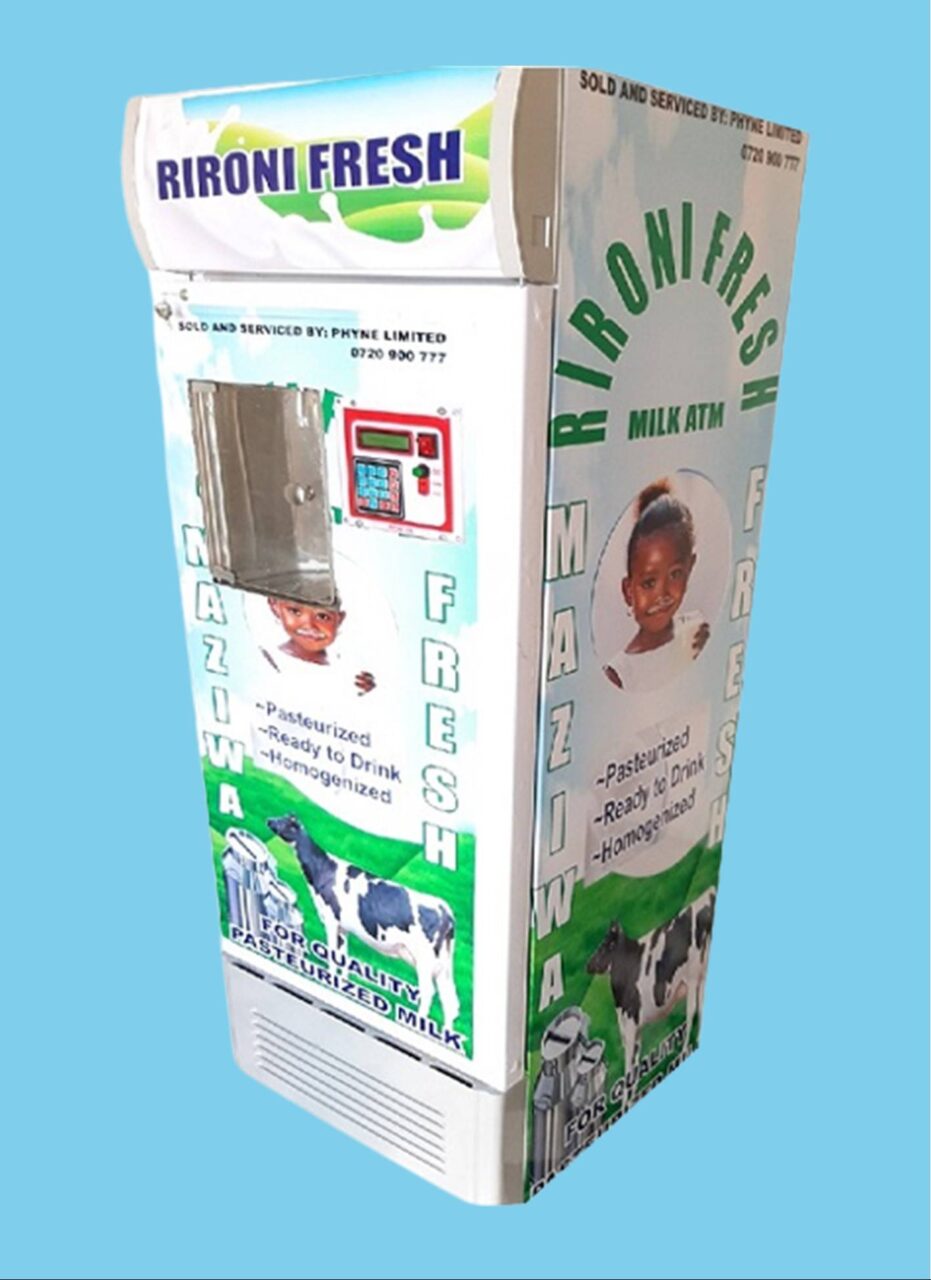 The machine you choose defines your operational reliability, your compliance status, and ultimately your customer’s trust. This is where Vinsol stands out.
Vinsol Milk ATMs are KDB-approved fresh milk dispensing machines built with food-grade stainless steel interiors, integrated cooling systems, and precision dispensing mechanisms that minimise waste. When buying a dairy milk dispenser from Vinsol, you get a machine engineered specifically for the Kenyan market — handling everything from Nairobi’s traffic heat to rural power fluctuations.
Key machine specifications to confirm before purchase:
- Capacity: 100–500 litre tanks depending on your daily volume projections
- Cooling system: Built-in refrigeration to maintain milk at ≤4°C
- Material: 304 or 316 food-grade stainless steel throughout all contact surfaces
- Dispensing precision: Volume-controlled tap with minimal wastage
- KDB and KEBS certification: Non-negotiable for legal operation
💡 Pro Tip: When choosing between 100L and 200L capacity machines, start with a machine that matches 80% of your projected daily demand. Buying oversized capacity means unnecessary energy costs to cool milk you haven’t sold.
Step 4: Source Quality Milk from Reliable Suppliers
Your machine is only as good as the milk going into it. Poor-quality or inconsistently pasteurised milk will generate returns, complaints, and damaged reputation faster than anything else.
What to look for in a milk supplier:
- KDB-licensed dairy farmer or cooperative
- Access to pasteurised milk (ultra-heat treated or fresh-pasteurised)
- Reliable daily delivery within a cold chain
- Consistent pricing through a written supply agreement
Popular cooperatives such as Githunguri Dairy, Limuru Dairy, and smaller county-based co-ops often supply ATM operators at wholesale prices ranging from KSh 35–KSh 55 per litre depending on volume and location.
💡 Pro Tip: Negotiate a 30-day credit facility with your supplier once you’ve built trust. It significantly eases your working capital pressure during the early months.
Step 5: Set Up Operations, Pricing, and Marketing
Once your machine is installed and your supplier is confirmed, focus on three things: hygiene, pricing, and visibility.
Hygiene protocols:
- Clean and sanitise the machine interior daily using food-safe detergents
- Display your KDB license and health certificates visibly at the point of sale
- Train your operator or attendant on proper handling and customer service
Pricing strategy:
- Retail price typically ranges from KSh 60–KSh 80 per litre in urban areas
- Allow customers to buy as little as KSh 10 worth (typically 150–200 ml) to capture low-income buyers
- Offer loyalty incentives — a simple punch card for every 10 litres bought earns a bonus 0.5 litre
Marketing tactics that work:
- Branded signage and banners in Kiswahili and English
- WhatsApp community group for your estate — announce restocking times
- Opening week promotion: KSh 5 discount per litre for first 100 customers
Step 6: Understand Your Profitability and Plan for Growth
The numbers are what make milk ATM businesses compelling. Here’s a realistic breakdown across three business scenarios:
| Metric | Conservative | Moderate | Aggressive |
| Daily Sales (litres) | 50 L | 100 L | 200 L |
| Margin per Litre | KSh 10 | KSh 15 | KSh 20 |
| Daily Profit | KSh 500 | KSh 1,500 | KSh 4,000 |
| Monthly Profit | KSh 15,000 | KSh 45,000 | KSh 120,000 |
| Capital Required | ~KSh 100K | ~KSh 200K | ~KSh 300K+ |
These figures assume you’re buying milk at approximately KSh 50/litre wholesale and selling at KSh 65–70/litre retail. Margins improve further once you negotiate better supplier rates or scale to multiple machines.
Most operators recoup their initial investment within 6–10 months when operating in a high-traffic location. From month 12 onwards, profit compounds as you expand your customer base and potentially add a second machine.
Why Vinsol Is the Best Place to Buy Your Milk ATM in Kenya
 You’ve done the research. Now it’s time to partner with a supplier who gives you the best possible start — and that’s Vinsol.
- KDB-Approved Machines You Can Trust
Every Vinsol Milk ATM is KDB-approved and KEBS-certified, meaning you can apply for your dispenser license with zero compliance headaches. You’re not guessing — you’re operating with a machine the regulator already recognises.
- Built for Kenyan Conditions
Vinsol machines are designed with the Kenyan operating environment in mind — power fluctuations, temperature swings, and dusty locations. The food-grade stainless steel construction and reinforced cooling systems are built to last, not just sell.
- Competitive, Transparent Pricing
Vinsol offers some of the most competitive prices on high-quality milk ATMs in Kenya. No hidden costs, no surprise add-ons — just honest pricing and machines that deliver value from day one.
- After-Sales Support That Doesn’t Disappear
When you buy a dairy milk dispenser from Vinsol, you get a business partner, not just a product. Vinsol provides installation guidance, operator training, and ongoing technical support — so you’re never left troubleshooting alone.
- A Proven Track Record Across Kenya
Vinsol Milk ATMs are already operating successfully in Nairobi, Kiambu, Nakuru, Mombasa, and dozens of other counties. That’s a track record built by real operators seeing real results — not sales brochure claims.
Ready to start your milk dispensing business? Contact Vinsol today to get a quote, request a demonstration, or learn more about our full range of fresh milk dispensing machines. The opportunity is real. The machine that makes it work is the Vinsol Milk ATM.
Conclusion: How to Start a Dairy Milk Dispensing Business in Kenya in 2026 Using a Vinsol Milk ATM
 Starting a dairy milk dispensing business in Kenya in 2026 is a proven, accessible, and scalable income stream — but only when done right. The foundation is a good location, a compliant machine, a reliable supplier, and disciplined daily operations. Get those four elements aligned and profitability follows.
Vinsol Milk ATMs give you the compliance, quality, and support infrastructure to build on that foundation with confidence. Whether you’re starting with a single 100-litre machine or planning a multi-unit operation from the start, the path forward is clear.
Do your market research, get your licenses in order, and choose a machine you can trust. The milk ATM business in Kenya isn’t a trend — it’s a durable, demand-backed opportunity that’s only growing stronger as urban populations expand and consumers seek quality and affordability simultaneously.
How to Start a Dairy Milk Dispensing Business in Kenya in 2026 Using a Vinsol Milk ATM
Frequently Asked Questions (FAQs)
- How much does it cost to start a milk ATM business in Kenya in 2026?
Starting a milk ATM business in Kenya typically requires KSh 100,000–KSh 300,000 in capital. This covers the machine (KSh 80,000–KSh 200,000+), licensing and permits (KSh 15,000–KSh 30,000), initial milk stock, signage, and a small operating float. Costs vary by county and machine capacity. - Is a milk dispensing business profitable in Kenya?
Yes. With a margin of KSh 10–20 per litre and daily sales of 100–200 litres, a well-placed milk ATM can generate KSh 45,000–KSh 120,000 per month in profit. Most operators recover their full investment within 6–12 months. - What licences do I need to operate a milk ATM in Kenya?
You need a business registration certificate, a county Single Business Permit, a Public Health Certificate for both staff and premises, and a KDB Dispenser License. Your machine must also be KEBS-approved. Operating without these can result in fines or closure. - What makes Vinsol Milk ATMs the best choice in Kenya?
Vinsol Milk ATMs are KDB-approved, built with food-grade stainless steel, designed for Kenyan operating conditions, and backed by after-sales technical support. They offer competitive pricing and a proven track record across multiple counties in Kenya. - Where can I buy a high-quality milk ATM in Kenya?
You can buy the best fresh milk ATMs in Kenya from Vinsol — a trusted supplier of KDB-approved milk dispensing machines. Contact Vinsol directly for pricing, specifications, and delivery options across Kenya. - How do I source milk for my milk ATM business?
Partner with a KDB-licensed dairy farmer, farmer cooperative, or pasteurisation plant in your area. Negotiate a consistent supply agreement with agreed-upon prices and delivery schedules. Always use pasteurised milk to meet regulatory requirements and maintain quality.