How to Start a Water Refill Station Business in Kenya
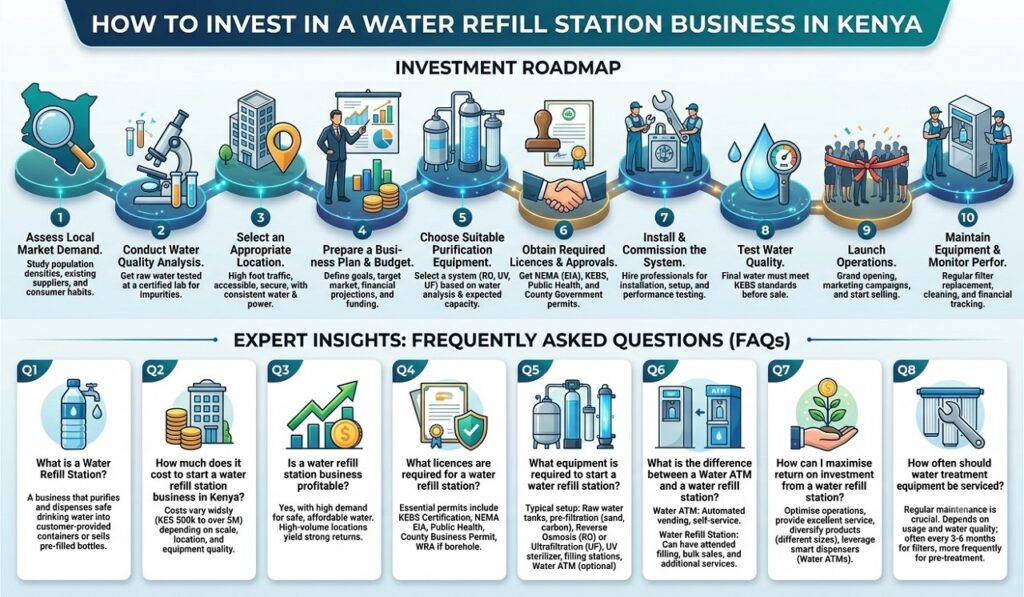
How to Start a Water Refill Station Business in Kenya A water refill station business in Kenya involves purifying water from a borehole, spring or municipal source and selling it to customers who bring their own containers. Setup costs typically range from KES 100,000 to KES 800,000 depending on scale, and operators commonly report gross margins of 40 to 60 percent once licensing, equipment and location are in place. Kenya’s water refilling sector has grown into one of the country’s most accessible small business opportunities. Unreliable municipal supply, rising health awareness and steady urban population growth have combined to create consistent demand for affordable, safe drinking water. For entrepreneurs weighing where to place their capital, a refill station offers low technical complexity, a non-perishable product and a relatively short payback period. This guide on how to start a water refill station business in Kenya walks through what a water refill station actually is, whether it is profitable, and the ten practical steps involved in setting one up in Kenya, including the licences you will need from the Kenya Bureau of Standards (KEBS), the National Environment Management Authority (NEMA) and your county government. What Is a Water Refill Station? A water refill station is a commercial facility that treats raw water and dispenses it to customers who supply their own containers, typically 20-litre jerry cans, 10-litre bottles or 5-litre bottles. The term covers the entire setup, including storage tanks, the purification system and the dispensing point, whether that dispensing point is staffed or automated. Water refill station versus water ATM The two terms are often used interchangeably in the Kenyan market, but there is a practical distinction worth understanding before you buy equipment. Feature Water Refilling Station Water ATM Operation Usually attended by staff who dispense water manually Self-service, coin, token or M-Pesa operated Typical setting Shops, kiosks, small retail premises Estates, corridors, apartment blocks, schools Automation Basic to moderate High, often with digital monitoring Entry cost Generally lower for a single-tap manual unit Similar or slightly higher once payment hardware is added Staffing Usually requires an attendant Can run largely unattended In practice, most commercial units sold in Kenya today combine both functions, offering manual taps alongside coin or mobile-money payment options. Is a Water Refill Station Business Profitable in Kenya? Yes, water refilling is generally considered a profitable small business in Kenya, though actual returns depend heavily on location, pricing and operating discipline. Industry suppliers commonly cite gross margins in the range of 40 to 60 percent, with some estimates for well-run stations reaching higher, largely because the cost of purifying and dispensing water is low relative to the retail price. A simple way to think about the unit economics: if a 20-litre jerry can costs roughly KES 60 to produce (electricity, water, filter wear and consumables) and sells for KES 100, that is a gross profit of around KES 40 per can. At 25 to 50 refills a day, that translates into daily gross profit of KES 1,000 to KES 2,000 before rent, wages and licensing amortisation. Several factors point to sustained demand: Unreliable municipal supply. Many Kenyan towns experience intermittent piped water, pushing households and small businesses towards refill stations as a dependable alternative. Growing population. Kenya’s urban population continues to expand, particularly around Nairobi, Mombasa and Kisumu, increasing the customer base within walking distance of a well-placed station. Lower cost than bottled water. Refilled water is typically priced well below sealed bottled water, making it attractive to price-sensitive households. Low inventory risk. Water does not spoil in the way food products do, which reduces waste-related losses common in other small retail ventures. We would caution against treating any single profit figure as guaranteed. Margins vary by county, competition density and how disciplined the operator is about maintenance and pricing. Underpricing to compete on volume, without controlling electricity and filter replacement costs, is a common reason stations underperform. How to Start a Water Refill Station Business in Kenya: 10 Steps Step 1. Assess Local Market Demand Start by mapping water access in your target area. Look for estates, schools, markets and offices within walking distance that currently rely on unreliable municipal supply, expensive bottled water or distant refill points. Count existing competitors and note their pricing, queue lengths and container sizes served, since this tells you both the size of the opportunity and how saturated the market already is. Step 2. Conduct Water Quality Analysis Before committing to equipment, test your intended water source, whether borehole, spring or municipal connection, at an accredited laboratory. This establishes baseline levels of turbidity, total dissolved solids (TDS), pH, fluoride, heavy metals and microbiological contamination such as E. coli and total coliforms. The results determine which purification stages your system actually needs. A borehole with high fluoride or salinity, for instance, will need a different reverse osmosis configuration than a relatively clean municipal supply that mainly needs filtration and disinfection. Step 3. Select an Appropriate Location Location decisions should weigh foot traffic, visibility, accessibility for customers carrying containers, and proximity to reliable electricity. High-density residential estates, areas near schools and markets, and busy pedestrian routes tend to perform best. Confirm that the premises is not located within a residential setup with living quarters above the business floor, since KEBS will not certify a bottling or refilling operation in that configuration. Step 4. Prepare a Business Plan and Budget A basic business plan should cover your target market, pricing strategy, equipment and setup costs, licensing budget, and a simple monthly cash flow projection. Startup costs for a small manual refilling station typically fall between KES 100,000 and KES 300,000, while mid-sized setups with automated dispensing and higher throughput can run to KES 800,000 or more. Build in licensing fees, initial water testing, rent deposits and a buffer for the first two to three months of operating costs before the business becomes self-sustaining. Step 5. Choose Suitable Purification Equipment Most Kenyan refill stations combine sediment filtration, activated carbon filtration, reverse osmosis (RO)
Professional Solar Power System Installation Services in Kenya

Professional Solar Power System Installation Services in Kenya: A Complete Buyer’s Guide Kenya receives some of the highest solar irradiation levels on the continent, making solar power one of the most cost-effective energy choices available to households, businesses, and farms. Yet too many property owners still overpay, get undersized systems, or hire unqualified technicians — and then spend years chasing warranty repairs that never come. This guide walks you through everything you need to know about professional solar power system installation services in Kenya: how to evaluate a system, what a proper installation looks like, what it costs, and how to choose a certified installer who will stand behind their work. What Are Professional Solar Power System Installation Services in Kenya? Professional solar power system installation services in Kenya involve the design, supply, and commissioning of solar power systems by certified technicians. A qualified installer assesses your energy needs, sizes the system correctly, mounts panels to KEBS and EPRA standards, wires the components safely, and tests the system for peak output. Services cover residential, commercial, agricultural, and off-grid applications across the country. Why Solar Energy Makes Sense for Kenya Right Now Kenya sits between latitudes 4 degrees North and 5 degrees South — a prime solar belt. Most parts of the country receive between 4 and 7 peak sun hours per day, which means a well-designed solar power system generates reliable electricity year-round, even during the shorter days of June and July. Grid electricity from Kenya Power remains expensive and unreliable. Power outages in Nairobi, Mombasa, Nakuru, Kisumu, and upcountry areas disrupt businesses and households daily. For water vending stations, irrigation pumps, cold rooms, and manufacturing lines, every hour of downtime has a direct financial cost. Solar offers a practical alternative. A properly installed system with quality batteries eliminates dependence on the grid for 8 to 24 hours per day, depending on capacity. Over a 5 to 10-year period, the savings on electricity bills typically exceed the upfront installation cost several times over. Pro Tip: Always request a site energy audit before signing any installation contract. A reputable installer will measure your actual daily consumption in kilowatt-hours (kWh) before recommending panel count, inverter size, or battery capacity. Skipping this step leads to an undersized or oversized system. Types of Solar power systems Available for Residential and Commercial Installation in Kenya Not every property needs the same type of system. Understanding the three main configurations will help you ask the right questions when speaking to an installer. On-Grid Solar power systems On-grid systems connect directly to the Kenya Power grid and use a grid-tie inverter. When your panels produce more electricity than you consume, excess power feeds back into the grid. These systems have no battery storage, so they shut down during a blackout for safety reasons. On-grid systems are best suited for properties with a reliable grid connection and high daytime electricity consumption, such as office buildings, shopping centres, and manufacturing plants. Off-Grid Solar power systems Off-grid systems operate completely independently of Kenya Power. They include solar panels, an MPPT charge controller, battery bank (often ~16 kWh or larger), and a pure sine wave inverter. They are the standard solution for rural homes, water pumping stations, remote farms, and any location where the grid is absent or extremely unreliable. This is the most popular configuration for residential solar installation in Kenya, particularly in peri-urban and rural areas. A well-designed off-grid system can power lights, TVs, laptops, refrigerators, water pumps, and small machinery around the clock. They provide 24/7 power, making them ideal for rural areas. These systems offer total energy independence and eliminate electricity bills, though they require higher initial investments. Hybrid Solar power systems Hybrid systems combine a grid connection with battery backup. During the day, panels charge the batteries and power the load. At night, batteries take over. The grid acts as a safety net only when both the panels and batteries are insufficient. Hybrid systems are increasingly popular for commercial solar power system installation services in Kenya, especially for supermarkets, hospitals, schools, and industrial facilities that cannot afford any downtime. Feature On-Grid Off-Grid Hybrid Battery Storage None Yes Yes Works During Blackout No Yes Yes Requires Grid Connection Yes No Optional Best For Urban commercial Rural / off-grid Critical facilities Relative Cost Lower Medium Higher How to Choose Certified Solar Installers in Kenya The solar market in Kenya has grown rapidly, and unfortunately not all vendors are equally qualified. Choosing the wrong installer can result in a system that underperforms, fails prematurely, or even poses a fire risk. Verify Certifications and Compliance A credible solar company in Kenya should be registered with the Energy and Petroleum Regulatory Authority (EPRA) and use products that meet Kenya Bureau of Standards (KEBS) specifications. Ask to see these registrations before any conversation about pricing. The installer’s technicians should also hold relevant vocational qualifications from institutions such as the Kenya Technical and Vocational Education and Training (TVET) authority. For large commercial or industrial installations, compliance with the National Construction Authority (NCA) regulations may also apply. Assess Technical Competence Ask the company to walk you through how they plan to size your system. A qualified team will ask about your monthly utility bill or current diesel generator consumption, your peak loads, your operational hours, and the appliances you need to run. If an installer gives you a quote without asking any of these questions, that is a serious red flag. Request references or site visits to previous installations. A reputable company with years of experience should be able to show you working systems of a similar scale. Pro Tip: Always confirm that your installer provides a written performance warranty on the installed system, separate from the product manufacturer warranties. Panel manufacturers typically warrant 80% output at 25 years, but your installer should also guarantee the workmanship for at least 1 to 2 years. Solar power system Installation Cost in Kenya: What to Budget Cost is the question every buyer asks first, and
Solar Powered RO Water Purification Systems in Kenya

Solar Powered RO Water Purification Systems in Kenya: Reliable Off-Grid Water Treatment for Homes, Businesses, and Communities Reliable access to clean water is no longer guaranteed by grid electricity alone. Across Kenya, many boreholes and water treatment plants operate in areas where power outages, high electricity costs, or remote locations make conventional systems expensive to run. That is why solar powered RO water purification systems in Kenya are becoming the preferred solution for water vending stations, factories, farms, and homeowners seeking independence from unreliable power supply. This guide explains how solar-powered reverse osmosis systems work, where they are most effective, how much they cost locally, and how to choose the right system for your specific water source and production needs. What is a Solar Powered RO Water Purification System Solar powered RO water purification systems are water treatment systems that use solar energy to power reverse osmosis membranes, pumps, and filtration components. They remove dissolved salts, bacteria, heavy metals, and contaminants from borehole, brackish, or seawater without relying on grid electricity. These systems are widely used in off-grid communities, water refilling stations, farms, and industries across Kenya. Why Solar Powered Reverse Osmosis Systems Are Growing Rapidly in Kenya Demand for solar powered reverse osmosis systems has increased sharply due to three realities on the ground. Electricity costs continue to rise, rural electrification is still uneven, and many regions rely on borehole water with high salinity or mineral content. From field experience, installers frequently encounter the following situations: Boreholes in Kajiado, Machakos, Kilifi, and Turkana producing brackish water Water vending businesses facing high monthly electricity bills Farms operating in remote locations without reliable grid power Manufacturing plants requiring consistent water quality for production A properly designed off-grid solar water treatment system solves all of these challenges while reducing operating costs over the long term. Key Benefits of Our Solar RO Solutions Lower operating costs compared to diesel or grid-powered systems Reliable performance during power outages Environmentally sustainable water treatment Scalable capacity for homes, businesses, and communities Compliance with KEBS, WHO, and Ministry of Health water quality standards Pro Tip: Always test your water before selecting a system. The Total Dissolved Solids level, iron content, and hardness determine membrane size, pump capacity, and pretreatment requirements. How Solar Reverse Osmosis Systems Work for Borehole and High-Salinity Water A solar reverse osmosis system for borehole water combines solar panels, energy storage, and advanced filtration to remove contaminants from groundwater. The process follows a clear sequence: Raw water enters the pretreatment stage Sediment and carbon filters remove particles and chlorine High-pressure pumps push water through RO membranes Dissolved salts and contaminants are separated Clean water is stored in tanks for distribution This process is particularly effective for: High-salinity groundwater Brackish borehole water Fluoride-contaminated water Hard water with excess minerals Industrial process water Components of a Typical Solar Powered System Solar panels Charge controller Inverter High-pressure pump RO membrane housing Pre-filtration units Storage tanks Monitoring and control system These components are engineered to meet standards set by: KEBS (Kenya Bureau of Standards) WHO drinking water guidelines EPRA energy safety regulations Pro Tip: Installers often oversize pumps without adjusting membrane capacity. A balanced design improves efficiency and extends membrane lifespan. Applications of Water Refilling Stations Solar Reverse Osmosis Systems Solar-powered treatment is now the backbone of many water refilling stations solar reverse osmosis systems across Kenya. These businesses depend on consistent production and predictable operating costs. Common Applications Water Vending and Refill Stations Many entrepreneurs operate kiosks that sell purified drinking water. Solar systems reduce dependence on grid electricity and increase profit margins. Residential Homes Homeowners in peri-urban areas use solar powered home RO systems to ensure safe drinking water even during blackouts. Agriculture and Irrigation Farmers use treated water to protect crops from salinity damage and improve yields. Manufacturing and Processing Plants Industries such as food processing and beverage production require stable water quality for compliance and product safety. Healthcare Facilities and Schools Reliable purification ensures safe water for patients and students in remote areas. Pro Tip: For water vending businesses, design the system around daily demand, not maximum capacity. Oversizing increases capital cost without improving profitability. Comparison Table: Solar vs Grid vs Diesel Water Treatment Systems Feature Solar RO System Grid-Powered RO Diesel-Powered RO Operating Cost Very Low Moderate to High Very High Reliability High Medium Medium Environmental Impact Low Medium High Maintenance Low Moderate High Suitable for Off-Grid Areas Yes No Yes Long-Term Savings Excellent Moderate Poor This comparison is often cited in feasibility studies for water treatment projects in Kenya. Cost of Solar Powered RO Water Purification Systems in Kenya The cost of a solar-powered system depends heavily on water quality, production capacity, and site conditions. Boreholes with high salinity require stronger pumps and specialized membranes, which increases system cost. Typical price ranges of solar-powered systems in Kenya System Capacity Estimated Cost Range (KES) Common Use 250 Litres per Hour 250,000 to 450,000 Homes and small businesses 500 Litres per Hour 450,000 to 850,000 Water vending kiosks 1,000 Litres per Hour 850,000 to 1,600,000 Medium commercial operations 2,000 Litres per Hour and above 1,600,000 to 4,500,000+ Industrial and municipal use These figures reflect typical installations in Nairobi, Kiambu, Nakuru, and Mombasa markets. Factors That Affect Cost Water salinity and contamination level System capacity and production rate Solar panel size and battery storage Installation location and site preparation Automation and monitoring features While the initial investment is higher than conventional systems, operating costs are significantly lower. In many projects, clients recover the investment within 18 to 36 months. Choosing the Right Solar Desalination System for Your Needs Selecting the correct system requires technical evaluation, not guesswork. Engineers must analyze water chemistry, daily demand, and energy requirements before designing the system. Key Questions to Ask Before Installation What is the Total Dissolved Solids level of the water How many litres per day are required Is the location connected to grid electricity What level of automation is required Is future expansion expected A professional assessment
Solar Battery Installation Services in Kenya

Solar Battery Installation Services in Kenya: Reliable Power Backup for Homes and Businesses Introduction: Why Solar Batteries Are Becoming Essential in Kenya Power reliability has become a major concern for many households and businesses across Kenya. Frequent outages, rising electricity costs, and the increasing need for uninterrupted operations have made backup power solutions more important than ever. While solar panels generate electricity during the day, batteries store that energy for use at night or during power interruptions. Without battery storage, a solar system cannot provide full energy independence or reliable backup. This is why demand for professional solar battery installation services in Kenya has grown rapidly in recent years. Solar batteries allow you to store excess energy and use it when needed, reducing reliance on the grid and ensuring consistent power supply. They also help stabilize energy usage, protect sensitive equipment, and improve overall system efficiency. For homeowners and businesses alike, battery storage has become a critical component of modern solar energy systems. Working with a trusted solar installer like Vinsol Kenya ensures your battery system is properly sized, safely installed, and optimized for long-term performance. Professional installation protects your equipment and maximizes the value of your solar investment. Whether you need backup power for your home, office, or industrial facility, a reliable battery system provides peace of mind. In today’s energy environment, dependable backup power is not just convenient—it is essential. What Is a Solar Battery System? A solar battery system is designed to store electricity generated by solar panels for later use. Instead of sending excess energy back to the grid or losing it entirely, the battery keeps that energy available when sunlight is unavailable. This stored power can be used during nighttime hours, cloudy weather, or unexpected power outages. As a result, solar batteries significantly improve energy reliability. Modern solar battery storage solutions in Kenya are built to support both residential and commercial applications. These systems integrate seamlessly with solar panels and inverters to create a complete energy solution. Advanced battery technology allows for faster charging, longer lifespan, and improved safety compared to older battery systems. This makes solar battery installation a smart long-term investment. Battery storage also helps manage electricity demand more efficiently. Businesses can store energy during low-demand periods and use it during peak hours. This flexibility improves operational efficiency and reduces dependence on expensive grid electricity. Over time, efficient energy management leads to significant cost savings. Types of Solar Batteries Available in Kenya Choosing the right battery type is an important step when installing a solar system. Different battery technologies offer varying levels of performance, lifespan, and cost. Understanding the differences helps you select the best option for your energy needs. Lithium Batteries Lithium batteries are currently the most popular choice for modern solar systems. They provide high efficiency, fast charging, and longer lifespan compared to traditional batteries. These batteries also require minimal maintenance, making them ideal for homes and businesses. Their compact design allows installation in smaller spaces. Another advantage of lithium battery installation for solar in Kenya is improved energy reliability. Lithium batteries maintain stable performance even under heavy usage. They can handle frequent charging and discharging cycles without significant wear. This durability makes them a preferred option for long-term energy storage. Lead-Acid Batteries Lead-acid batteries are a more traditional option that remains widely used in many solar systems. They are generally less expensive than lithium batteries, making them suitable for budget-conscious users. However, they require regular maintenance and have a shorter lifespan. Over time, replacement costs may offset the initial savings. Despite these limitations, lead-acid batteries still provide reliable backup power for smaller systems. They are often used in basic home installations where energy demand is relatively low. Proper maintenance can extend their lifespan and improve performance. For some users, they remain a practical entry-level solution. How Solar Battery Backup Systems Work Understanding how solar battery backup systems in Kenya operate can help you appreciate their role in maintaining reliable power supply. These systems follow a simple but effective process to store and distribute electricity. Step 1: Energy Generation Solar panels capture sunlight and convert it into electrical energy during the day. This electricity powers appliances and equipment immediately. Any excess energy is directed toward battery storage. This ensures that no generated energy is wasted. Step 2: Energy Storage The battery stores unused electricity until it is needed. Stored energy remains available even when sunlight is not present. Modern batteries are designed to retain energy efficiently for extended periods. This improves overall system reliability. Step 3: Energy Distribution When solar panels stop generating electricity, the battery supplies stored energy to the building. This allows lights, appliances, and equipment to continue operating without interruption. Seamless energy transfer ensures consistent power supply. Reliable distribution prevents downtime. Benefits of Installing Solar Batteries Installing solar batteries offers several advantages for both residential and commercial users. These benefits extend beyond backup power and contribute to long-term energy stability. Reliable Backup Power Solar batteries provide electricity during power outages, ensuring uninterrupted operations. This reliability is especially important for businesses that depend on continuous power supply. Households also benefit from consistent lighting, refrigeration, and security systems. Reliable backup improves comfort and productivity. Reduced Electricity Bills Battery storage allows you to use stored solar energy instead of purchasing electricity from the grid. This reduces monthly energy expenses and improves financial savings. Over time, lower electricity bills can offset installation costs. Energy independence becomes more achievable. Protection for Sensitive Equipment Power fluctuations can damage electronic devices and industrial equipment. Solar batteries stabilize energy supply and prevent voltage spikes. This protection reduces repair costs and equipment downtime. Stable power improves operational reliability. Increased Energy Independence Battery storage reduces reliance on the national grid and external energy sources. This independence provides greater control over energy usage and costs. Businesses can maintain operations even during extended outages. Energy security becomes a strategic advantage. Solar Battery Cost in Kenya The solar battery cost in Kenya varies depending on battery type, capacity, and brand
Commercial Solar Installation Services in Kenya
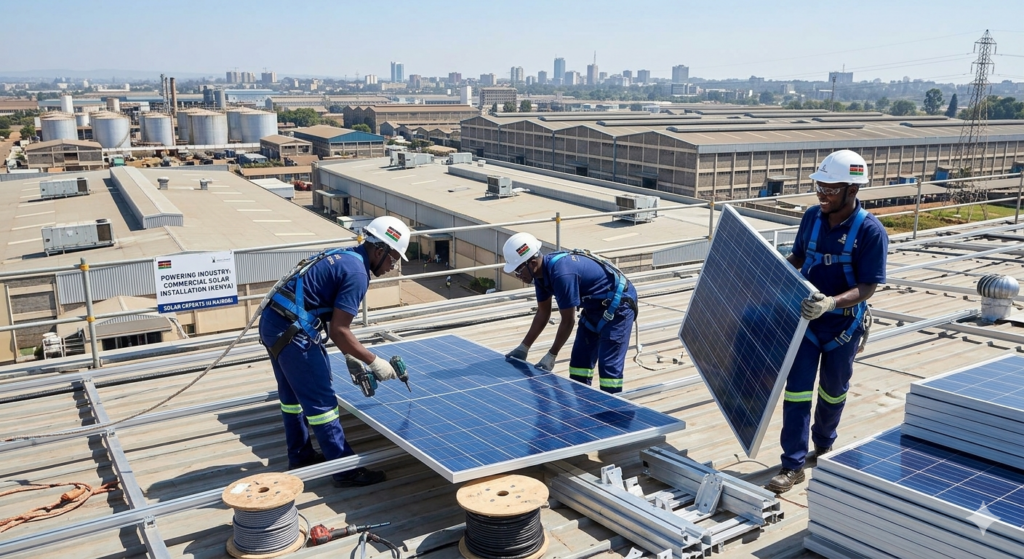
Commercial Solar Installation Services in Kenya: Power Your Business with Reliable, Cost-Effective Energy Introduction: Why Businesses in Kenya Are Rapidly Switching to Solar Energy Energy reliability and cost control have become top priorities for businesses across Kenya. Frequent power outages, rising electricity tariffs, and the need for operational stability are pushing companies to explore alternative energy solutions. As a result, solar power has emerged as one of the most practical and cost-effective options for businesses seeking long-term energy independence. Companies are no longer viewing solar as a luxury but as a strategic investment that supports growth and resilience. Modern businesses depend heavily on electricity to run operations, serve customers, and protect productivity. When power interruptions occur, the consequences can include lost sales, delayed production, and equipment downtime. Solar systems provide a dependable backup and reduce reliance on the national grid. This reliability is especially valuable for industries where continuous power is essential, such as manufacturing, healthcare, hospitality, and retail. Professional commercial solar installation services in Kenya enable businesses to generate their own electricity, reduce operating costs, and maintain consistent operations. A well-designed system can significantly lower monthly energy bills while providing stable power during outages. Over time, the savings generated by solar energy can be reinvested into business expansion, equipment upgrades, or workforce development. In this way, solar energy becomes both an operational tool and a financial asset. Working with an experienced installer like Vinsol Kenya ensures that commercial solar systems are properly engineered, safely installed, and optimized for performance. From system design to installation and maintenance, professional expertise plays a critical role in achieving reliable energy outcomes. Businesses that invest in professional solar installation gain confidence in the durability and efficiency of their energy systems. This foundation supports long-term operational success. What Is Commercial Solar Installation? Commercial solar installation involves designing and installing solar power systems specifically for business and industrial environments. Unlike residential systems, commercial installations typically require larger energy capacity and more advanced system configurations. These systems are built to support heavy electrical loads and operate continuously throughout the day. As a result, they require careful planning and professional execution. Commercial solar systems can be installed in several locations depending on available space and operational requirements. Common installation sites include building rooftops, warehouses, parking structures, and open land areas. Each location requires different mounting techniques and structural considerations. Proper site assessment ensures safe installation and maximum energy generation. The goal of commercial solar system installation in Kenya is to provide reliable electricity while reducing dependence on expensive grid power. Businesses benefit from predictable energy costs and improved power stability. This reliability allows companies to plan operations more effectively and avoid disruptions caused by power shortages. Ultimately, commercial solar systems support operational efficiency and financial stability. Types of Businesses That Benefit from Solar Power Solar energy is suitable for a wide range of commercial and industrial operations. Any business that relies on electricity can benefit from installing a solar system. The level of benefit typically depends on energy consumption patterns and operational hours. Businesses with high daytime electricity usage often achieve the greatest savings. Manufacturing and Industrial Facilities Factories and industrial plants consume significant amounts of electricity for machinery, lighting, and production processes. Energy costs can represent a large portion of operational expenses in these environments. Installing industrial solar power systems in Kenya helps reduce energy bills and improve cost control. Reliable solar power also minimizes production interruptions caused by outages. Offices and Commercial Buildings Office buildings require consistent electricity to support computers, lighting, air conditioning, and communication systems. Power interruptions can disrupt business operations and reduce employee productivity. Solar systems provide stable electricity and reduce dependence on the grid. Over time, energy savings can significantly improve business profitability. Hotels and Hospitality Businesses Hotels depend on reliable electricity to provide guest comfort and maintain service quality. Power outages can affect lighting, refrigeration, and security systems, leading to customer dissatisfaction. Solar power ensures uninterrupted service and improves operational reliability. It also enhances the hotel’s reputation for sustainability and environmental responsibility. Retail Shops and Supermarkets Retail businesses rely on electricity for lighting, refrigeration, and payment systems. Even short power interruptions can result in product loss or sales disruptions. Solar energy provides dependable backup power and protects business revenue. Reliable electricity also improves customer experience. Hospitals and Healthcare Facilities Healthcare facilities require continuous electricity to operate medical equipment and maintain patient safety. Power outages in hospitals can have serious consequences. Solar systems provide reliable backup power and improve operational resilience. This reliability is essential for maintaining high-quality healthcare services. Key Components of a Commercial Solar System A commercial solar system consists of several essential components that work together to generate and distribute electricity. Each component plays a critical role in system performance and reliability. Understanding these components helps businesses make informed decisions when planning a solar installation. Solar Panels Solar panels capture sunlight and convert it into electrical energy. They are typically installed on rooftops or open land areas where sunlight exposure is maximum. High-quality panels produce more electricity and last longer than low-quality alternatives. Investing in efficient panels improves long-term system performance. Inverters The inverter converts solar energy into usable electricity for business operations. It also manages power flow between the solar system, batteries, and the electrical grid. A reliable inverter ensures stable energy supply and protects equipment from electrical fluctuations. Proper inverter selection is essential for system efficiency. Battery Storage Batteries store excess solar energy for use during nighttime or power outages. This stored energy ensures continuous electricity supply when sunlight is unavailable. High-capacity batteries improve system reliability and operational flexibility. Businesses that require uninterrupted power often prioritize battery storage. Mounting Structures Mounting structures secure solar panels to rooftops or ground surfaces. These structures must withstand weather conditions such as wind and heavy rainfall. Durable mounting systems protect panels and maintain proper alignment. Stable mounting improves safety and energy production. Monitoring Systems Monitoring systems track solar energy production and system performance in real time. They allow technicians to
How to Start a Dairy Milk Dispensing Business in Kenya in 2026 Using a Vinsol Milk ATM

How to Start a Dairy Milk Dispensing Business in Kenya in 2026 Using a Vinsol Milk ATM Kenya’s milk ATM industry has quietly become one of the most resilient small-business opportunities in the country. With millions of households buying fresh milk daily and the formal dairy supply chain still out of reach for many, milk dispensing machines have stepped in to fill a real gap, and entrepreneurs who moved early are reaping steady returns. This guide walks you through how to start a dairy milk dispensing business in Kenya in 2026 using a Vinsol Milk ATM. If you’re thinking about, venturing into milk vending business but don’t know how to go about it, we are here to help you navigate every step. From picking the right location to understanding what it truly costs and how much you can realistically earn this guide is your cheat code. Whether you’re putting in KSh 100,000 or scaling up to KSh 300,000, this is a business with a clear path to profitability. Why Milk ATMs Are a Smart Business Choice in 2026 Kenya produces over 5 billion litres of milk annually, yet distribution to last-mile consumers remains fragmented. Milk ATMs, also known as fresh milk dispensing machines, bridge that gap by allowing entrepreneurs to buy in bulk from dairy farmers or cooperatives and retail it directly to households at prices consumers trust. Here’s what makes the model compelling in 2026: Urban and peri-urban populations are growing, driving consistent demand for affordable, fresh milk. Government crackdowns on unpasteurised informal milk have pushed buyers toward licensed dispensers. Machines like the Vinsol Milk ATM are of the highest quality, meet KEBS quality standards, stainless steel, and built for the Kenyan market. The business is simple to operate and requires no advanced technical skills. 💡 Pro Tip: Milk ATM businesses in high-density estates like Umoja, Githurai, or Mwiki in Nairobi can sell out 200+ litres daily within the first three months of operation. Location is your single biggest profit lever. Step-by-Step Guide: How to Start a Dairy Milk Dispensing Business in Kenya in 2026 Using a Vinsol Milk ATM Step 1: Conduct Market Research and Choose Your Location Before you spend a single shilling, spend time understanding your target market. The difference between a successful milk ATM business and a struggling one is usually just location. Best locations to target: Dense residential estates and low-to-middle-income housing areas Near matatu stages, market centres, and shopping centres Schools, hospitals, and institutional zones with canteen access Estates underserved by supermarkets or formal dairy outlets Walk the area at peak times — 6–9 AM and 5–8 PM — and count foot traffic. Talk to residents and ask where they currently buy milk. If the answer is “from a hawker” or “from a shop that’s far,” you’ve likely found your spot. 💡 Pro Tip: Avoid locations within 200 metres of an established competitor unless you have a price or convenience advantage. Step 2: Register Your Business and Obtain All Required Licenses Operating a milk dispensing business without the proper permits is a compliance risk that can shut you down overnight. Kenya Dairy Board (KDB) inspectors conduct regular field checks, so get your paperwork sorted early. Requirement Issuing Authority Notes Business Registration Huduma Centre / eCitizen One-time, ~KSh 950 Single Business Permit County Government Annual renewal Public Health Certificate County Health Dept. For staff & premises KDB Dispenser License Kenya Dairy Board Mandatory for all dispensers KEBS Machine Approval Kenya Bureau of Standards Machine must be certified Budget approximately KSh 15,000–KSh 30,000 for all licensing combined, depending on your county. Nairobi, Kiambu, and Mombasa counties have slightly higher permit fees than rural counties. Step 3: Procure Your Vinsol Milk ATM Machine The machine you choose defines your operational reliability, your compliance status, and ultimately your customer’s trust. This is where Vinsol stands out. Vinsol Milk ATMs are KDB-approved fresh milk dispensing machines built with food-grade stainless steel interiors, integrated cooling systems, and precision dispensing mechanisms that minimise waste. When buying a dairy milk dispenser from Vinsol, you get a machine engineered specifically for the Kenyan market — handling everything from Nairobi’s traffic heat to rural power fluctuations. Key machine specifications to confirm before purchase: Capacity: 100–500 litre tanks depending on your daily volume projections Cooling system: Built-in refrigeration to maintain milk at ≤4°C Material: 304 or 316 food-grade stainless steel throughout all contact surfaces Dispensing precision: Volume-controlled tap with minimal wastage KDB and KEBS certification: Non-negotiable for legal operation 💡 Pro Tip: When choosing between 100L and 200L capacity machines, start with a machine that matches 80% of your projected daily demand. Buying oversized capacity means unnecessary energy costs to cool milk you haven’t sold. Step 4: Source Quality Milk from Reliable Suppliers Your machine is only as good as the milk going into it. Poor-quality or inconsistently pasteurised milk will generate returns, complaints, and damaged reputation faster than anything else. What to look for in a milk supplier: KDB-licensed dairy farmer or cooperative Access to pasteurised milk (ultra-heat treated or fresh-pasteurised) Reliable daily delivery within a cold chain Consistent pricing through a written supply agreement Popular cooperatives such as Githunguri Dairy, Limuru Dairy, and smaller county-based co-ops often supply ATM operators at wholesale prices ranging from KSh 35–KSh 55 per litre depending on volume and location. 💡 Pro Tip: Negotiate a 30-day credit facility with your supplier once you’ve built trust. It significantly eases your working capital pressure during the early months. Step 5: Set Up Operations, Pricing, and Marketing Once your machine is installed and your supplier is confirmed, focus on three things: hygiene, pricing, and visibility. Hygiene protocols: Clean and sanitise the machine interior daily using food-safe detergents Display your KDB license and health certificates visibly at the point of sale Train your operator or attendant on proper handling and customer service Pricing strategy: Retail price typically ranges from KSh 60–KSh 80 per litre in urban areas Allow customers to buy as little as KSh 10 worth (typically 150–200 ml)
The Perfect Guide to Starting and Operating a Profitable Milk ATM Business in Kenya

The Perfect Guide to Starting and Operating a Profitable Milk ATM Business in Kenya Kenya’s dairy industry is evolving fast, and one business model is quietly outperforming many traditional retail ventures: milk ATM businesses. Powered by automation, cold-chain technology, and cashless payments, milk ATMs are transforming how fresh milk reaches consumers while unlocking strong margins for entrepreneurs. This is the perfect guide to starting and operating a profitable milk ATM business in Kenya is designed to help you understand this opportunity clearly, from market potential and profitability to compliance, operations, and long-term growth. Whether you are a first-time entrepreneur, a dairy farmer looking to sell directly to consumers, or an investor seeking a stable, fast-payback venture, this guide explains how to build a milk ATM business that is profitable, compliant, and scalable in the Kenyan market. The Perfect Guide to Starting and Operating a Profitable Milk ATM Business in Kenya: Why This Model Works At its core, a milk ATM business solves three persistent challenges in Kenya’s dairy value chain: milk spoilage, price exploitation by middlemen, and inconsistent access to hygienic milk. Milk vending machines, also known as dairy milk dispensers, allow operators to sell chilled milk directly to consumers at controlled prices while maintaining quality and safety. A milk ATM is a refrigerated dispensing unit that stores milk at temperatures below 4°C and releases it in precise quantities after payment. Modern high-quality dairy milk dispensers accept both cash and mobile money, especially M-Pesa, which aligns perfectly with Kenyan consumer behavior. This convenience, combined with affordability, has driven rapid adoption in urban and peri-urban areas. Urbanization, rising health awareness, and demand for minimally processed fresh milk continue to fuel growth. As a result, milk ATMs are no longer experimental, they are a proven, bankable retail model across Nairobi, Kiambu, Nakuru, Eldoret, and other fast-growing towns. Why Milk ATM Businesses Are Profitable in Kenya One of the strongest reasons entrepreneurs are embracing this model is its financial logic. Milk ATM businesses combine low operating costs, strong daily cash flow, and fast return on investment. Startup costs are relatively manageable compared to many brick-and-mortar food businesses. Depending on capacity and features, affordable milk ATMs allow entrepreneurs to enter the market without heavy overheads like large staff numbers or complex logistics. Once operational, the business benefits from daily cash sales, predictable demand, and low wastage when managed correctly. Margins are driven by the price difference between farm-gate milk and retail prices. Even modest daily sales volumes can translate into strong monthly net profits when refrigeration, hygiene, and stock rotation are properly managed. Choosing the Right Milk ATM: Compliance, Quality, and Trust Success in this business starts with choosing the right equipment. Not all machines are equal, and cutting corners at this stage can lead to losses, regulatory trouble, or reputational damage. In Kenya, it is essential to invest in milk ATMs that meet Kenya Dairy Board standards. These standards govern hygiene, storage temperatures, food-grade materials, and handling processes. Using KDB approved milk ATMs protects your business from shutdowns and builds customer trust from day one. Many entrepreneurs searching for where to buy high quality milk ATMs in Kenya prioritize suppliers with a proven track record, local support, and full regulatory compliance. This is where Vinsol has established a strong reputation. Why Vinsol Milk ATMs Are Trusted by Kenyan Entrepreneurs Vinsol milk vending machines are designed specifically for the Kenyan market. They are KEBS certified, compliant with Kenya Dairy Board regulations, and built using food-grade stainless steel for durability and hygiene. Their machines maintain stable refrigeration below 4°C and include self-cleaning features that simplify sanitation and reduce contamination risks. Beyond compliance, Vinsol milk ATMs integrate M-Pesa payment systems, accurate PLC-controlled dispensing, secure access controls, and automated sales tracking. This combination makes them among the best milk ATMs in Kenya for entrepreneurs who want reliability, affordability, and long-term support. Step-by-Step: The Perfect Guide to Starting and Operating a Profitable Milk ATM Business in Kenya Step 1: Market Research and Location Selection Location is the single most important success factor. High-performing milk ATM locations typically include residential estates, busy market centers, transport hubs, and areas near schools or fitness centers. These locations offer consistent foot traffic and daily demand for fresh milk. Before committing, observe foot traffic at different times of day, analyze nearby competition, and understand local pricing. Strong demand with weak service quality often presents the best opportunity. Step 2: Licensing and Legal Compliance Operating legally is non-negotiable. You will need to register your business, obtain a county Single Business Permit, secure a Public Health Certificate, and ensure your machine is KEBS certified. Depending on scale, Kenya Dairy Board registration may also apply. Compliance is not just about avoiding penalties, it signals professionalism and builds consumer confidence in your milk quality. Step 3: Milk Sourcing and Quality Control Your reputation depends entirely on milk quality. Work with reliable farmers or cooperatives that supply pasteurized, properly chilled milk consistently. Always verify delivery temperatures and reject milk that does not meet quality standards. Consistent quality builds repeat customers, while a single incident of sour milk can damage trust quickly. Step 4: Installation and Daily Operations Professional installation ensures optimal machine performance. Reliable electricity, good ventilation, security, and visibility are essential. Once operational, daily routines should include temperature checks, sales monitoring, basic cleaning, and proper cash or M-Pesa reconciliation. Well-run milk ATM businesses rely on discipline rather than complexity. Managing Challenges in Milk ATM Operations Milk spoilage is the most common operational risk. This can be minimized through accurate demand forecasting, strict temperature control, and disciplined stock rotation. Reliable machines and quality suppliers significantly reduce this risk. Technical issues may occur, but they are manageable with preventive maintenance and access to local technical support. One advantage of Vinsol milk vending machines is the availability of spare parts and servicing within Kenya, which minimizes downtime. Competition is increasing, but it usually signals strong market demand. Businesses that focus on cleanliness, reliability, and customer service tend to outperform
7 Essential Requirements for Setting Up a Successful Salad Oil ATM Business in Kenya
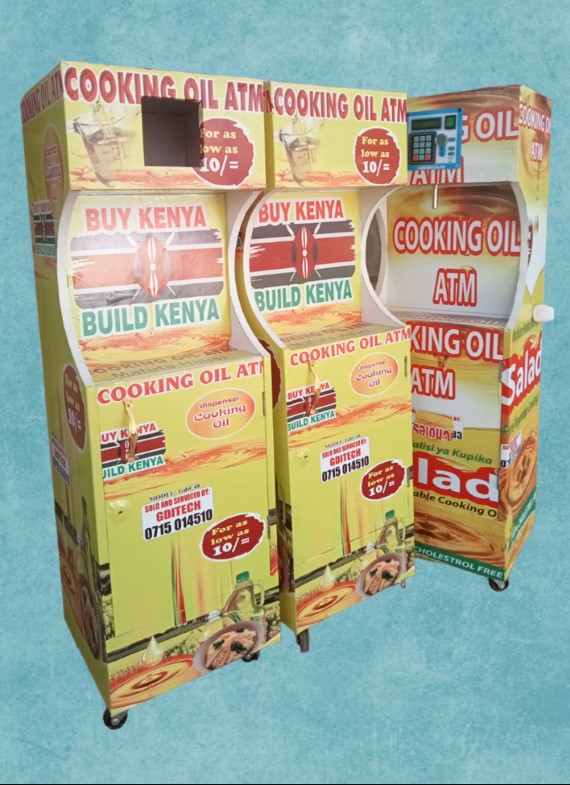
7 Essential Requirements for Setting Up a Successful Salad Oil ATM Business in Kenya The retail landscape in Kenya is shifting rapidly toward “kadogo economy” solutions. For aspiring entrepreneurs, understanding the 7 essential requirements for setting up a successful salad oil ATM business in Kenya is the first step toward tapping into a highly profitable, recession-proof market. With rising costs of living, consumers are moving away from expensive branded bottled oils toward more flexible, quantity-based dispensing. A cooking oil ATM (also known as a salad oil dispenser) allows customers to buy exactly what they can afford—even for as little as Ksh 10. 7 Essential Requirements for Setting Up a Successful Salad Oil ATM Business in Kenya Starting this venture requires more than just a machine; it requires a blend of strategic planning, legal compliance, and high-quality equipment. Here is the definitive checklist to get you started. Strategic High-Traffic Location Location is the heartbeat of any retail business. For a salad oil ATM, you need to be where your target demographic lives and breathes. Target Moderate to Low-Income Areas: Avoid “leafy suburbs” where residents prefer bulk supermarket shopping. Focus on densely populated residential estates, busy market centers, or spots near bus termini. Visibility: Your premises should ideally face the street. High foot traffic ensures a steady stream of “walk-in” customers. Security: Ensure the location is secure, as many customers shop after work in the evening. High-Quality Cooking Oil Dispensing Machine Your most important asset is the cooking oil dispensing machine. To ensure longevity and hygiene, you must invest in equipment made of food-grade 304 stainless steel. Pro Tip: Always check if the machine has a PLC (Programmable Logic Controller). This allows you to set and calibrate prices easily, ensuring you remain profitable even when wholesale oil prices fluctuate. Reliable Bulk Oil Suppliers Where you source your oil determines your profit margin. Certification: Ensure your supplier provides oil with the KEBS (Kenya Bureau of Standards) certification and the fortified logo. Wholesalers vs. Manufacturers: While buying directly from manufacturers is cheaper, they often have high Minimum Order Quantities (MOQs). For beginners, reputable regional wholesalers are often the best bet. Legal Compliance and Licensing Operating without the “green light” from authorities is a recipe for disaster. You will need: Single Business Permit: Obtained from your specific County Government. Public Health Certificate: Essential for any business handling food products. Fire Safety Permit: Often required for commercial premises. Proper Space and Infrastructure You don’t need a massive showroom. A clean, well-ventilated space of approximately 1.5m x 1.5m is sufficient. However, you must ensure a stable electricity supply to power the ATM’s digital system and the internal heating element. Marketing and Local Awareness Even the best business needs a “shout.” Use low-cost marketing like: Clear, visible signage above your shop. Directional posters in the neighborhood. Introductory offers (e.g., a small discount for the first week). Operational Working Capital Beyond the machine and rent, ensure you have enough cash flow to purchase your first 2–3 barrels of oil and cover utility bills for the first month. Why Choosing the Best Salad Oil ATMs in Kenya Matters Not all machines are created equal. In Kenya’s varied climate, oil can solidify in colder regions like Limuru, Eldoret, or Nairobi during the “winter” months. This is why the technical requirements for setting up a successful salad oil ATM business in Kenya include choosing a machine with an integrated heating system. Comparison: Standard Dispensers vs. Vinsol High-Quality Cooking Oil ATMs Feature Standard Dispenser Vinsol Salad Oil ATM Material Basic stainless steel or cardboard Best Quality Particle Boards + Food-grade 304 Stainless Steel Control System Manual/Basic Advanced PLC (Digital) Heating Element Often Missing Built-in (Prevents solidification) Sales Tracking None Password-protected digital logs Warranty Limited/None Full 1-Year Warranty Advantages of Buying a Cooking Oil Dispenser from Vinsol When you buy a salad oil ATM, you are investing in the backbone of your livelihood. Vinsol high quality cooking oil ATMs in Kenya are engineered specifically for the local market. Tamper-Proof Logic: Our machines are password-protected. If you employ a shop attendant, they cannot alter sales records or prices without your authorization. Precision Calibration: Dispense oil for as little as Ksh 10 with 100% accuracy, ensuring no wastage and maximum trust from your customers. Climate Adaptation: Our ATMs feature specialized elements that prevent oil from freezing, ensuring your business runs 24/7 regardless of the weather. Top Quality Build: We prioritize food safety and durability, using materials that meet international health standards. After-Sales Support: We don’t just sell; we help you maintain your machine to ensure a high Return on Investment (ROI). 5 Reasons Why Vinsol is Your Best Source for Buying Top Quality Cooking Oil Dispensing Machines in Kenya: Unmatched Durability: Built to Last Over a Decade At Vinsol, we don’t believe in “disposable” machinery. Our cooking oil ATMs are constructed using heavy-duty, food-grade 304 stainless steel, which is resistant to corrosion and wear. When you buy a salad oil ATM from us, you aren’t just making a purchase; you are making a long-term capital investment. With simple, routine maintenance, our machines are engineered to remain operational for over 10 years, ensuring your initial investment pays for itself many times over. Precision Accuracy & Guaranteed Profitability In the “kadogo economy,” every drop of oil counts toward your bottom line. Vinsol machines feature advanced PLC (Programmable Logic Controller) digital units that allow for hyper-accurate calibration. This means if a customer buys oil for Ksh 10, they get exactly Ksh 10 worth of oil—no more, no less. This precision eliminates product wastage and ensures that every cent of your inventory is accounted for, protecting your profit margins from the very first liter. Expert Guidance: Free Consultation for Your Success We believe our success is tied to yours. That is why we offer comprehensive, free business consultations to all our clients. We don’t just hand over a machine; we provide expert advice on the best high-traffic locations in Kenya, how to navigate county licensing (like the “kanju” permits), and
Ideal Sites To Install Milk ATMs in Kenya
Ideal Sites To Install Milk ATMs in Kenya (Best Locations for Milk ATMs Across Kenya) Choosing the right location is the single most important decision when starting or scaling a milk ATM business. Even the best milk ATMs in Kenya will underperform if installed in the wrong place, while a well-positioned unit can generate consistent daily sales with minimal marketing. Across Kenya, successful operators understand that milk vending machines thrive where convenience, routine purchasing, and trust intersect. This guide explores the ideal sites to install milk ATMs in Kenya, explains why some locations outperform others, and provides practical insights drawn from real-world dairy retail patterns. Whether you are setting up your first 100-litre unit or expanding into multiple counties, understanding where milk sold via milk ATMs sell best in Kenya will significantly improve your profitability. Why Location Determines Milk ATM Success in Kenya Milk is a daily-consumption product. Unlike luxury goods, it relies on convenience, proximity, and habit. This is why milk ATMs perform best in areas where customers can easily integrate milk purchases into their daily routines. Across Kenya, operators who prioritize accessibility over prestige consistently achieve higher turnover. Another critical factor is trust. Consumers are more willing to buy milk from dairy milk dispensers placed in familiar, well-trafficked environments. A visible, clean, and professionally branded machine in the right location builds confidence and encourages repeat purchases, often without any active selling. Ideal Sites To Install Milk ATMs in Kenya · Residential Estates: The Backbone of Milk ATM Sales Residential estates remain the most reliable locations for milk ATMs across Kenya. These areas offer consistent daily demand, predictable foot traffic, and repeat customers who buy milk for household use. Estates with mid- to high-density housing perform particularly well because residents prefer nearby milk sources rather than traveling long distances. When installed within or near estate entrances, milk vending machines become part of residents’ daily routines. Operators report that estates generate stable morning and evening sales peaks, making stock planning easier. For new entrepreneurs, estates are often the safest starting point when evaluating ideal sites to install milk ATMs in Kenya. · Market Centres and Trading Hubs Local markets and trading centres are among the high foot traffic milk vending locations in Kenya. These areas attract a diverse mix of shoppers, traders, and commuters throughout the day. Milk ATMs placed near vegetable stalls, butcheries, or grocery clusters benefit from impulse purchases and bulk buying. In trading hubs, visibility is crucial. A milk ATM positioned where customers naturally pause, such as near entrances or popular stalls, will outperform one tucked away. Many experienced operators prefer compact, reliable units such as Vinsol dairy milk dispensers for these environments due to their durability and ease of maintenance. · Transport Hubs and Commuter Zones Bus stages, matatu termini, and commuter pickup points are often overlooked but highly effective locations for milk ATMs. These areas experience predictable rush-hour traffic in the morning and evening, aligning perfectly with milk purchasing habits. Commuters frequently buy milk on their way home, especially when the ATM is conveniently placed along their route. Mobile money integration is essential in such locations, as speed and convenience drive sales. Operators using Vinsol milk ATMs in commuter zones often report strong evening turnover with minimal price sensitivity. · Peri-Urban Areas and Fast-Growing Towns Across Kenya, peri-urban areas are expanding rapidly due to urban migration and housing development. These locations often lack established retail infrastructure but have growing populations with daily milk needs. Milk ATMs perform exceptionally well here because they fill a clear gap between informal milk sellers and packaged milk brands. For entrepreneurs looking to scale, peri-urban towns represent some of the best places to install dairy milk dispensers. Lower rent costs, limited competition, and strong community ties make these areas ideal for long-term growth. Consistent quality and hygiene are especially important in building trust in these emerging markets. · Institutions and Community-Centered Locations Schools, colleges, hospitals, and staff housing complexes also offer strong potential for milk ATM placement. These environments support consistent demand, particularly when access to fresh milk is limited. However, such locations often require stricter compliance and formal agreements. Using milk ATMs that meet Kenya Dairy Board standards is non-negotiable in institutional settings. Operators supplying institutions typically rely on high-quality dairy milk dispensers that are easy to clean and maintain, reinforcing professionalism and safety. Ideal Sites To Install Milk ATMs in Kenya: Other Considerations to Make How Foot Traffic Quality Matters More Than Quantity While foot traffic is important, its quality matters even more. High traffic does not automatically translate into high sales if people are passing through without stopping or purchasing household goods. Successful operators analyze how people move, where they pause, and what else they are buying. Understanding tips for milk ATM placement in Kenya includes observing daily routines. Locations where people already purchase food items consistently outperform purely transit-oriented spaces. This insight helps explain where milk sold via milk ATMs sell best in Kenya, in places tied to daily living rather than occasional movement. Competition and Market Saturation Considerations Competition is not necessarily a bad thing. In fact, areas with existing milk sellers often indicate proven demand. However, saturation without differentiation can limit growth. Before installing a milk ATM, operators should assess pricing, hygiene standards, and customer loyalty among existing sellers. Installing affordable dairy milk dispensers in competitive areas works best when combined with visible hygiene, consistent quality, and reliable availability. Customers are quick to switch if they perceive better value or cleanliness. Compliance and Visibility Go Hand in Hand Across Kenya, compliance influences location viability. County governments and public health officers closely monitor food vending activities, especially in public spaces. Choosing locations that allow easy inspection access and proper sanitation reduces operational risk. Using KDB approved milk ATMs and clearly displaying licenses builds trust with both regulators and customers. Locations that support proper drainage, water access, and power supply are more sustainable in the long term. Choosing the Right Machine for Each Location Type
A Step-by-Step Guide to Operating a Milk ATM Business in Kenya
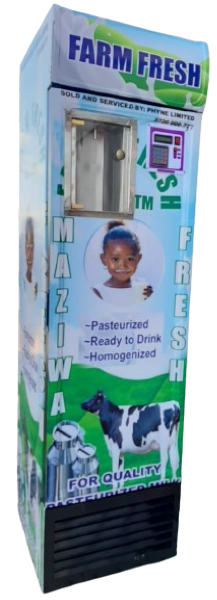
A Step-by-Step Guide to Operating a Milk ATM Business in Kenya The dairy industry in Kenya is evolving rapidly. Rising urban populations, changing consumer habits, and growing demand for hygienic, affordable fresh milk have created a powerful opportunity for entrepreneurs. At the center of this transformation is the milk ATM also known as a dairy milk dispenser or a milk vending machine, a compact yet highly profitable milk vending solution that bridges the gap between dairy farmers and urban consumers. This step-by-step guide to operating a milk ATM business in Kenya is designed for serious entrepreneurs, dairy farmers, and investors who want practical, real-world insights, not theory. Whether you’re starting your first milk vending business or expanding an existing dairy operation, this guide walks you through everything that matters: compliance, sourcing, operations, profitability, hygiene, and long-term growth. Also: The Ultimate Guide to Starting a Profitable Dairy Milk Dispenser Business in Kenya Why Milk ATMs Are Transforming Kenya’s Dairy Sector Kenya produces millions of litres of milk daily, yet a significant portion is lost due to poor cold-chain infrastructure, middlemen exploitation, and limited market access. Milk ATMs solve these challenges by enabling direct-to-consumer sales while preserving quality and safety. Milk ATMs, also known as dairy milk dispensers or milk vending machines, store milk in chilled, food-grade tanks and dispense precise quantities on demand. Customers pay using cash or mobile money, making the process fast, transparent, and convenient. For entrepreneurs, this model eliminates unnecessary intermediaries, improves margins, and offers daily cash flow—something few agribusinesses can guarantee. Why a Vinsol Milk ATM Is Ideal for Kenya A Vinsol 100-Litre milk ATM unit is widely regarded as the sweet spot for most Kenyan startups. It balances affordability, operational simplicity, and scalability. Key Advantages of Vinsol 100-Litre Milk ATMs: Lower capital investment compared to larger units Easier compliance with hygiene and regulatory standards Faster stock turnover, reducing spoilage risk Ideal for estates, markets, and peri-urban locations Perfect for testing demand before scaling This is why many consider 100-litre units among the best milk ATMs in Kenya for first-time operators. A Step-by-Step Guide to Operating a Milk ATM Business in Kenya Step 1: Market Research and Location Selection Before purchasing a machine, understand who will buy your milk and where. High-performing locations include: Residential estates with high population density Local markets and shopping centers Transport hubs and stage areas Areas with limited access to packaged milk Peri-urban neighborhoods with price-sensitive consumers A good location alone can determine up to 60% of your milk ATM business success. Step 2: Business Registration and Legal Compliance Operating legally builds trust and protects your investment. Required licenses and approvals: Business registration (sole proprietor or limited company) County Single Business Permit Public Health Certificate Kenya Dairy Board (KDB) license Machine compliance with KEBS standards Always ensure your machine qualifies as one of the milk ATMs that meet Kenya Dairy Board standards. Non-compliant machines risk closure, fines, or confiscation. Step 3: Choosing the Right Milk ATM Machine Not all milk ATMs are created equal. Your profitability depends heavily on machine quality. What to look for: Food-grade stainless steel tank Reliable cooling system (2–4°C) Accurate volume calibration M-Pesa integration Easy cleaning and maintenance Warranty and spare parts availability Vinsol milk vending machines are increasingly popular due to their durability, hygienic design, and local after-sales support. Many entrepreneurs specifically prefer Vinsol milk ATMs for their reliability and KEBS-compliant construction. If you’re searching for where to buy high quality milk ATMs in Kenya, always prioritize certified suppliers with proven installations. Also: How to Choose the Best Milk ATM for Your Business Step 4: Cost of Milk ATMs in Kenya The price of milk vending machines in Kenya varies based on features and supplier. Typical cost breakdown: Machine price: KES 70,000 – 150,000 Licensing & permits: KES 10,000 – 30,000 Initial milk stock: KES 5,000 – 10,000 Branding & setup: KES 5,000 – 15,000 Vinsol dairy milk dispensers are some of the most affordable milk ATMs in the market. Step 5: Sourcing High-Quality Milk Milk quality is your brand. Best sourcing options: Trusted local dairy farmers Licensed milk processors Dairy cooperatives with chilling facilities Milk must be: Fresh and pasteurized Delivered cold Free from antibiotics and contaminants Consistent quality is what builds customer loyalty and repeat sales. Step 6: Daily Operations and Hygiene Management Operating milk vending machines in Kenya requires strict discipline. Daily routine checklist: Load chilled milk into the ATM Clean dispensing nozzles and surfaces Monitor temperature and volume accuracy Reconcile M-Pesa and cash collections Track daily sales and stock levels Hygiene is non-negotiable. Clean machines inspire confidence and keep regulators away. Step 7: Pricing Strategy and Profitability Most milk ATM operators sell milk between KES 60–80 per litre, depending on location. Profit example (conservative): Daily sales: 80 litres Selling price: KES 70/litre Daily revenue: KES 5,600 Gross margin: KES 20–25 per litre Monthly net profit: KES 40,000–70,000 At this rate, many operators recover their investment in 6–12 months, making milk vending machines one of the fastest payback agribusinesses in Kenya. Also: How to Choose the Best Milk ATM for Your Business Marketing Your Milk ATM for Consistent Sales Even the best machine needs visibility. Proven marketing tactics: Clear signage with pricing Emphasize “fresh, chilled, hygienic” Loyalty incentives for repeat customers WhatsApp community promotions Strategic branding around trust and quality Milk ATMs thrive on habitual daily purchases, so consistency matters more than aggressive advertising. Scaling Beyond a Single Unit Milk ATM Once demand grows, scaling becomes natural. Options include: Adding another milk dispenser unit in a new location Adding other related products instead of just milk. For example you can add yoghurt, bread, eggs, mala etc. Creating a mini milk ATM network Partnering with farmer groups for supply security Many successful operators start small and scale fast without loans. Common Challenges and How to Overcome Them Key risks: Milk spoilage due to power outages Inconsistent milk supply Poor hygiene practices Machine downtime Practical solutions: Backup power or ice buffering Supplier diversification Strict cleaning schedules Preventive maintenance