How to Start a Water Refill Station Business in Kenya
A water refill station business in Kenya involves purifying water from a borehole, spring or municipal source and selling it to customers who bring their own containers. Setup costs typically range from KES 100,000 to KES 800,000 depending on scale, and operators commonly report gross margins of 40 to 60 percent once licensing, equipment and location are in place.
Kenya’s water refilling sector has grown into one of the country’s most accessible small business opportunities. Unreliable municipal supply, rising health awareness and steady urban population growth have combined to create consistent demand for affordable, safe drinking water. For entrepreneurs weighing where to place their capital, a refill station offers low technical complexity, a non-perishable product and a relatively short payback period.
This guide on how to start a water refill station business in Kenya walks through what a water refill station actually is, whether it is profitable, and the ten practical steps involved in setting one up in Kenya, including the licences you will need from the Kenya Bureau of Standards (KEBS), the National Environment Management Authority (NEMA) and your county government.
 What Is a Water Refill Station?
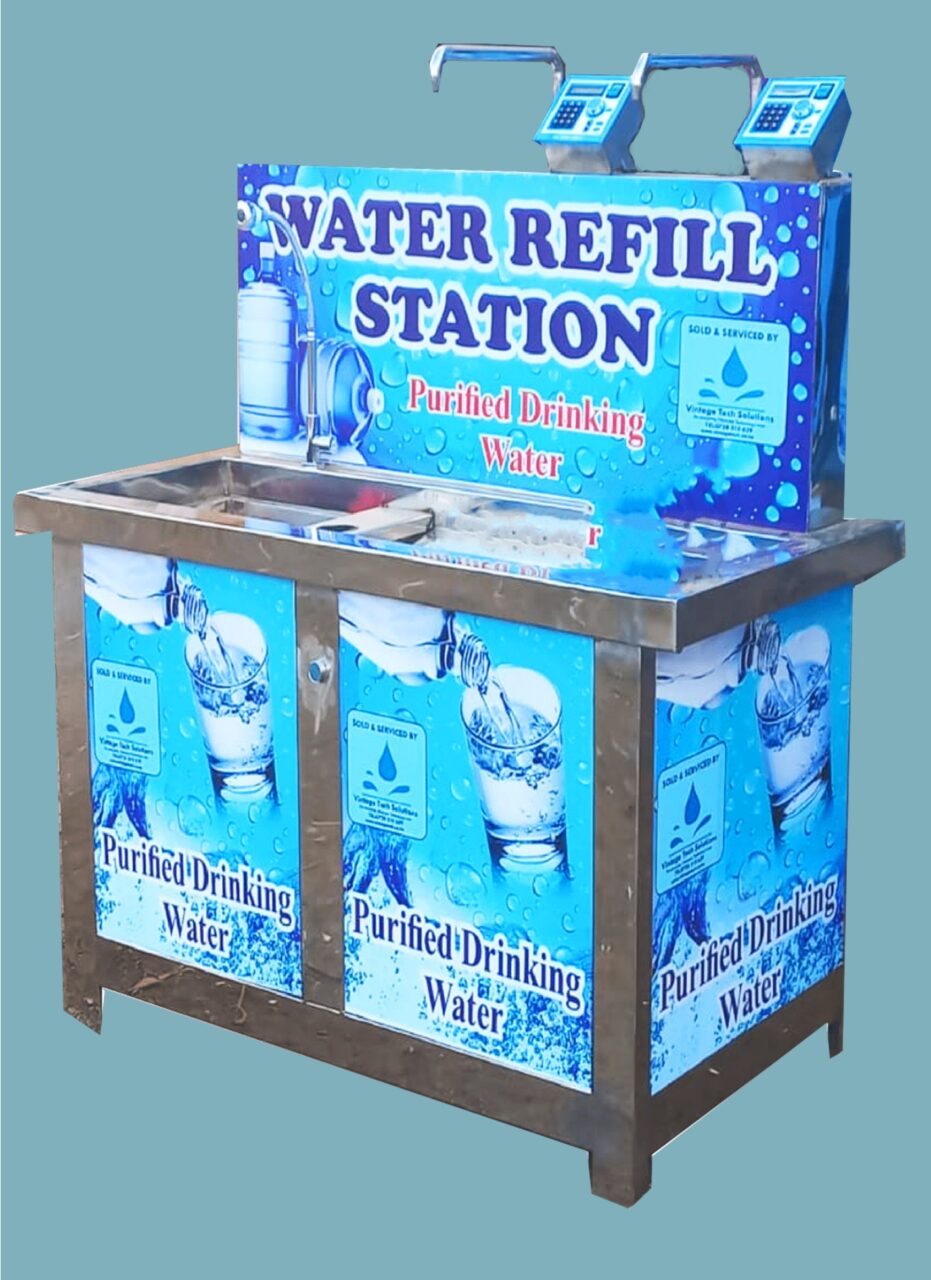
A water refill station is a commercial facility that treats raw water and dispenses it to customers who supply their own containers, typically 20-litre jerry cans, 10-litre bottles or 5-litre bottles. The term covers the entire setup, including storage tanks, the purification system and the dispensing point, whether that dispensing point is staffed or automated.
Water refill station versus water ATM
The two terms are often used interchangeably in the Kenyan market, but there is a practical distinction worth understanding before you buy equipment.
| Feature | Water Refilling Station | Water ATM |
| Operation | Usually attended by staff who dispense water manually | Self-service, coin, token or M-Pesa operated |
| Typical setting | Shops, kiosks, small retail premises | Estates, corridors, apartment blocks, schools |
| Automation | Basic to moderate | High, often with digital monitoring |
| Entry cost | Generally lower for a single-tap manual unit | Similar or slightly higher once payment hardware is added |
| Staffing | Usually requires an attendant | Can run largely unattended |
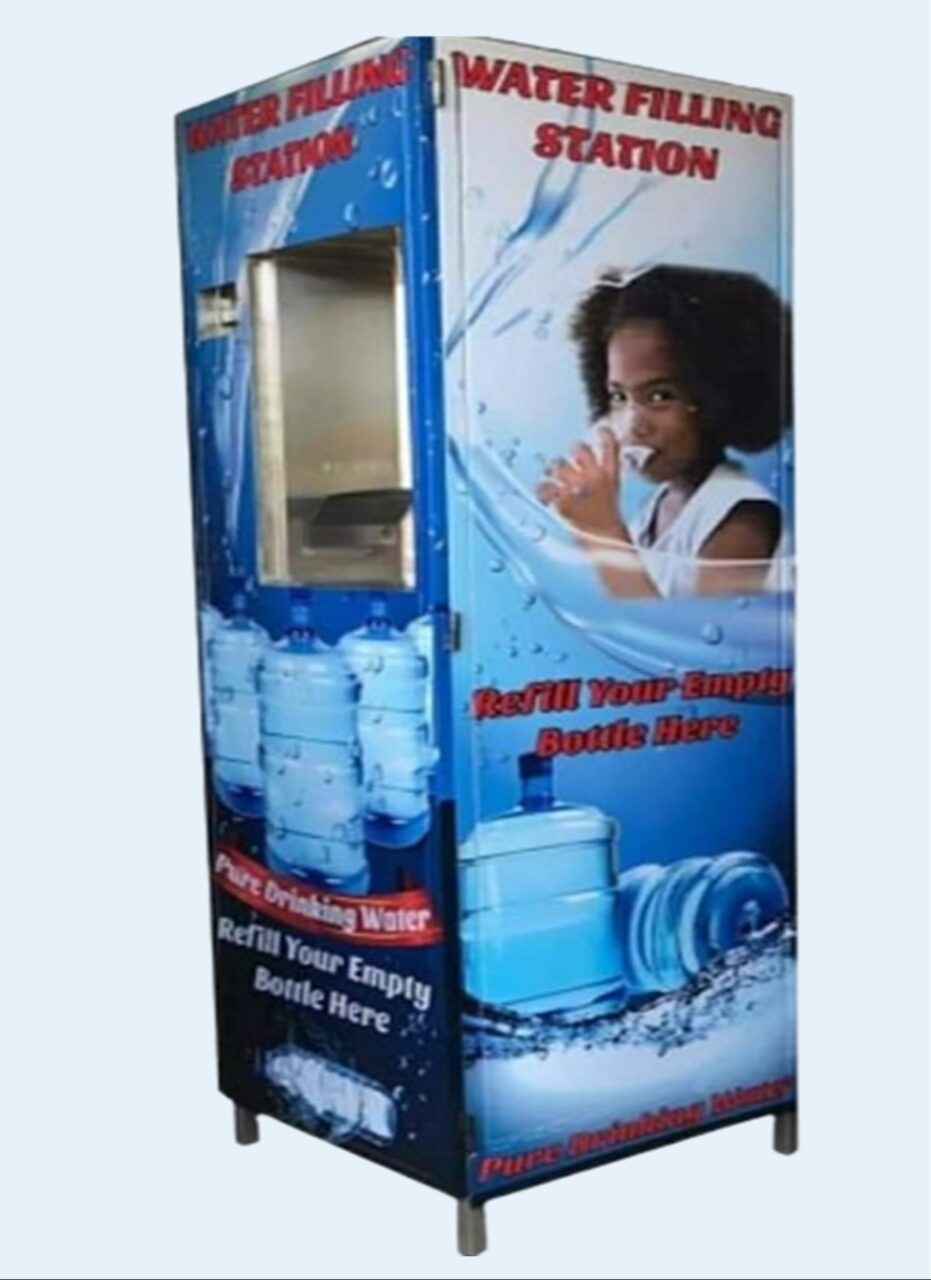
In practice, most commercial units sold in Kenya today combine both functions, offering manual taps alongside coin or mobile-money payment options.
Is a Water Refill Station Business Profitable in Kenya?
 Yes, water refilling is generally considered a profitable small business in Kenya, though actual returns depend heavily on location, pricing and operating discipline. Industry suppliers commonly cite gross margins in the range of 40 to 60 percent, with some estimates for well-run stations reaching higher, largely because the cost of purifying and dispensing water is low relative to the retail price.
A simple way to think about the unit economics: if a 20-litre jerry can costs roughly KES 60 to produce (electricity, water, filter wear and consumables) and sells for KES 100, that is a gross profit of around KES 40 per can. At 25 to 50 refills a day, that translates into daily gross profit of KES 1,000 to KES 2,000 before rent, wages and licensing amortisation.
Several factors point to sustained demand:
- Unreliable municipal supply. Many Kenyan towns experience intermittent piped water, pushing households and small businesses towards refill stations as a dependable alternative.
- Growing population. Kenya’s urban population continues to expand, particularly around Nairobi, Mombasa and Kisumu, increasing the customer base within walking distance of a well-placed station.
- Lower cost than bottled water. Refilled water is typically priced well below sealed bottled water, making it attractive to price-sensitive households.
- Low inventory risk. Water does not spoil in the way food products do, which reduces waste-related losses common in other small retail ventures.
We would caution against treating any single profit figure as guaranteed. Margins vary by county, competition density and how disciplined the operator is about maintenance and pricing. Underpricing to compete on volume, without controlling electricity and filter replacement costs, is a common reason stations underperform.
How to Start a Water Refill Station Business in Kenya: 10 Steps
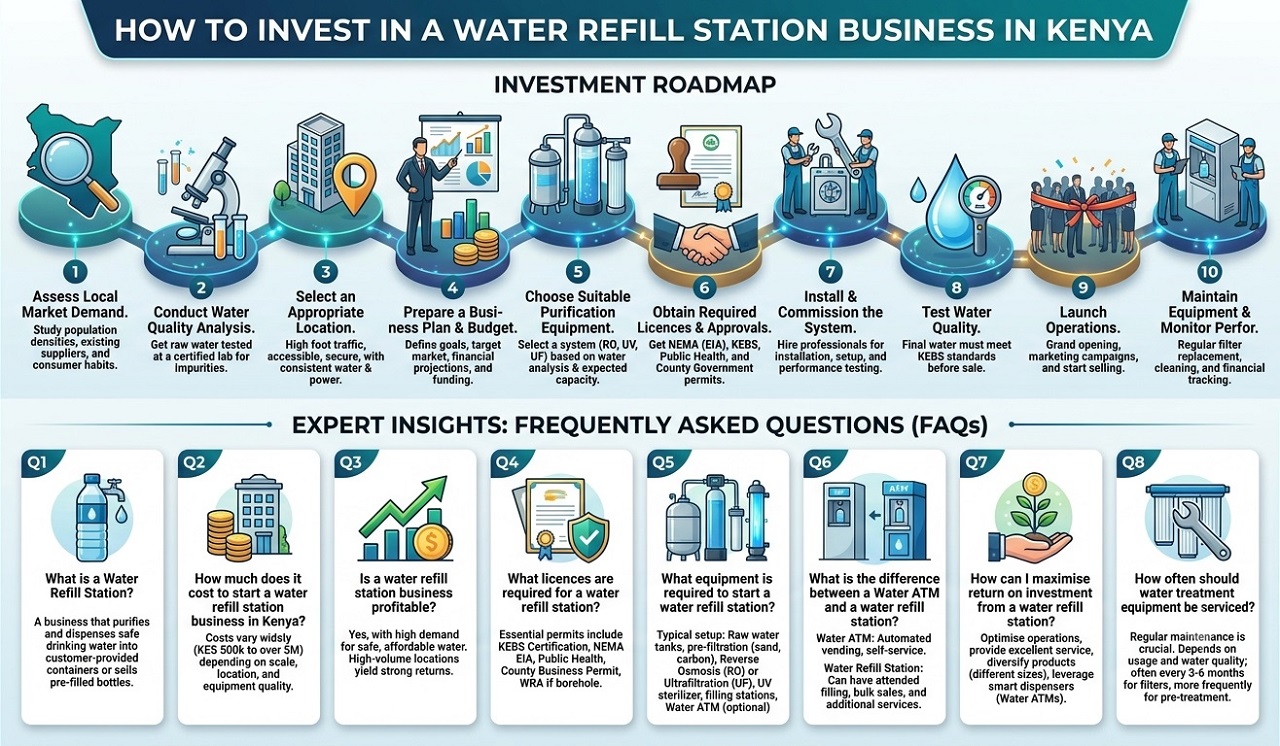
Step 1. Assess Local Market Demand
Start by mapping water access in your target area. Look for estates, schools, markets and offices within walking distance that currently rely on unreliable municipal supply, expensive bottled water or distant refill points. Count existing competitors and note their pricing, queue lengths and container sizes served, since this tells you both the size of the opportunity and how saturated the market already is.
Step 2. Conduct Water Quality Analysis
Before committing to equipment, test your intended water source, whether borehole, spring or municipal connection, at an accredited laboratory. This establishes baseline levels of turbidity, total dissolved solids (TDS), pH, fluoride, heavy metals and microbiological contamination such as E. coli and total coliforms. The results determine which purification stages your system actually needs. A borehole with high fluoride or salinity, for instance, will need a different reverse osmosis configuration than a relatively clean municipal supply that mainly needs filtration and disinfection.
Step 3. Select an Appropriate Location
Location decisions should weigh foot traffic, visibility, accessibility for customers carrying containers, and proximity to reliable electricity. High-density residential estates, areas near schools and markets, and busy pedestrian routes tend to perform best. Confirm that the premises is not located within a residential setup with living quarters above the business floor, since KEBS will not certify a bottling or refilling operation in that configuration.
Step 4. Prepare a Business Plan and Budget
A basic business plan should cover your target market, pricing strategy, equipment and setup costs, licensing budget, and a simple monthly cash flow projection. Startup costs for a small manual refilling station typically fall between KES 100,000 and KES 300,000, while mid-sized setups with automated dispensing and higher throughput can run to KES 800,000 or more. Build in licensing fees, initial water testing, rent deposits and a buffer for the first two to three months of operating costs before the business becomes self-sustaining.
 Step 5. Choose Suitable Purification Equipment
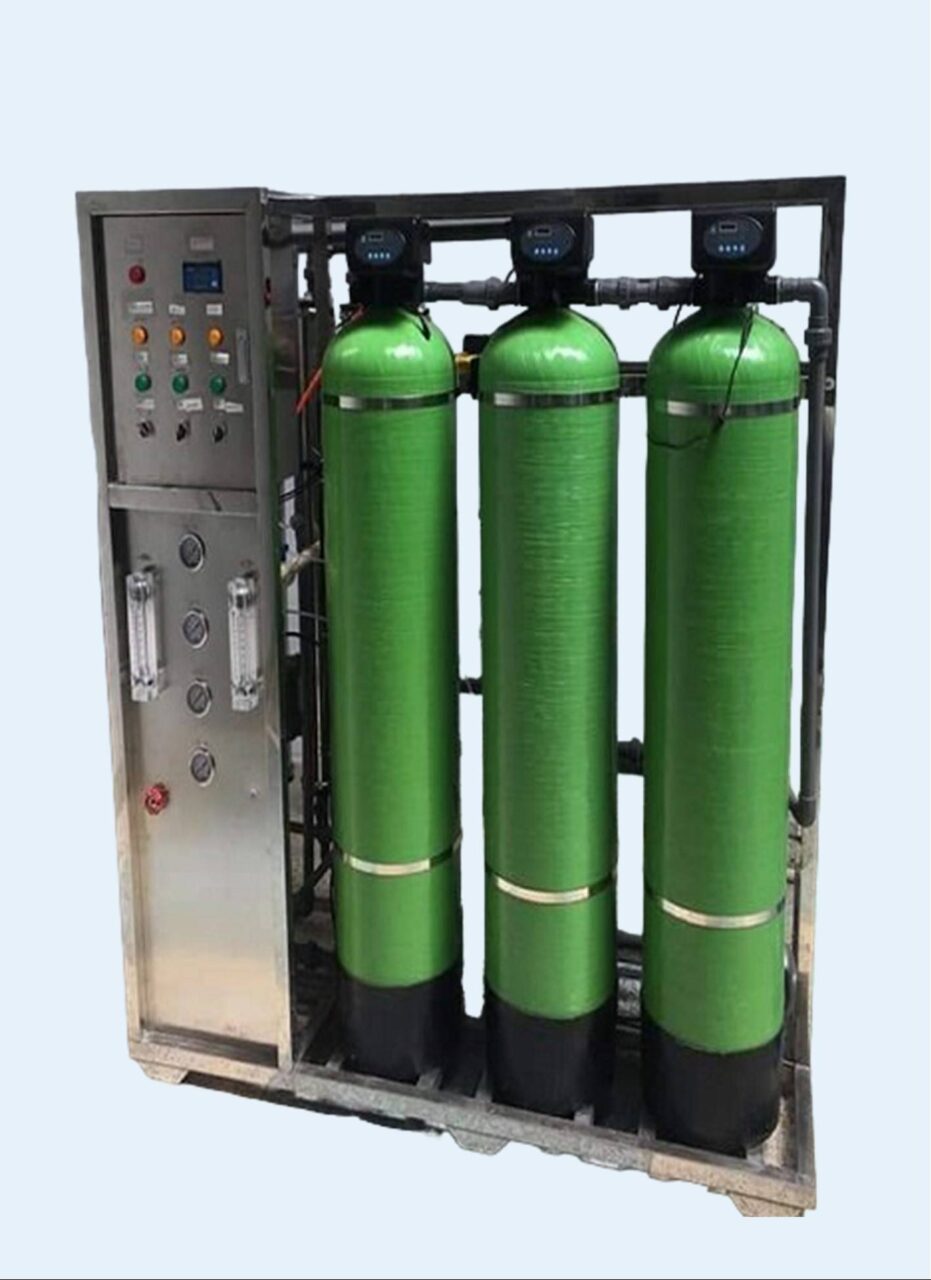
Most Kenyan refill stations combine sediment filtration, activated carbon filtration, reverse osmosis (RO) or ultrafiltration, and UV sterilisation or ozonation as a final disinfection step. Reverse osmosis is generally recommended for borehole water carrying high dissolved solids or fluoride, while ultrafiltration can be sufficient for cleaner municipal sources. Match system capacity, typically measured in litres per hour, to your expected peak demand rather than your average demand, so customers are not left queuing during busy periods.
Step 6. Obtain Required Licences and Approvals
This is the step most first-time operators underestimate. A compliant water refilling business in Kenya generally needs the following:
| Licence or Permit | Issuing Body | Typical Purpose |
| Single Business Permit | County government | Legal authorisation to operate within the county |
| Public Health Certificate | County public health department | Confirms premises meets food-handling hygiene standards, since water is classified as a food product |
| KEBS Standardisation Mark | Kenya Bureau of Standards | Certifies water meets KS EAS 153 (drinking water) or KS EAS 12 (mineral water) and Code of Hygiene KS 459 Part 9 |
| NEMA Environmental Compliance | National Environment Management Authority | Environmental Impact Assessment or self-assessment where applicable, plus waste management compliance |
| Water Abstraction Permit | Water Resources Authority (formerly WARMA) | Required if drawing water from a borehole or spring rather than municipal supply |
| KRA PIN and Tax Registration | Kenya Revenue Authority | Standard tax registration for any registered business |
KEBS will not certify a facility located within a residential building where living quarters sit above the business premises. The KEBS certification process also requires a dedicated production area, stainless steel work surfaces, tiled and waterproof flooring, an insectocuter, a foot bath at the entrance, hand-washing facilities and a first aid kit, in line with Code of Hygiene Standard KS 459 Part 9. Budgeting a few weeks for KEBS sampling, laboratory testing and inspection is realistic, since the mark is only issued once your installed equipment has been tested and passed.
Step 7. Install and Commission the System
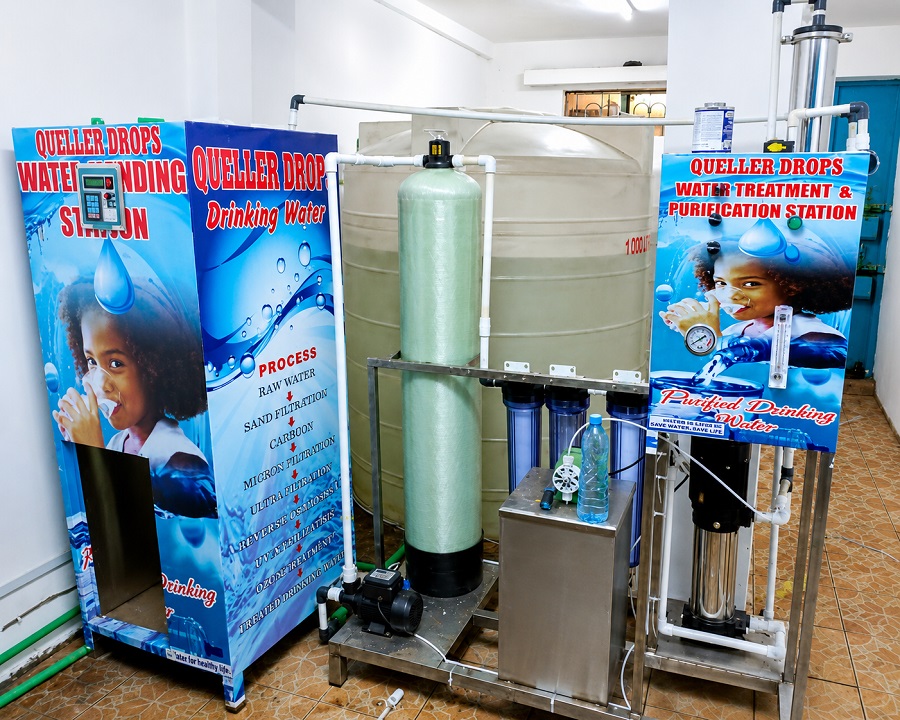
Once equipment is on site, installation should include pressure testing of pipework, correct sequencing of filtration stages, and calibration of any automated dispensing or payment hardware. Commissioning typically includes running the system for several days under normal operating conditions before opening to customers, to confirm consistent output quality and flow rate.
Step 8. Test Water Quality
After commissioning, send a sample of your finished, treated water to an accredited laboratory for verification against KS EAS 153 or the applicable KEBS standard before you begin selling. This step is also part of the KEBS certification process itself, since the Standardisation Mark is only awarded after your product water has been sampled and passed. Keep laboratory reports on file, since you will need to demonstrate ongoing quality monitoring, not just a one-off pass, to retain your certification.
Step 9. Launch Operations
With licensing, equipment and water testing complete, you can open for business. Early operations should focus on building trust with your first customers through consistent quality, fair pricing and reliable opening hours. Simple local marketing, signage, word of mouth and partnerships with nearby shops or supermarkets for revenue-sharing space, tends to work better in this sector than paid advertising.
Step 10. Maintain Equipment and Monitor Performance
Ongoing maintenance is what protects both your KEBS certification and your customers’ trust. Replace sediment and carbon filters on the schedule recommended by your equipment supplier, typically every three to six months depending on source water quality and sales volume, and keep a written maintenance and testing log. Track daily sales volume, electricity costs and filter replacement costs so you can spot declining margins early and adjust pricing or equipment before problems compound.
Water Refill Station Startup Costs in Kenya: A Quick Breakdown
| Cost Item | Typical Range (KES) |
| Manual single-tap refilling unit | 85,000 to 120,000 |
| Multi-tap or automated water ATM | 250,000 to 600,000 |
| KEBS certification | 15,000 to 30,000 |
| NEMA environmental compliance | 10,000 to 20,000 |
| County business permit and health certificate | 5,000 to 15,000 |
| Water quality laboratory testing | Varies by laboratory and parameter count |
These figures are drawn from multiple equipment suppliers and industry guides and should be treated as indicative rather than fixed, since county fees and equipment specifications vary.
Frequently Asked Questions
- What is a water refill station? A water refill station is a facility that purifies water from a borehole, spring or municipal source and dispenses it to customers who bring their own containers, typically 20-litre jerry cans or smaller bottles.
- How much does it cost to start a water refill station business in Kenya? A basic manual station can be set up for roughly KES 100,000 to KES 300,000, while automated or higher-capacity setups often cost KES 500,000 to KES 800,000 or more, once equipment, licensing and premises costs are included.
- Is a water refill station business profitable? Yes, industry sources commonly report gross margins of 40 to 60 percent, though actual profitability depends on location, competition, electricity costs and how consistently the operator maintains equipment.
- What licences are required for a water refill station? You typically need a county Single Business Permit, a Public Health Certificate, a KEBS Standardisation Mark, NEMA environmental compliance, a Water Abstraction Permit if using a borehole or spring, and KRA tax registration.
- What equipment is required to start a water refill station? Core equipment includes sediment and carbon filtration, a reverse osmosis or ultrafiltration system, UV sterilisation or ozonation for final disinfection, storage tanks, and a dispensing unit with one or more taps.
- What is the difference between a Water ATM and a water refill station? A water refilling station is usually attended and dispenses water manually, while a water ATM is a self-service, automated unit, often accepting coins, tokens or mobile money. In practice, many machines sold in Kenya today combine both functions.
- How can I maximise return on investment from a water refill station? Focus on high-footfall locations, keep filter maintenance on schedule to protect water quality and reduce breakdowns, monitor electricity and consumable costs closely, and build repeat custom through consistent quality and fair pricing rather than discounting.
- How often should water treatment equipment be serviced? Most suppliers recommend replacing sediment and carbon filters every three to six months, depending on source water quality and sales volume, with RO membranes typically lasting longer but requiring periodic testing to confirm performance.
 Key Takeaways
- A water refill station purifies and dispenses water into customer-supplied containers, with setup costs ranging roughly from KES 100,000 to KES 800,000 depending on scale.
- Licensing involves county government, KEBS, NEMA, and the Water Resources Authority where a borehole or spring is used.
- KEBS certification requires a dedicated, non-residential production facility meeting Code of Hygiene Standard KS 459 Part 9.
- Reported gross margins commonly range from 40 to 60 percent, though results vary by location and operating discipline.
- Ongoing filter maintenance and water testing are essential for retaining certification and customer trust, not optional extras.
Note: Cost and margin figures cited throughout this article are drawn from multiple independent equipment suppliers and industry guides current as of 2025 and 2026. They are presented as indicative market ranges rather than verified government statistics, since no single official published source for water refilling business margins was identified during research. Readers should confirm current licensing fees directly with KEBS, NEMA, the Water Resources Authority and their county government, as fees are subject to periodic revision.
Invest in the Best Water Refill Station Machines in Kenya Today
Knowing how to start a water refill station business in Kenya as discussed above is not enough. The success of your business depends heavily on the quality of the machines you invest in. This is where many people fail and end up loosing their investment. At Vinsol, we are committed to offering you not only the right equipment but also the highest quality water vending station machines. If you are interested in venturing into this business and need the best water refill station machines in Kenya no need to look further.
We make machines like water ATMs, water refill stations, reverse osmosis water purifiers, bottle rinsers, stainless steel storage tanks, stainless steel transport tanks, stainless steel packaging benches etc. Get in touch with us today to order yours.
How to Contact Vinsol Kenya:
- Call/WhatsApp Us: +254 715 01 45 10
- Email: inquiries@vinsol.co.ke | info@vinsol.co.ke
- Contact Form: Fill out the contact form here.
- Visit Our Branches:
- Ruiru Branch: Next to Total Petrol Station – Kihunguro, Ruiru
- Eldoret Branch: Rehema Complex, opposite Japara Ltd., along Oloo Street, Eldoret.
References
- Kenya Bureau of Standards. “Bottling Water Requirements.” KEBS. Accessed 2 July 2026. https://www.kebs.org/wp-content/uploads/2023/09/Water_Bottling_Requirements.pdf
- Water Services Regulatory Board (WASREB). “Drinking Water Quality and Effluent Monitoring Guideline.” WASREB. Accessed 2 July 2026. https://wasreb.go.ke/wp-content/uploads/2023/08/Drinking-Water-Guidelines-gwqem_Edited.pdf
- Water Services Regulatory Board (WASREB). “Drinking Water Quality Guidelines.” WASREB. Accessed 2 July 2026. https://wasreb.go.ke/drinking-water-quality-guidelines/
- Polucon Group. “Understanding KEBS and NEMA Water Quality Standards in Kenya.” Polucon. Accessed 2 July 2026. https://polucon.com/blog/Understanding-KEBS-and-NEMA-Water-Quality-Standards-in-Kenya
- East African Community. “KENYA STANDARD KS EAS 12:2014, Potable Water — Specification.” EAC. Accessed 2 July 2026. http://www.puntofocal.gob.ar/notific_otros_miembros/ken470_t.pdf
- Kenyans.co.ke. “Licences and Requirements for Starting Water Refill Business in Kenya.” Kenyans.co.ke. Accessed 2 July 2026. https://www.kenyans.co.ke/news/89892-licences-and-requirements-starting-water-refill-business-kenya
- Huduma Global. “How to Start a Water Bottling and Purification Business in Kenya.” Huduma Global Blog. Accessed 2 July 2026. https://hudumaglobal.com/blog/how-to-start-water-bottling-purification-business-kenya