

Description
Chlorine 90% – TCCA Stabilised Pool Chlorine Tablets
Product Data
| Attribute | Verified Information |
| Product Name | Chlorine 90% |
| Chemical Category | Stabilised Sanitiser / Slow-Release Chlorinator |
| Active Ingredient | Trichloroisocyanuric Acid (C₃Cl₃N₃O₃) |
| Chemical Formula | C₃Cl₃N₃O₃ |
| Alternative Names | TCCA; Trichlor; Trichlorocyanuric Acid; Super Chlorine; Stabilised Chlorine; Symclosene |
| Primary Purpose | Continuous, slow-release disinfection and sanitisation of pool water. Acts as both a chlorine donor and a cyanuric acid stabiliser carrier. |
| Typical Usage | Continuous chlorination via floating dispensers, skimmer baskets, or automatic chemical feeders; commercial pools; residential pools; hotels; schools |
Chlorine 90% – TCCA Stabilised Pool Chlorine Tablets
Product Overview
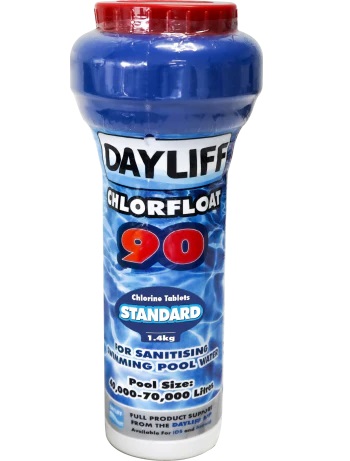 Chlorine 90% is a stabilised, slow-release chlorine sanitiser containing Trichloroisocyanuric Acid (TCCA) with 90% available chlorine. It is the highest concentration solid chlorine product available for pool use, combining primary disinfection with built-in cyanuric acid stabiliser protection.
TCCA is a chlorinated derivative of isocyanuric acid, manufactured by reacting cyanuric acid with chlorine gas. Upon dissolution, it releases hypochlorous acid (HOCl) for disinfection while simultaneously releasing cyanuric acid (CYA), which acts as a UV stabiliser. This dual action makes Chlorine 90% particularly effective for outdoor pools in high-sunlight regions like Kenya.
The product is available in convenient tablet form (200 g standard tablets and 1-inch mini tablets), granules, or powder. Its slow dissolution rate enables continuous, consistent chlorine release, making it ideal for automatic chemical feeders and floating dispensers.
How It Works
Chlorine 90% operates through a controlled-release mechanism. When TCCA tablets are placed in water, they dissolve slowly, releasing both chlorine and cyanuric acid.
The disinfection process involves:
- Hydrolysis – TCCA hydrolyses in water to release hypochlorous acid (HOCl), the primary biocidal agent
- Cell destruction – HOCl penetrates and oxidises bacterial cell walls, viral proteins, and algal membranes
- Stabiliser release – Cyanuric acid is simultaneously released, forming reversible complexes with free chlorine
- UV protection – The chlorine-CYA complex protects free chlorine from photodegradation by UV radiation
- Equilibrium – Bound chlorine remains in equilibrium with free active chlorine, ensuring continuous disinfection
The low dissolution rate of standard tablets (200 g) enables slow, continuous chlorine release over several days, maintaining a steady free chlorine residual without daily manual dosing.
Why It Matters
- Consistent sanitisationis the primary benefit of Chlorine 90%. Unlike daily granular dosing which can result in fluctuating chlorine levels, slow-release tablets maintain a steady free chlorine residual, ensuring continuous protection against pathogens.
- UV protectionis critical for outdoor pools. In tropical and subtropical environments like Kenya, UV radiation can destroy 75–90% of unstabilised chlorine within 2 hours of direct sunlight exposure. The built-in cyanuric acid stabiliser in Chlorine 90% dramatically reduces this degradation, extending chlorine residual by up to 10 times.
- Operational conveniencereduces the burden on pool maintenance staff. With slow-release tablets, daily manual chlorination is eliminated. Tablets typically need replacement only once per week, depending on bather load and environmental conditions.
- Cost efficiencyresults from reduced chlorine consumption. The stabiliser protection means less chlorine is lost to UV degradation, so less product is required to maintain adequate sanitiser levels.
- Swimmer comfortis improved because consistent chlorine levels prevent the formation of chloramines (combined chlorine) which cause eye irritation and the characteristic “chlorine smell.”
Key Benefits
- Very High Available Chlorine (90%)
At 90% available chlorine, Chlorine 90% is the most concentrated solid chlorine product available for pool use. This high concentration means smaller quantities are required for effective sanitisation. - Built-In UV Stabiliser
The cyanuric acid released during dissolution provides automatic UV protection. This is particularly valuable for outdoor pools in Kenya’s high-sunlight climate, where unstabilised chlorine degrades rapidly. - Slow-Release for Continuous Dosing
Standard 200 g tablets dissolve slowly over several days, providing consistent chlorine delivery without daily manual dosing. This reduces handling frequency and labour costs. - Convenient Tablet Form
Tablets are easy to handle, store, and dose. They can be used in floating dispensers, skimmer baskets, or automatic chemical feeders, offering flexibility for different pool configurations. - Long Shelf Life
When stored correctly in cool, dry, sealed containers, Chlorine 90% has a shelf life of 3–5 years, significantly longer than liquid chlorine products. - Suitable for Automatic Feeders
The controlled dissolution rate of TCCA tablets makes them ideal for use with automatic chemical feeders, ensuring precise, consistent chlorination in commercial facilities. - Reduces Handling Frequency
With weekly tablet replacement instead of daily granular dosing, maintenance staff can focus on other pool management tasks, improving operational efficiency.
Problem-Solution Table
| Problem | Likely Cause | How Chlorine 90% Helps | Expected Outcome |
| Rapid chlorine loss in sunlight | UV degradation of unstabilised chlorine | Built-in cyanuric acid stabiliser protects chlorine | Extended chlorine residual; reduced consumption |
| Inconsistent chlorine levels | Irregular manual dosing | Slow-release tablets provide steady chlorine delivery | Stable free chlorine 1.0–3.0 mg/L |
| Frequent chlorine handling | Daily dosing requirements | Weekly tablet replacement reduces handling | Lower labour costs; simplified maintenance |
| Algae growth | Chlorine level fluctuations | Consistent chlorine residual prevents algae establishment | Algae-free pool water |
| Bacterial contamination | Inadequate sanitiser residual | Continuous disinfection eliminates pathogens | Safe swimming water |
| High chlorine consumption | UV degradation and variable demand | Stabilised chlorine reduces overall consumption | Lower chemical costs |
Dosage & Application Guidance
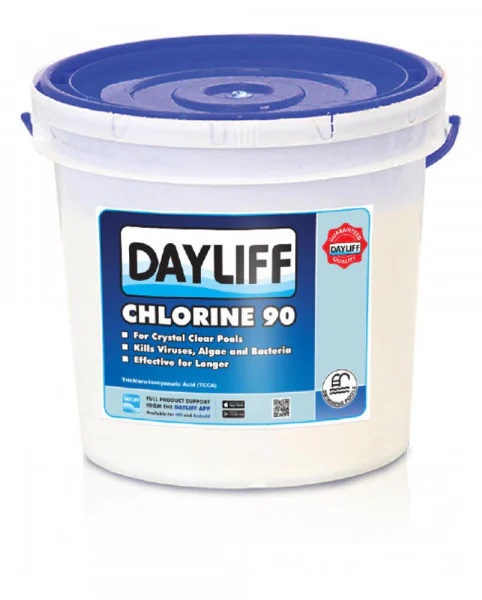 Dosage requirements vary depending on manufacturer specifications, pool volume, contaminant load, water chemistry, bather load, environmental conditions, and treatment objectives. Always follow product label instructions and professional water test results.
Based on the reference guide, typical guidance includes:
- Continuous dosing via floater or feeder: 1 tablet per 25,000–50,000 litres per week (varies with bather load and sunlight)
- Target free chlorine: 1.0–3.0 mg/L
- Cyanuric acid monitoring: Levels should be monitored; drain and dilute pool water if CYA exceeds 50–80 mg/L
Important: Because Chlorine 90% contains cyanuric acid, additional stabiliser dosing may not be required. Monitor CYA levels regularly to prevent over-stabilisation.
Water Balance Reference Table
The values below represent general swimming pool industry guidance and are not specifications of the product described on this page. Actual operating targets may vary depending on local regulations, pool type, water source, equipment design, and operating objectives.
| Parameter | Recommended Range | Notes |
| Free Chlorine | 1.0–3.0 mg/L | Maintained by slow-release tablets |
| Combined Chlorine | < 0.5 mg/L | Consistent chlorination prevents chloramine formation |
| pH | 7.2–7.6 | TCCA is acidic (~pH 2.8) – monitor pH regularly |
| Total Alkalinity | 80–120 mg/L | Provides pH buffering against acidic TCCA |
| Cyanuric Acid | 30–50 mg/L (outdoor) | Do not exceed 80 mg/L to avoid chlorine lock |
| Calcium Hardness | 200–400 mg/L | TCCA does not add calcium |
Step-by-Step Application Guide
Before Treatment:
- Test pool water for free chlorine, combined chlorine, pH, total alkalinity, and cyanuric acid
- Ensure pH is within 7.2–7.6 range (TCCA is acidic and will lower pH over time)
- Calculate number of tablets required based on pool volume and bather load
- Gather required PPE: chemical-resistant gloves, safety goggles
During Treatment (Floating Dispenser):
- Place the required number of tablets in the floating dispenser
- Adjust the dispenser’s vent openings to control dissolution rate
- Float the dispenser in the pool, ensuring it is not obstructed
- Check free chlorine twice weekly with a test kit
During Treatment (Skimmer Basket):
- Place tablets in the skimmer basket (ensure water flow is adequate)
- Monitor chlorine levels closely – skimmer dosing can result in higher localised concentrations
- Not recommended for pools with vinyl liners or delicate surfaces
During Treatment (Automatic Feeder):
- Load tablets into the feeder according to manufacturer instructions
- Set the feeder to deliver the desired chlorine output
- Monitor free chlorine levels and adjust feeder settings as needed
After Treatment:
- Retest free chlorine and adjust tablet quantity or feeder settings
- Monitor pH regularly – TCCA is acidic and may require pH adjustment
- Test CYA levels monthly – if CYA exceeds 80 mg/L, dilute pool water with fresh water
Usage Guide for Kenya & East Africa Region
- High UV Exposure
Kenya’s tropical location means intense UV radiation year-round. The built-in cyanuric acid stabiliser in Chlorine 90% is particularly valuable in this climate, protecting chlorine from rapid UV degradation. For outdoor pools, this product is often the preferred choice over unstabilised chlorine. - Rainy Seasons
During Kenya’s rainy seasons, heavy rainfall can dilute pool water and introduce organic contaminants. While Chlorine 90% provides consistent chlorination, increased rainfall may require additional shock treatment using an unstabilised chlorine product like Calcium Hypochlorite. - Dust and Organic Contamination
Wind-blown dust and organic debris increase chlorine demand. The slow-release nature of Chlorine 90% helps maintain a baseline chlorine residual, but heavy contamination may require supplemental chlorination. - Hotel and Lodge Pools
East Africa’s tourism industry relies on hotel and safari lodge pools. Chlorine 90% is widely used in these settings due to its convenience and consistent performance. The reduced handling frequency is particularly valuable for remote lodges with limited maintenance staff.
Commercial Applications
- Hotels, Resorts & Safari Lodges
Chlorine 90% provides reliable, consistent disinfection for high-turnover pools. The slow-release tablets reduce labour costs and ensure guests always swim in properly sanitised water. - Schools & Universities
Educational facilities benefit from the reduced handling requirements and consistent chlorine levels. Automatic feeders with TCCA tablets are common in school pool installations. - Competition Pools & Public Pools
Municipal pools require consistent water quality to meet regulatory standards. Chlorine 90% tablets in automatic feeders provide the reliable chlorination these facilities demand. - Waterparks
Waterparks with large water volumes and high bather loads benefit from the high concentration (90%) and consistent delivery of TCCA tablets. - Apartment Complex Pools
Multi-unit residential complexes appreciate the low-maintenance nature of Chlorine 90%. Weekly tablet replacement is significantly simpler than daily granular dosing.
Residential Applications
- Private Pools
Homeowners value the convenience of Chlorine 90% tablets. With a floating dispenser, pool owners can maintain proper chlorination without daily handling of chemicals. - Holiday Homes
Properties that are occupied intermittently benefit from the long-lasting protection of slow-release tablets. A single tablet can provide chlorination for a week or more.
Safety & Handling
Storage Conditions
- Store in a cool, dry, well-ventilated area away from moisture and direct sunlight
- Keep away from all other pool chemicals, especially Calcium Hypochlorite (Cal Hypo)
- Store in original sealed container below 30°C
- Shelf life: 3–5 years when stored correctly
Personal Protective Equipment (PPE)
- Chemical-resistant gloves
- Safety goggles or face shield
- Dust/mist respirator
- Protective clothing
Critical Mixing Precautions
- DO NOT mix with Calcium Hypochlorite (Cal Hypo 65%) – causes violent exothermic reaction, fire, or explosion
- DO NOT mix with Sodium Hypochlorite
- DO NOT mix with acids, ammonia compounds, or flammable materials
- DO NOT mix with other oxidising agents
Spill Response
- Isolate area and ensure adequate ventilation
- Use appropriate PPE
- Sweep up dry product (do not use water on large spills)
- Place in sealed container for disposal
First Aid
- Inhalation: Move to fresh air; seek medical attention if breathing difficulties occur
- Skin contact: Remove contaminated clothing; wash with plenty of water for at least 15 minutes
- Eye contact: Rinse with water for at least 15 minutes; seek medical attention
- Ingestion: Do NOT induce vomiting; rinse mouth; seek immediate medical attention
Important Safety Disclaimer
The safety information contained here is provided for general reference purposes only. Always refer to the official Safety Data Sheet (SDS) and Technical Data Sheet (TDS) provided by the product manufacturer before handling any chemical. Local health, safety, and environmental regulations must be observed at all times. The dosage guidance provided is indicative only — always test pool water and adjust dosages based on actual test results.
Product Comparison
| Feature | Chlorine 90% (TCCA / Trichlor) | Chlorine 65% (Cal Hypo) |
| Active Ingredient | Trichloroisocyanuric Acid (C₃Cl₃N₃O₃) | Calcium Hypochlorite (Ca(OCl)₂) |
| Available Chlorine | 90% | 65% |
| Stabiliser Content | Contains cyanuric acid (stabiliser) | None – unstabilised |
| Primary Purpose | Continuous slow-release disinfection | Sanitisation and shock treatment |
| Effect on pH | Acidic (~2.8) – lowers pH over time | Alkaline (~10.8) – raises pH |
| Effect on Calcium Hardness | Does not add calcium | Raises calcium hardness |
| Mixing Compatibility | DO NOT mix with Cal Hypo | DO NOT mix with Trichlor |
Cross-Selling Recommendations
- pH Plus (Sodium Carbonate)
Because Chlorine 90% is acidic (pH ~2.8), it will lower pool pH over time. pH Plus raises pH back into the optimal 7.2–7.6 range. - pH Plus Super (Sodium Bicarbonate)
Regular use of acidic TCCA can deplete total alkalinity. pH Plus Super restores alkalinity, providing pH buffering stability. - Algaecide
While Chlorine 90% prevents algae, an algaecide provides additional protection, particularly during Kenya’s warm, rainy seasons. - Shock Chlorinator (Chlorine 65%)
For breakpoint chlorination or treating heavy contamination, an unstabilised shock product like Chlorine 65% is recommended. Note: Do not mix these products in the same container or feeder. - Stabiliser (Cyanuric Acid)
Chlorine 90% already contains cyanuric acid. Additional stabiliser is not required and may lead to over-stabilisation. Monitor CYA levels regularly.
FAQs- Chlorine 90%
- What is Chlorine 90% used for in swimming pools?
Chlorine 90% is a stabilised, slow-release chlorine sanitiser containing Trichloroisocyanuric Acid (TCCA) used for continuous pool disinfection. - How does Chlorine 90% differ from Chlorine 65%?
Chlorine 90% (TCCA) contains built-in cyanuric acid stabiliser and is acidic, while Chlorine 65% (Cal Hypo) is unstabilised and alkaline. Never mix them. - How many Chlorine 90% tablets should I use?
Typically 1 tablet per 25,000–50,000 litres per week. Dosage varies with bather load, sunlight, and water temperature. Always test water and follow label instructions. - Does Chlorine 90% raise cyanuric acid levels?
Chlorine 90% releases cyanuric acid as it dissolves. Monitor CYA levels regularly and dilute if levels exceed 80 mg/L to avoid chlorine lock. - Can I use Chlorine 90% in indoor pools?
Yes, but because indoor pools do not require UV stabilisation, the cyanuric acid will accumulate over time. Monitor CYA levels and consider using unstabilised chlorine for indoor pools. - Why is it dangerous to mix Chlorine 90% with Calcium Hypochlorite?
Mixing TCCA with Cal Hypo causes a violent exothermic reaction that can result in fire, explosion, and toxic gas release. Never mix these products. - How should I store Chlorine 90% tablets?
Store in a cool, dry, well-ventilated area below 30°C, away from moisture, sunlight, and all other pool chemicals, especially Cal Hypo.
Summary / Conclusion
Chlorine 90% is a stabilised, slow-release chlorine sanitiser containing Trichloroisocyanuric Acid (TCCA) with 90% available chlorine. It provides continuous disinfection while releasing cyanuric acid to protect chlorine from UV degradation. Ideal for outdoor pools in Kenya’s high-sunlight climate, it is available in convenient tablet form for use in floating dispensers, skimmer baskets, or automatic feeders. Monitor cyanuric acid levels regularly and never mix with Calcium Hypochlorite. Suitable for both commercial and residential pools.
Need Chlorine 90% for your pool or facility?
Vinsol Kenya is your trusted supplier of swimming pool chemicals and water treatment solutions across Kenya and East Africa. Whether you manage a hotel pool, school facility, waterpark, or residential pool, we have the products and technical expertise to keep your water crystal clear and safe.
Contact us today for bulk orders, commercial supply contracts, or expert technical advice.
- 📞 Call/WhatsApp: +254 715 01 45 10
- 📧 Email: inquiries@vinsol.co.ke | info@vinsol.co.ke
- 📍 Ruiru Branch: Next to Total Petrol Station – Kihunguro, Ruiru
- 📍 Eldoret Branch: Rehema Complex, opposite Japara Ltd., along Oloo Street, Eldoret
- 🕐 Working Hours: Mon – Sat 8:30AM – 5PM
References:
- Publisher Source: World Health Organization (WHO)
Article Title: Guidelines for Safe Recreational Water Environments, Vol. 2: Swimming Pools and Similar Environments
URL: https://www.who.int/publications/i/item/9241546808
Access Date: August 3, 2026 - Publisher Source: Centers for Disease Control and Prevention (CDC)
Article Title: Healthy Swimming: Pool Chemical Safety
URL: https://www.cdc.gov/healthywater/swimming/
Access Date: August 3, 2026 - Publisher Source: NSF International
Article Title: NSF/ANSI Standard 50: Equipment for Swimming Pools, Spas, Hot Tubs and Other Recreational Water Facilities
URL: https://blog.ansi.org/ansi/nsf-ansi-50-2025-equipment-swimming-pools/
Access Date: August 3, 2026 - Publisher Source: Pool Water Treatment Advisory Group (PWTAG)
Article Title: Swimming Pool Water: Treatment and Quality Standards for Pools and Spas
URL: https://www.pwtag.org/standards/
Access Date: August 3, 2026 - Publisher Source: American Chemical Society (ACS)
Article Title: The Chemistry of Swimming Pool Maintenance
URL: https://pubs.acs.org/doi/10.1021/ed084p1124
Access Date: August 3, 2026 - Publisher Source: PubChem (National Library of Medicine)
Article Title: Trichloroisocyanuric Acid – Compound Summary
URL: https://pubchem.ncbi.nlm.nih.gov/compound/Trichloroisocyanuric-acid
Access Date: August 3, 2026 - Publisher Source: International Organisation for Standardisation (ISO)
Article Title: ISO 15714: Method of Evaluating the UV Dose to Airborne Microorganisms
URL: https://www.iso.org/obp/ui/#iso:std:iso:15714:ed-1:v1:en:fig:1
Access Date: August 3, 2026


Reviews
There are no reviews yet.