

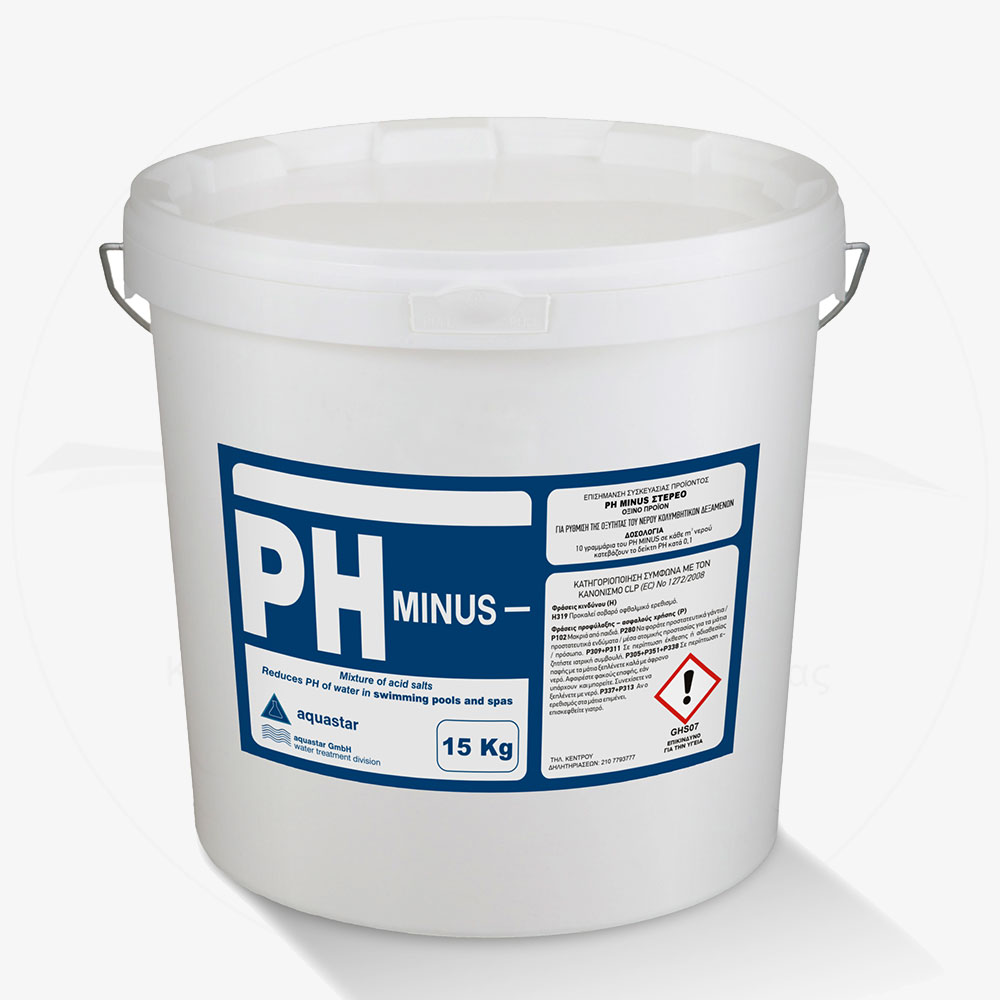
Description
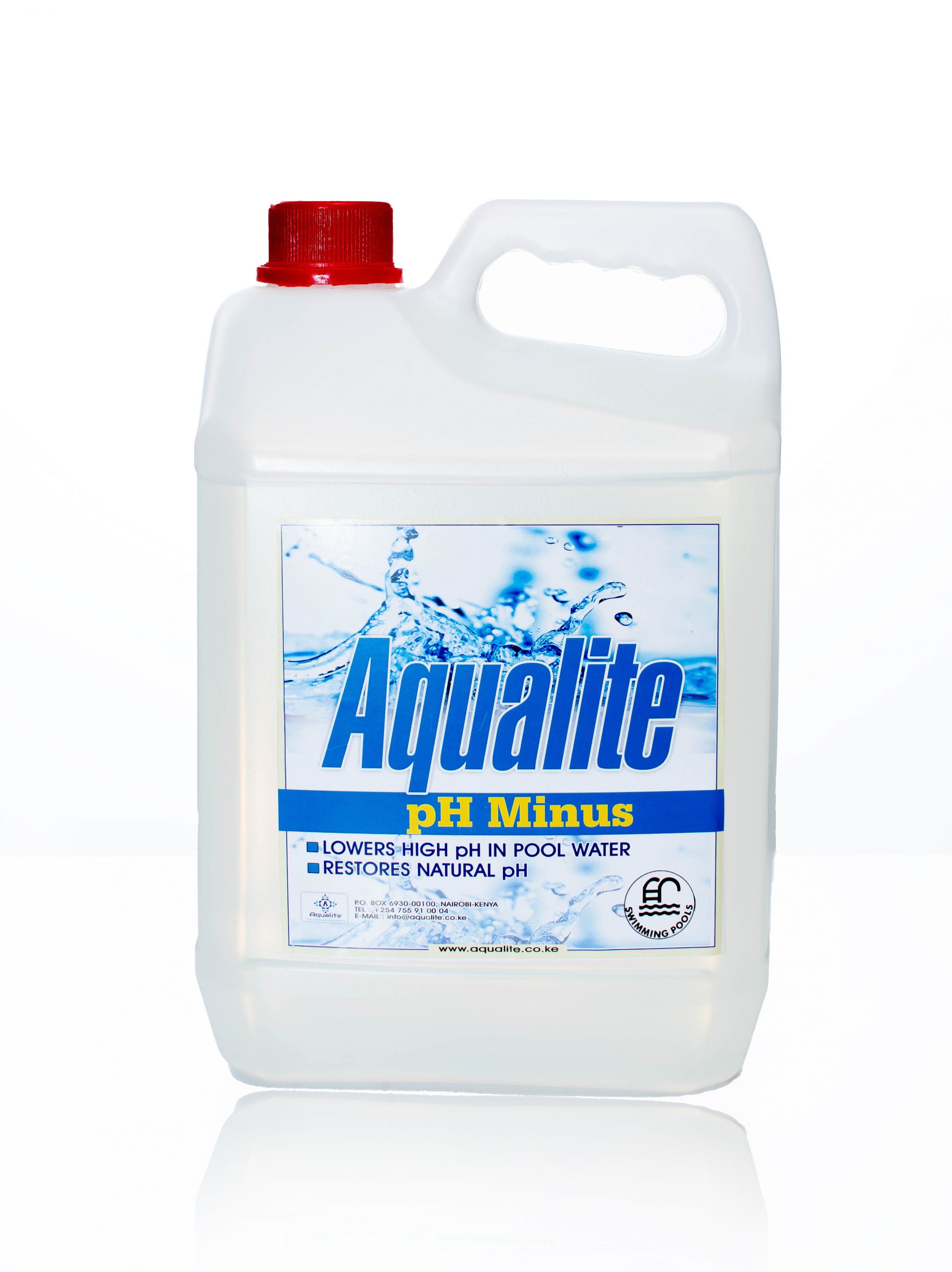
pH Minus– Pool pH Reducer & Adjuster
Product Data
| Attribute | Verified Information |
| Product Name | pH Minus |
| Chemical Category | pH Reducer / pH Adjuster |
| Active Ingredient | Sodium Bisulphate (NaHSO₄) — granular form; OR Hydrochloric Acid (HCl) — liquid form |
| Chemical Formula | NaHSO₄ (sodium bisulphate); HCl (hydrochloric acid) |
| Alternative Names | Dry Acid; pH Reducer; pH Lowerer; pH Down; pH Decreaser; Sodium Hydrogen Sulphate; Muriatic Acid (HCl liquid form) |
| Primary Purpose | Reduces pool water pH from high (alkaline) readings to the recommended range of 7.2–7.6. |
| Typical Usage | All pool and spa types; fountains; cooling towers |
pH Minus – Pool pH Reducer & Adjuster
Product Overview
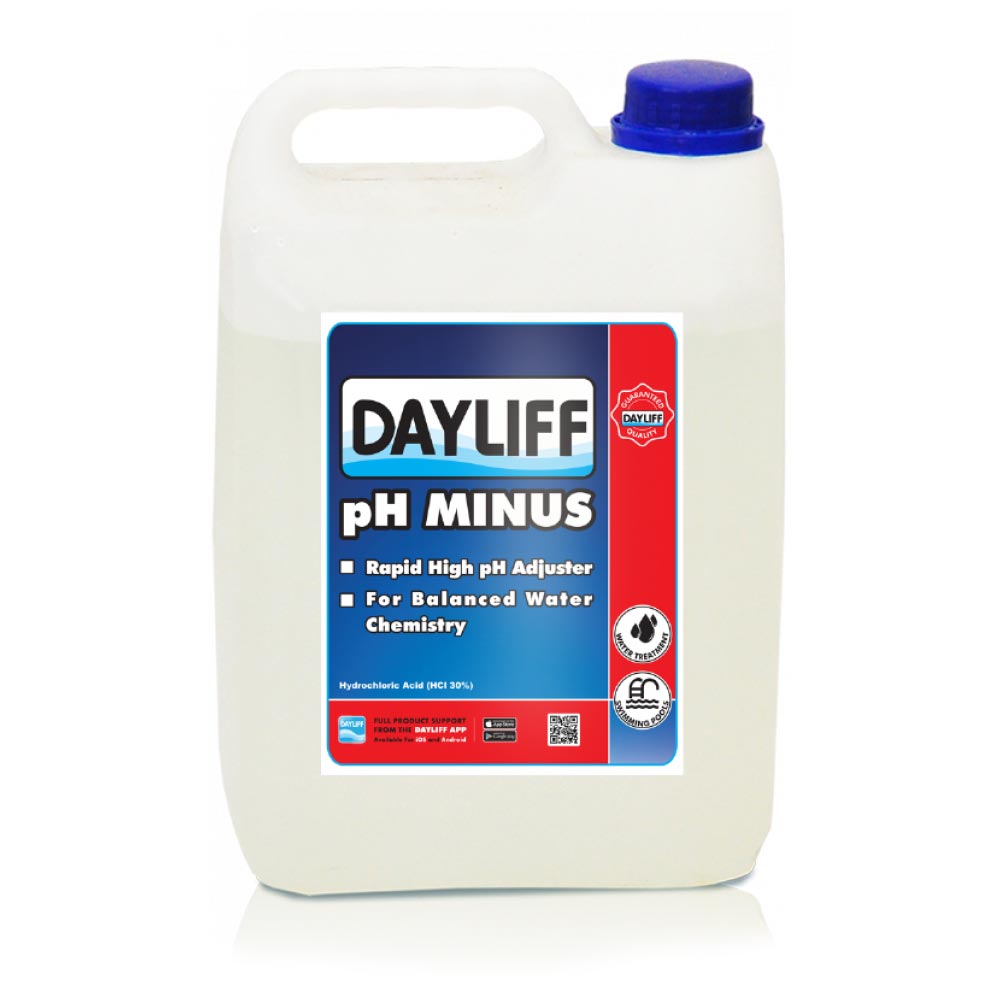 pH Minus is a pH reducer used to lower high (alkaline) pH readings in pool water to the recommended range of 7.2–7.6. The product is available in two distinct formulations: granular Sodium Bisulphate (NaHSO₄) — also known as dry acid — and liquid Hydrochloric Acid (HCl), also called muriatic acid.
Sodium Bisulphate (NaHSO₄) is an acidic salt produced as a by-product of nitric acid and hydrochloric acid production. In water, it ionises to Na⁺, H⁺, and SO₄²⁻, with the hydrogen ion reducing pool water pH. As a solid dry acid, it is easier and safer to handle and transport than liquid mineral acids, making it the preferred pH reducer for residential and small commercial pools.
Hydrochloric Acid (HCl) is a mineral acid that directly contributes hydronium ions (H₃O⁺) to lower pH. It acts faster than granular dry acid but presents greater handling hazards, requiring acid-resistant PPE and careful storage.
The reference guide specifies that pH reduction is achieved by introducing hydrogen ions (H⁺) that react with carbonate and bicarbonate buffering species, reducing pH. Neither product introduces calcium, so they do not contribute to calcium hardness.
Important Note: Two distinct formulations exist. Confirm with your specific supplier which formulation is being supplied. A separate product ‘pH Minus Super’ (Granular Sodium Bisulphate) is listed as the dry acid form.
How It Works
pH Minus works by introducing hydrogen ions into pool water, which react with the carbonate-bicarbonate buffer system to reduce pH.
The pH reduction process for Sodium Bisulphate (granular):
- Dissolution – NaHSO₄ dissolves in water, releasing sodium (Na⁺), hydrogen (H⁺), and sulphate (SO₄²⁻) ions
- Acid-base reaction – Hydrogen ions react with bicarbonate (HCO₃⁻) to form carbonic acid (H₂CO₃)
- pH reduction – The increase in hydrogen ion concentration lowers pH
- Sulphate addition – Sulphate ions (SO₄²⁻) accumulate over time
The pH reduction process for Hydrochloric Acid (liquid):
- Dissociation – HCl dissociates completely in water to H⁺ and Cl⁻ ions
- Direct acidification – Hydrogen ions directly lower pH
- Chloride addition – Chloride ions (Cl⁻) are introduced, which can contribute to corrosivity at high concentrations
- Faster action – Liquid acid acts more rapidly than granular dry acid
Both formulations achieve the same result — lowering pH — but through slightly different mechanisms and with different handling considerations.
Why It Matters
- Chlorine efficacy depends on pH. When pH rises above 7.6, chlorine becomes less effective as a disinfectant. The equilibrium shifts from hypochlorous acid (HOCl), the primary biocidal species, to hypochlorite ion (OCl⁻), which is a weaker disinfectant. pH Minus restores optimal pH for chlorine performance.
- Scale prevention is essential for pool longevity. High pH water promotes calcium carbonate scale formation on pool surfaces, tiles, heat exchangers, and equipment. pH Minus prevents scale accumulation by maintaining pH within the recommended range.
- Swimmer comfort is affected by high pH. Alkaline water causes eye irritation, dry skin, and an unpleasant feeling. Maintaining pH at 7.2–7.6 ensures swimmer comfort.
- Equipment protection prevents scale formation that can damage heaters, pumps, filters, and heat exchangers. Scale acts as an insulator, reducing heat transfer efficiency and increasing energy costs.
- Water clarity is improved when pH is balanced. High pH can cause cloudy water due to calcium carbonate precipitation. pH Minus helps maintain crystal-clear water.
Key Benefits 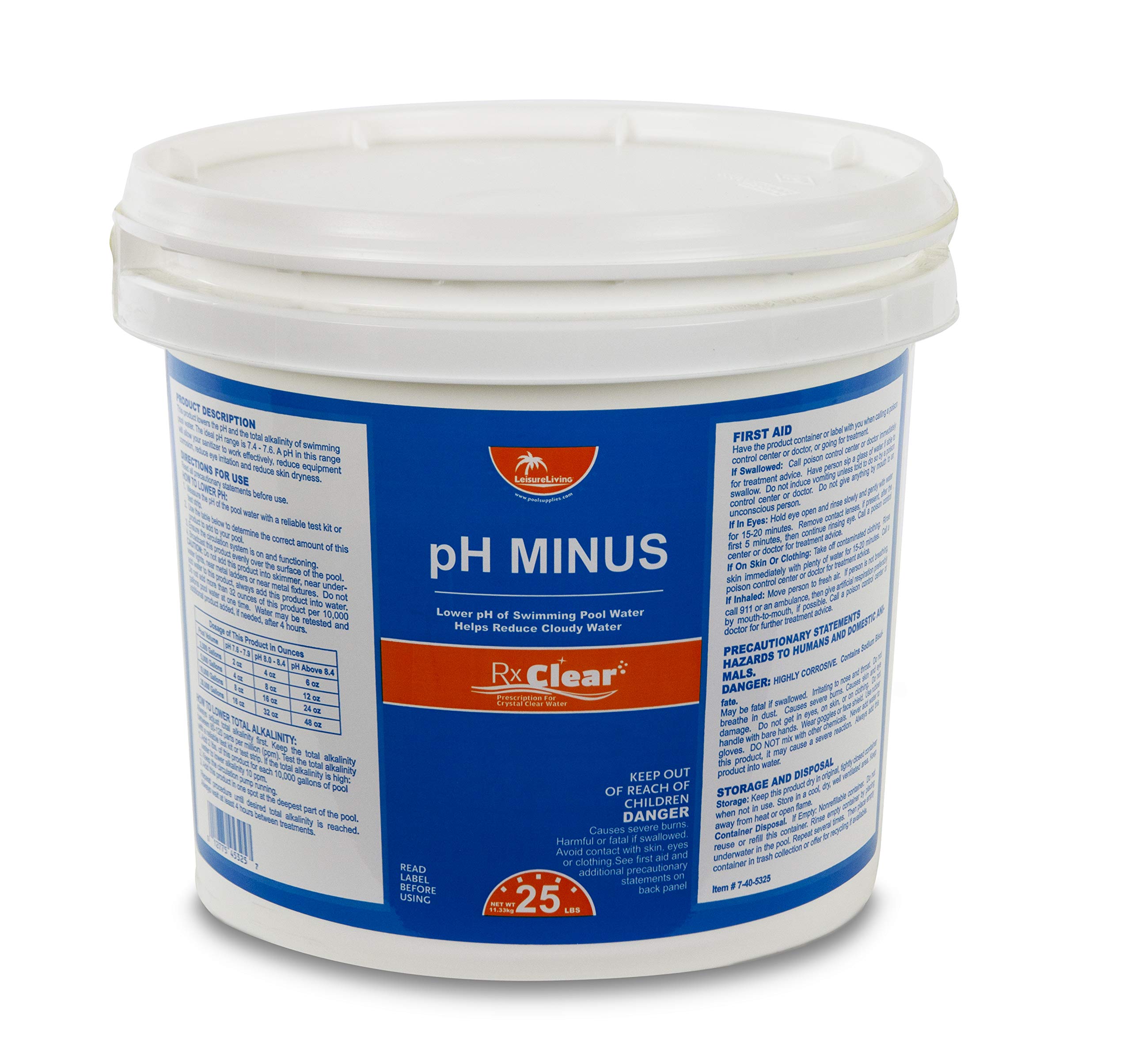
- Effective pH Reduction
pH Minus reliably lowers high pH readings back into the recommended range of 7.2–7.6. - Prevents Scale Formation
By maintaining proper pH, pH Minus prevents calcium carbonate scale from forming on pool surfaces and equipment. - Restores Chlorine Efficacy
Lowering pH into the optimal range ensures chlorine remains effective as a disinfectant. - Improves Swimmer Comfort
Balanced pH eliminates the eye and skin irritation associated with alkaline water. - Granular Form is Safer to Handle
Sodium Bisulphate (dry acid) is safer to handle than liquid hydrochloric acid, with no dangerous fumes at normal handling. - Accurate Dry Dosing
Granular pH Minus allows for accurate, measured dosing without the need for measuring liquids.
Problem-Solution Table
| Problem | Likely Cause | How pH Minus Helps | Expected Outcome |
| High pH (above 7.6) | Use of alkaline chlorine products or high alkalinity | Lowers pH to 7.2–7.6 | Balanced water chemistry |
| Scale formation on surfaces | High pH causing calcium carbonate precipitation | Prevents scale by maintaining proper pH | Scale-free surfaces |
| Reduced chlorine efficacy | pH above 7.6 reduces HOCl availability | Restores optimal pH for chlorine effectiveness | Effective sanitisation |
| Cloudy water | High pH causing calcium precipitation | pH correction prevents precipitation | Clear water |
| Swimmer eye irritation | Alkaline water conditions | Corrects pH to comfortable range | Swimmer comfort restored |
Dosage & Application Guidance
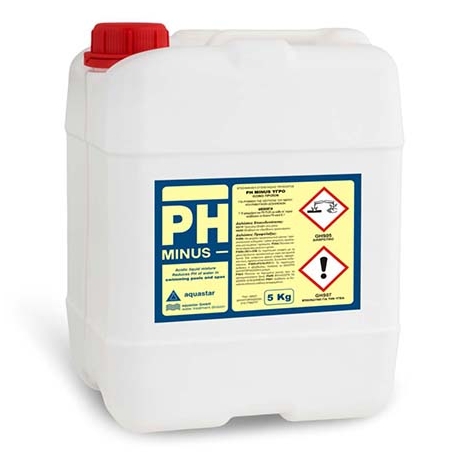 Dosage requirements vary depending on manufacturer specifications, pool volume, contaminant load, water chemistry, bather load, environmental conditions, and treatment objectives. Always follow product label instructions and professional water test results.
Based on the reference guide, typical guidance includes:
Granular (Sodium Bisulphate):
- General guidance: 150–200 g per 10,000 litres to lower pH by approximately 0.2 units
- Method: Pre-dissolve in water and broadcast around pool perimeter with pump running
- Target pH: 7.2–7.6
- Retest: After 4 hours
Liquid (Hydrochloric Acid):
- General guidance: Approximately 100 mL of 33% acid per 10,000 litres per 0.1 pH unit reduction (highly variable — test and adjust)
- Method: Add acid to water, never water to acid. Add slowly to deep end with pump running.
Important: Dose incrementally. Never add acid directly to pool in concentrated form near surfaces (risk of surface etching). Granular dry acid is safer to handle than liquid hydrochloric acid.
Water Balance Reference Table
The values below represent general swimming pool industry guidance and are not specifications of the product described on this page. Actual operating targets may vary depending on local regulations, pool type, water source, equipment design, and operating objectives.
| Parameter | Recommended Range | Notes |
| pH | 7.2–7.6 | Correct high pH with pH Minus |
| Total Alkalinity | 80–120 mg/L | pH Minus will lower alkalinity over time |
| Free Chlorine | 1.0–3.0 mg/L | Optimal chlorine efficacy at pH 7.2–7.6 |
| Calcium Hardness | 200–400 mg/L | pH Minus does not add calcium |
Step-by-Step Application Guide
Before Treatment: 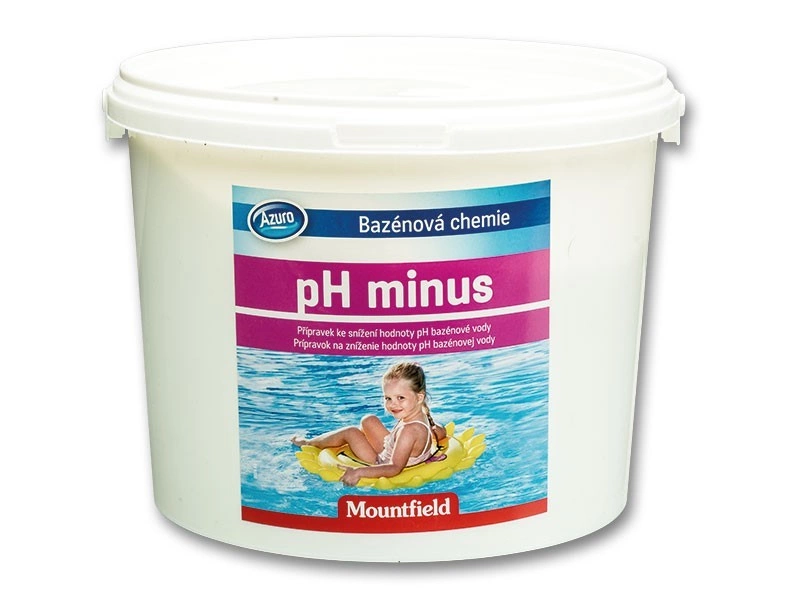
- Test pool water for pH and total alkalinity
- Confirm pH is above 7.6 before adding pH Minus
- Calculate required dosage based on pool volume and current pH
- Ensure total alkalinity is adequate (80–120 mg/L) for buffering
- Gather required PPE: chemical-resistant (acid-resistant) gloves, safety goggles, protective clothing
During Treatment (Granular Sodium Bisulphate):
- Fill a clean plastic bucket with pool water (not fresh water)
- Add the measured pH Minus granules to the bucket water
- Stir gently until the granules are fully dissolved
- With the pool pump running, broadcast the solution evenly around the pool perimeter
- Allow the pump to run for at least 4 hours for proper circulation
During Treatment (Liquid Hydrochloric Acid):
- Measure the required volume of hydrochloric acid
- IMPORTANT: Add acid to water, never water to acid
- With the pool pump running, slowly pour the acid into the deep end of the pool
- Avoid splashing and do not pour near pool surfaces
- Allow the pump to run for at least 4 hours for proper circulation
After Treatment:
- Retest pH after 4 hours
- If pH is still above 7.6, repeat the dosing process
- If pH drops below 7.2, use pH Plus to raise pH
- Retest total alkalinity — may require adjustment with pH Plus Super
Troubleshooting:
- pH not decreasing sufficiently: Check alkalinity — high alkalinity resists pH change; may require larger dose or alkalinity adjustment
- pH overshot target: Use pH Plus to raise pH back into range
- Surface etching: Avoid pouring concentrated acid near pool surfaces; always dilute before adding
- Sulphate accumulation: Monitor sulphate levels with long-term sodium bisulphate use
Usage Guide for Kenya & East Africa Region
- Use of Alkaline Chlorine Products
Chlorine 65% (Calcium Hypochlorite) is alkaline (~pH 10.8) and will raise pH over time. Pools using Cal Hypo require regular pH monitoring and pH Minus to maintain balance. - High Alkalinity Source Water
Some water sources in Kenya have high natural alkalinity, making pH difficult to reduce. Regular pH Minus dosing may be required. - Coastal Pools
Coastal areas experience salt spray and high humidity. Liquid hydrochloric acid may accelerate corrosion in coastal environments — granular sodium bisulphate is preferred. - Hotel and Lodge Pools
Commercial facilities must maintain pH within 7.2–7.6 for regulatory compliance. pH Minus is an essential chemical for these operations. - Granular vs Liquid Selection
For residential pools and smaller commercial facilities, granular sodium bisulphate is preferred due to safer handling. For large commercial pools with trained staff, liquid hydrochloric acid offers faster action.
Commercial Applications
- Hotels, Resorts & Safari Lodges
Commercial pools require regular pH adjustment. pH Minus is essential for counteracting the pH rise from alkaline chlorine products. - Schools & Universities
Educational facilities must maintain water balance for health and safety compliance. Regular pH testing and adjustment is essential. - Competition Pools & Public Pools
Municipal pools operate under strict regulatory oversight. pH must be maintained within 7.2–7.6 at all times. - Waterparks
Large water volumes and high bather loads create significant pH challenges. pH Minus provides reliable pH correction.
Residential Applications
- Private Pools
Homeowners can use granular pH Minus for safe, effective pH reduction. The dry acid form is straightforward to handle. - Holiday Homes
Properties with intermittent occupancy may experience pH rise. pH Minus corrects these issues quickly. - Apartment Complex Pools
Multi-unit residential complexes benefit from the cost-effectiveness and ease of use of granular pH Minus.
Safety & Handling
Storage Conditions
- Store in a cool, dry, well-ventilated location away from alkalis and oxidisers
- Keep sealed to prevent moisture absorption (granular form is hygroscopic)
- Liquid HCl requires acid-resistant storage and must be stored away from metals and alkalis
- Shelf life: Granular 2–3 years sealed; Liquid HCl indefinite when sealed
Personal Protective Equipment (PPE)
- Chemical-resistant (acid-resistant) gloves
- Face shield or safety goggles
- Protective clothing
- Respiratory protection for liquid HCl vapours
Mixing Precautions
- DO NOT mix with Calcium Hypochlorite — severe reaction, chlorine gas release
- DO NOT mix with other oxidising agents, alkalis, or bleach
- DO NOT mix concentrated acid with other chemicals
- Add acid to water, never water to acid
Spill Response
- Neutralise with sodium bicarbonate or soda ash
- Rinse with plenty of water
- Ensure adequate ventilation
- Use appropriate PPE
First Aid
- Inhalation: Move to fresh air; seek medical attention if breathing difficulties occur
- Skin contact: Remove contaminated clothing; wash with plenty of water for at least 15 minutes
- Eye contact: Rinse with water for at least 15 minutes; seek medical attention
- Ingestion: Do NOT induce vomiting; rinse mouth; seek immediate medical attention
Important Safety Disclaimer 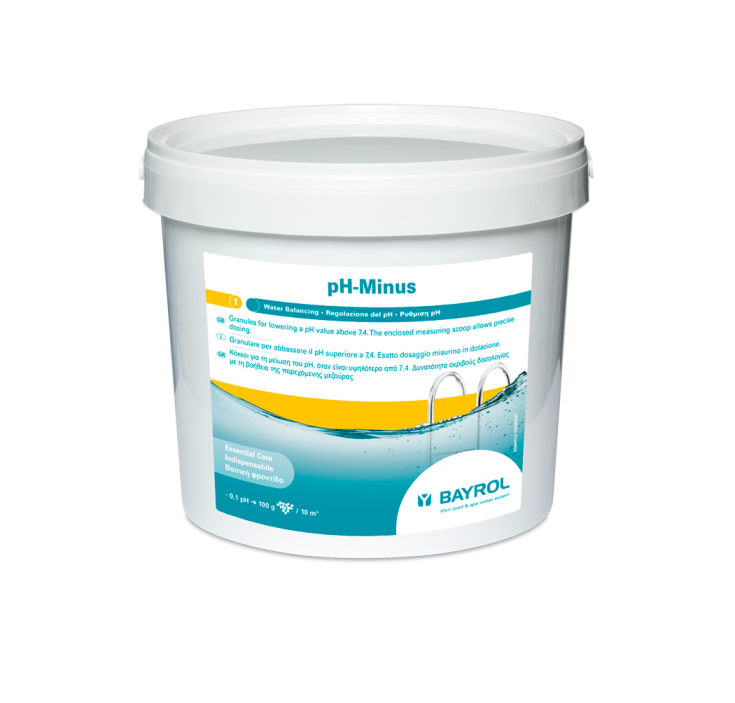
The safety information contained here is provided for general reference purposes only. Always refer to the official Safety Data Sheet (SDS) and Technical Data Sheet (TDS) provided by the product manufacturer before handling any chemical. Local health, safety, and environmental regulations must be observed at all times. The dosage guidance provided is indicative only — always test pool water and adjust dosages based on actual test results.
Product Comparison
| Feature | pH Minus (Granular) | pH Minus (Liquid) |
| Chemical Name | Sodium Bisulphate (NaHSO₄) | Hydrochloric Acid (HCl) |
| Form | Granular solid | Liquid |
| Handling Safety | Safer — no dangerous fumes at normal handling | More hazardous — corrosive fumes |
| Action Speed | Slower | Faster |
| Ions Added | Sulphate (SO₄²⁻) | Chloride (Cl⁻) |
| Best Application | Residential and small commercial | Large commercial with trained staff |
Cross-Selling Recommendations
- pH Plus (Sodium Carbonate)
For when pH drops too low after pH Minus dosing. pH Plus raises pH back into range. - pH Plus Super (Sodium Bicarbonate)
pH Minus can lower total alkalinity over time. pH Plus Super restores alkalinity buffering. - Chlorine Test Kit
Comprehensive water testing is essential. A reliable test kit measures pH, free chlorine, and total alkalinity. - Chlorine 65% (Calcium Hypochlorite)
Cal Hypo is alkaline and raises pH. pH Minus is essential for counteracting pH rise when using Cal Hypo. - Stabiliser
For outdoor pools, cyanuric acid protects chlorine from UV degradation, reducing pH fluctuations.
FAQs- pH Minus
- What is pH Minus used for in swimming pools?
pH Minus is used to lower high pH readings in pool water to the recommended range of 7.2–7.6. - What is the difference between granular and liquid pH Minus?
Granular pH Minus (Sodium Bisulphate) is safer to handle. Liquid pH Minus (Hydrochloric Acid) acts faster but is more hazardous. - How much pH Minus should I add to my pool?
Granular: 150–200 g per 10,000 litres to lower pH by ~0.2 units. Liquid: ~100 mL of 33% acid per 10,000 litres per 0.1 pH unit reduction. Always test and follow label instructions. - Can I mix pH Minus with other pool chemicals?
Never mix pH Minus with calcium hypochlorite, other oxidising agents, alkalis, or bleach — severe reactions and chlorine gas release can occur. - Is granular pH Minus safer than liquid acid?
Granular sodium bisulphate is safer to handle than liquid hydrochloric acid, with no dangerous fumes at normal handling. - Does pH Minus affect alkalinity?
pH Minus will lower total alkalinity over time. Monitor alkalinity and adjust with pH Plus Super as needed. - What happens if I add too much pH Minus?
pH will drop below 7.2. Use pH Plus (Sodium Carbonate) to raise pH back into range.
Summary / Conclusion
pH Minus is a pH reducer used to lower high pH readings in pool water to the recommended range of 7.2–7.6. Available in two formulations: granular Sodium Bisulphate (dry acid) — safer to handle — and liquid Hydrochloric Acid (muriatic acid) — faster acting but more hazardous. Both formulations work by introducing hydrogen ions that react with the carbonate-bicarbonate buffer system. pH correction is essential for chlorine efficacy, scale prevention, swimmer comfort, and equipment protection. Pre-dissolve granular form before adding; never add concentrated acid near pool surfaces. Suitable for all pool types.
Need pH Minus for your pool or facility?
Vinsol Kenya is your trusted supplier of swimming pool chemicals and water treatment solutions across Kenya and East Africa. Whether you manage a hotel pool, school facility, waterpark, or residential pool, we have the products and technical expertise to keep your water crystal clear and safe.
Contact us today for bulk orders, commercial supply contracts, or expert technical advice.
- 📞 Call/WhatsApp: +254 715 01 45 10
- 📧 Email: inquiries@vinsol.co.ke | info@vinsol.co.ke
- 📍 Ruiru Branch: Next to Total Petrol Station – Kihunguro, Ruiru
- 📍 Eldoret Branch: Rehema Complex, opposite Japara Ltd., along Oloo Street, Eldoret
- 🕐 Working Hours: Mon – Sat 8:30AM – 5PM
References:
- Publisher Source: World Health Organization (WHO)
Article Title: Guidelines for Safe Recreational Water Environments, Vol. 2: Swimming Pools and Similar Environments
URL: https://www.who.int/publications/i/item/9241546808
Access Date: August 4, 2026 - Publisher Source: Centers for Disease Control and Prevention (CDC)
Article Title: Healthy Swimming: Pool Chemical Safety
URL: https://www.cdc.gov/healthywater/swimming/
Access Date: August 4, 2026 - Publisher Source: NSF International
Article Title: NSF/ANSI Standard 50: Equipment for Swimming Pools, Spas, Hot Tubs and Other Recreational Water Facilities
URL: https://blog.ansi.org/ansi/nsf-ansi-50-2025-equipment-swimming-pools/
Access Date: August 4, 2026 - Publisher Source: Pool Water Treatment Advisory Group (PWTAG)
Article Title: Swimming Pool Water: Treatment and Quality Standards for Pools and Spas
URL: https://www.pwtag.org/standards/
Access Date: August 4, 2026 - Publisher Source: American Chemical Society (ACS)
Article Title: The Chemistry of Swimming Pool Maintenance
URL: https://pubs.acs.org/doi/10.1021/ed084p1124
Access Date: August 4, 2026 - Publisher Source: PubChem (National Library of Medicine)
Article Title: Sodium Bisulphate – Compound Summary
URL: https://pubchem.ncbi.nlm.nih.gov/compound/Sodium-bisulfate
Access Date: August 4, 2026 - Publisher Source: International Organisation for Standardisation (ISO)
Article Title: ISO 15714: Method of Evaluating the UV Dose to Airborne Microorganisms
URL: https://www.iso.org/obp/ui/#iso:std:iso:15714:ed-1:v1:en:fig:1
Access Date: August 4, 2026



Reviews
There are no reviews yet.