Professional Solar Power System Installation Services in Kenya: A Complete Buyer’s Guide
Kenya receives some of the highest solar irradiation levels on the continent, making solar power one of the most cost-effective energy choices available to households, businesses, and farms. Yet too many property owners still overpay, get undersized systems, or hire unqualified technicians — and then spend years chasing warranty repairs that never come. This guide walks you through everything you need to know about professional solar power system installation services in Kenya: how to evaluate a system, what a proper installation looks like, what it costs, and how to choose a certified installer who will stand behind their work.
| What Are Professional Solar Power System Installation Services in Kenya?
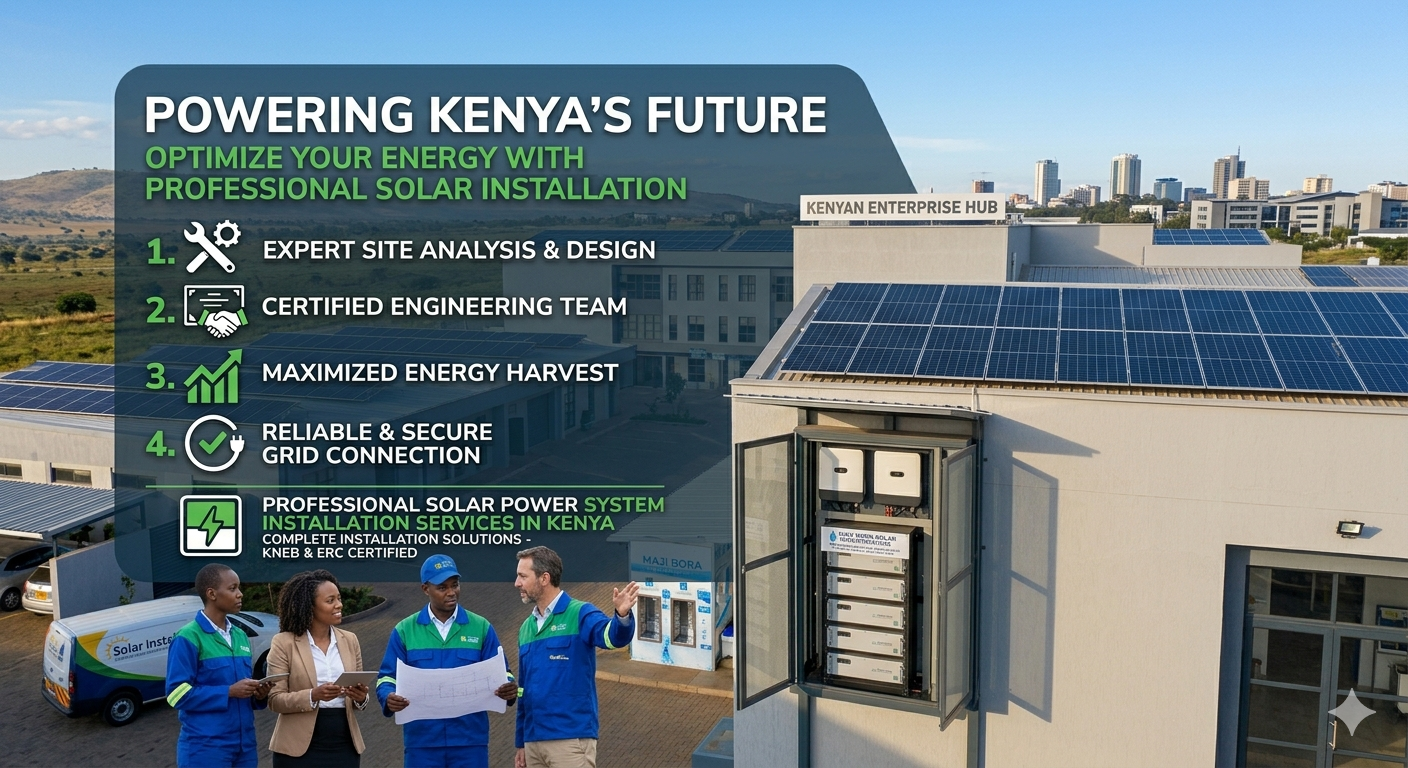
Professional solar power system installation services in Kenya involve the design, supply, and commissioning of solar power systems by certified technicians. A qualified installer assesses your energy needs, sizes the system correctly, mounts panels to KEBS and EPRA standards, wires the components safely, and tests the system for peak output. Services cover residential, commercial, agricultural, and off-grid applications across the country. |
Why Solar Energy Makes Sense for Kenya Right Now
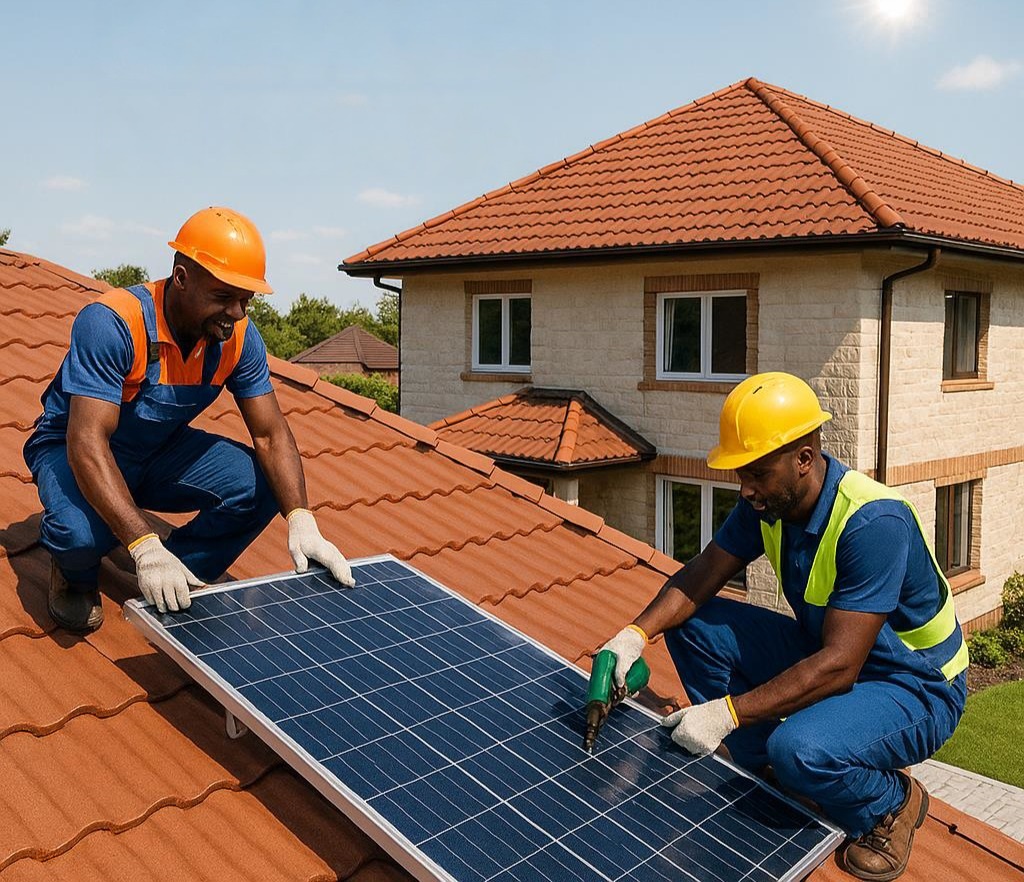 Kenya sits between latitudes 4 degrees North and 5 degrees South — a prime solar belt. Most parts of the country receive between 4 and 7 peak sun hours per day, which means a well-designed solar power system generates reliable electricity year-round, even during the shorter days of June and July.
Grid electricity from Kenya Power remains expensive and unreliable. Power outages in Nairobi, Mombasa, Nakuru, Kisumu, and upcountry areas disrupt businesses and households daily. For water vending stations, irrigation pumps, cold rooms, and manufacturing lines, every hour of downtime has a direct financial cost.
Solar offers a practical alternative. A properly installed system with quality batteries eliminates dependence on the grid for 8 to 24 hours per day, depending on capacity. Over a 5 to 10-year period, the savings on electricity bills typically exceed the upfront installation cost several times over.
| Pro Tip: Always request a site energy audit before signing any installation contract. A reputable installer will measure your actual daily consumption in kilowatt-hours (kWh) before recommending panel count, inverter size, or battery capacity. Skipping this step leads to an undersized or oversized system. |
Types of Solar power systems Available for Residential and Commercial Installation in Kenya
Not every property needs the same type of system. Understanding the three main configurations will help you ask the right questions when speaking to an installer.
On-Grid Solar power systems
On-grid systems connect directly to the Kenya Power grid and use a grid-tie inverter. When your panels produce more electricity than you consume, excess power feeds back into the grid. These systems have no battery storage, so they shut down during a blackout for safety reasons.
On-grid systems are best suited for properties with a reliable grid connection and high daytime electricity consumption, such as office buildings, shopping centres, and manufacturing plants.
Off-Grid Solar power systems 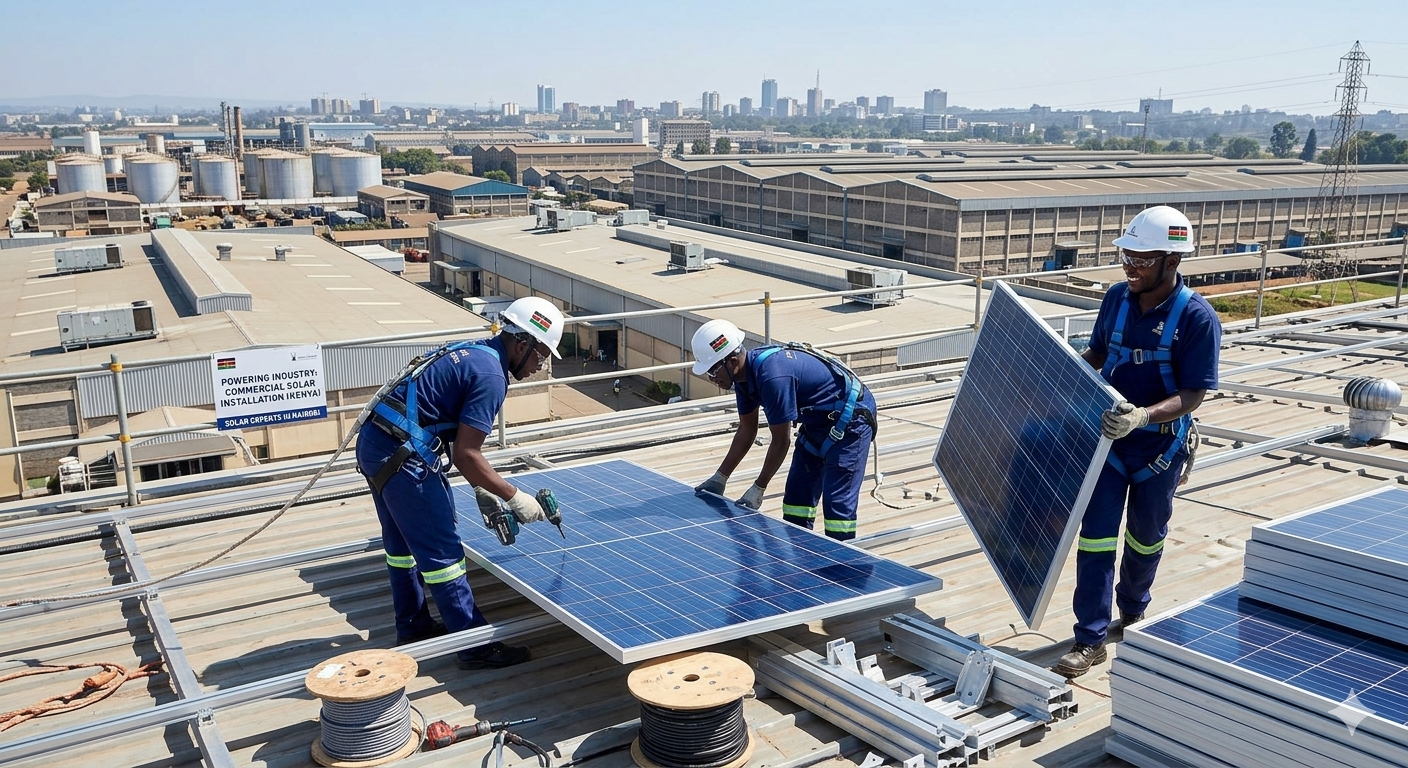
Off-grid systems operate completely independently of Kenya Power. They include solar panels, an MPPT charge controller, battery bank (often ~16 kWh or larger), and a pure sine wave inverter. They are the standard solution for rural homes, water pumping stations, remote farms, and any location where the grid is absent or extremely unreliable.
This is the most popular configuration for residential solar installation in Kenya, particularly in peri-urban and rural areas. A well-designed off-grid system can power lights, TVs, laptops, refrigerators, water pumps, and small machinery around the clock.
They provide 24/7 power, making them ideal for rural areas. These systems offer total energy independence and eliminate electricity bills, though they require higher initial investments.
Hybrid Solar power systems
Hybrid systems combine a grid connection with battery backup. During the day, panels charge the batteries and power the load. At night, batteries take over. The grid acts as a safety net only when both the panels and batteries are insufficient.
Hybrid systems are increasingly popular for commercial solar power system installation services in Kenya, especially for supermarkets, hospitals, schools, and industrial facilities that cannot afford any downtime.
| Feature | On-Grid | Off-Grid | Hybrid |
| Battery Storage | None | Yes | Yes |
| Works During Blackout | No | Yes | Yes |
| Requires Grid Connection | Yes | No | Optional |
| Best For | Urban commercial | Rural / off-grid | Critical facilities |
| Relative Cost | Lower | Medium | Higher |
How to Choose Certified Solar Installers in Kenya
The solar market in Kenya has grown rapidly, and unfortunately not all vendors are equally qualified. Choosing the wrong installer can result in a system that underperforms, fails prematurely, or even poses a fire risk.
Verify Certifications and Compliance
A credible solar company in Kenya should be registered with the Energy and Petroleum Regulatory Authority (EPRA) and use products that meet Kenya Bureau of Standards (KEBS) specifications. Ask to see these registrations before any conversation about pricing.
The installer’s technicians should also hold relevant vocational qualifications from institutions such as the Kenya Technical and Vocational Education and Training (TVET) authority. For large commercial or industrial installations, compliance with the National Construction Authority (NCA) regulations may also apply.
Assess Technical Competence
 Ask the company to walk you through how they plan to size your system. A qualified team will ask about your monthly utility bill or current diesel generator consumption, your peak loads, your operational hours, and the appliances you need to run. If an installer gives you a quote without asking any of these questions, that is a serious red flag.
Request references or site visits to previous installations. A reputable company with years of experience should be able to show you working systems of a similar scale.
| Pro Tip: Always confirm that your installer provides a written performance warranty on the installed system, separate from the product manufacturer warranties. Panel manufacturers typically warrant 80% output at 25 years, but your installer should also guarantee the workmanship for at least 1 to 2 years. |
Solar power system Installation Cost in Kenya: What to Budget
Cost is the question every buyer asks first, and it is also the question with the most variables. The solar power system installation cost in Kenya depends on the system size, the components selected, the complexity of the installation, and the location of the site.
Here are realistic price ranges for the Kenyan market as of 2024. These are installed costs, inclusive of panels, inverter, battery, wiring, mounting, and commissioning.
| System Size | Typical Use | Est. Cost (KES) | Ideal For |
| 300W – 500W | Basic lighting, phone charging, small TV | 45,000 – 90,000 | Single rooms, small shops |
| 1kW – 2kW | Lights, fridge, TV, fan | 120,000 – 250,000 | Small homes, kiosks |
| 3kW – 5kW | Full household including washing machine | 320,000 – 600,000 | Medium homes, clinics, schools |
| 10kW – 50kW | Heavy commercial / industrial load | 900,000 – 4,500,000+ | Factories, farms, hospitals |
| Water Pump Systems | Borehole or surface pump | 80,000 – 400,000 | Water stations, irrigation |
These figures are indicative. An honest installer will only give you a firm quote after assessing your actual energy needs, roof or ground space, shading conditions, and distance from the panel array to the battery bank.
Battery choice is often the biggest cost driver. Lithium iron phosphate (LiFePO4) batteries cost more upfront than sealed lead-acid (SLA) alternatives, but they last 3 to 5 times longer and deliver a better depth of discharge. Over a 10-year horizon, lithium is almost always the more economical option.
| Pro Tip: Get itemised quotations from at least two certified installers before committing. A quality quote will list each component by brand, model, wattage, and warranty period. Generic quotes that say only ‘solar panel x4, battery x2’ are not comparable and give you no protection if substandard components are installed. |
Common Mistakes Buyers Make When Hiring Solar Installers in Kenya
After years of installations across Kenya’s residential, commercial, and agricultural sectors, the same avoidable mistakes appear repeatedly. Awareness is your best protection.
- Choosing on price alone. The cheapest quote almost always means cheaper components, fewer panels than specified, or under-qualified technicians. Low-grade inverters and counterfeit batteries are common culprits behind system failures within 12 months.
- Skipping the energy audit. Buying a system without a consumption analysis is like ordering clothes without knowing your size. An undersized system will not power your home or business reliably, and an oversized one wastes capital.
- Ignoring shading analysis. Even partial shading on one panel can reduce the output of an entire string by 30% or more. A proper site visit includes assessing trees, buildings, and roof obstructions at different times of day.
- Not verifying KEBS compliance. Substandard panels sold in Kenya sometimes carry forged KEBS marks. Request the actual test certificates and verify batch numbers where possible.
- Accepting verbal warranties. Verbal assurances about ‘lifetime support’ or ‘free repairs’ mean nothing. Insist on a written service agreement that specifies response time, covered components, and escalation procedures.
- Neglecting earthing and surge protection. Many installations in Kenya skip proper earthing and DC/AC surge protection, leaving your inverter and appliances vulnerable to lightning strikes, which are common in high-altitude and Rift Valley areas.
Making the Right Solar Power System Investment in Kenya Today
Kenya’s solar opportunity is real, and it is available right now. The country’s solar resource, falling panel prices, improved battery technology, and rising grid electricity costs all point in the same direction: a properly installed solar power system is one of the best capital investments a Kenyan property owner or business can make today. The key phrase is properly installed.
The difference between a 10-year, trouble-free solar asset and an expensive disappointment comes down almost entirely to the quality of the design, the components used, and the competence of the installation team. Verify certifications. Request itemised quotes. Demand written warranties. And choose a company with a verifiable track record of completed projects.
Vinsol Kenya has been providing professional solar power system installation services in Kenya from its base in Ruiru, along Thika Road. The team brings hands-on experience across residential, commercial, agricultural, and water vending applications, with solar power systems that meet European, American, and KEBS quality standards. Getting started is as simple as a phone call or WhatsApp message.
Ready to Go Solar? Talk to Kenya’s Most Trusted Solar Power Installers
Whether you are powering a family home in Ruiru, a poultry farm in Nakuru, a water vending station in Machakos, or a manufacturing plant in Athi River, you deserve a solar power system that is reliable. The installation team at Vinsol Kenya has delivered reliable solar solutions for Kenyan homes and businesses across all these sectors and more.
Here are five reasons clients across Kenya choose Vinsol Kenya:
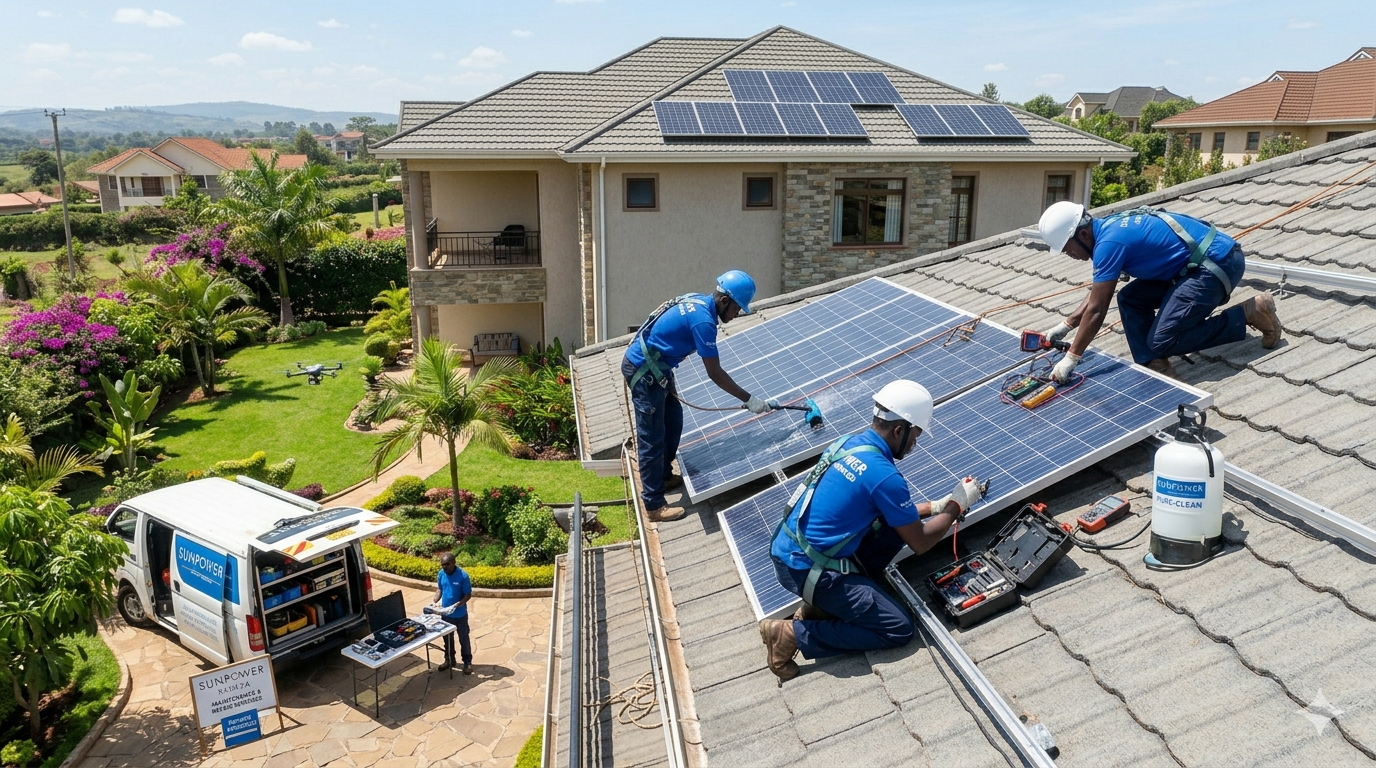
- European, American, and KEBS-certified solar products, so you know exactly what quality you are getting.
- Full off-grid, on-grid, and hybrid system capability, covering every application from a single-room home to a full industrial facility.
- Detailed energy audits and itemised quotations before any work begins, so there are no surprises.
- Experienced, certified installation technicians with a proven track record across Nairobi, Central, Rift Valley, Coast, and other regions.
- After-installation support and service warranty, because the relationship does not end when the system goes live.
Contact Vinsol Kenya today:
- Call/WhatsApp Us: +254 715 01 45 10
- Email: inquiries@vinsol.co.ke | info@vinsol.co.ke
- Contact Form: Fill out the contact form here.
- Visit Our Branches:
- Ruiru Branch: Next to Total Petrol Station – Kihunguro, Ruiru
- Eldoret Branch: Rehema Complex, opposite Japara Ltd., along Oloo Street, Eldoret.
Send a WhatsApp message or call right now to discuss your energy needs and get a free, no-obligation quotation. The team is available Monday to Saturday and responds to messages quickly. Do not let another month of high electricity bills or generator fuel costs pass before taking action.
Frequently Asked Questions About Solar Power System Installation in Kenya
- What does a solar power system installation company in Kenya actually do?
A solar installation company handles the entire process from energy assessment to commissioning. This includes measuring your power consumption, designing a system to match your needs, supplying certified components, mounting panels safely on your roof or ground frame, wiring all components, testing the system, and providing after-sales support. A full-service provider like Vinsol Kenya also assists with system monitoring and maintenance.
- How much does solar installation cost in Kenya for a typical home?
The solar power system installation cost in Kenya for a typical three-bedroom home ranges from KES 280,000 to KES 550,000 for a complete off-grid system with quality lithium batteries. Smaller starter systems from 300W to 1kW are available from KES 45,000. Final cost depends on your daily energy consumption, preferred battery type, and the specific brands specified. Always get an itemised quote.
- What is the difference between off-grid and hybrid solar in Kenya?
An off-grid system runs independently, with no connection to Kenya Power. It relies entirely on panels and batteries. A hybrid system connects to the grid but also has battery storage, so it keeps running during blackouts and draws from the grid only when panels and batteries are insufficient. Off-grid suits rural or severely underserved areas; hybrid suits urban businesses that need full backup.
- Where can I find certified solar installers near me in Kenya?
Certified solar installers in Kenya should be registered with EPRA and use KEBS-compliant products. Vinsol Kenya is based in Ruiru along Thika Road, conveniently positioned to serve clients across Nairobi, Kiambu, Murang’a, Thika, and surrounding counties. The team also undertakes projects in other regions across Kenya. Call or WhatsApp +254 715 01 45 10 to discuss your location and arrange a site visit.
- How long does a solar power system installation take in Kenya?
A standard residential installation typically takes one to three days from delivery of components to full commissioning. Larger commercial and industrial installations may take one to three weeks, depending on system complexity, roof access, and electrical infrastructure. Vinsol Kenya provides a clear installation schedule in advance so you can plan accordingly with minimal disruption to your operations.
- Are solar panels and batteries in Kenya covered by warranty?
Yes. Quality solar panels carry a product warranty of 10 to 12 years and a performance warranty guaranteeing at least 80% output at 25 years. Lithium batteries typically carry 5 to 10-year warranties. Vinsol Kenya installs products that meet European, American, and KEBS standards and provides a workmanship warranty on the installation itself. All warranty terms are provided in writing before work begins.
- Can solar power run agricultural equipment and borehole pumps in Kenya?
Absolutely. Solar-powered borehole pumps and surface pumps are widely deployed across Kenya’s agricultural counties, including Nakuru, Meru, Machakos, Laikipia, and Trans Nzoia. A properly sized solar pump system can replace diesel generators entirely for irrigation and livestock watering, eliminating fuel costs and reducing maintenance. Vinsol Kenya has experience designing and installing solar pump systems for farms, greenhouses, and water vending stations.