Professional Solar Power System Installation Services in Kenya

Professional Solar Power System Installation Services in Kenya: A Complete Buyer’s Guide Kenya receives some of the highest solar irradiation levels on the continent, making solar power one of the most cost-effective energy choices available to households, businesses, and farms. Yet too many property owners still overpay, get undersized systems, or hire unqualified technicians — and then spend years chasing warranty repairs that never come. This guide walks you through everything you need to know about professional solar power system installation services in Kenya: how to evaluate a system, what a proper installation looks like, what it costs, and how to choose a certified installer who will stand behind their work. What Are Professional Solar Power System Installation Services in Kenya? Professional solar power system installation services in Kenya involve the design, supply, and commissioning of solar power systems by certified technicians. A qualified installer assesses your energy needs, sizes the system correctly, mounts panels to KEBS and EPRA standards, wires the components safely, and tests the system for peak output. Services cover residential, commercial, agricultural, and off-grid applications across the country. Why Solar Energy Makes Sense for Kenya Right Now Kenya sits between latitudes 4 degrees North and 5 degrees South — a prime solar belt. Most parts of the country receive between 4 and 7 peak sun hours per day, which means a well-designed solar power system generates reliable electricity year-round, even during the shorter days of June and July. Grid electricity from Kenya Power remains expensive and unreliable. Power outages in Nairobi, Mombasa, Nakuru, Kisumu, and upcountry areas disrupt businesses and households daily. For water vending stations, irrigation pumps, cold rooms, and manufacturing lines, every hour of downtime has a direct financial cost. Solar offers a practical alternative. A properly installed system with quality batteries eliminates dependence on the grid for 8 to 24 hours per day, depending on capacity. Over a 5 to 10-year period, the savings on electricity bills typically exceed the upfront installation cost several times over. Pro Tip: Always request a site energy audit before signing any installation contract. A reputable installer will measure your actual daily consumption in kilowatt-hours (kWh) before recommending panel count, inverter size, or battery capacity. Skipping this step leads to an undersized or oversized system. Types of Solar power systems Available for Residential and Commercial Installation in Kenya Not every property needs the same type of system. Understanding the three main configurations will help you ask the right questions when speaking to an installer. On-Grid Solar power systems On-grid systems connect directly to the Kenya Power grid and use a grid-tie inverter. When your panels produce more electricity than you consume, excess power feeds back into the grid. These systems have no battery storage, so they shut down during a blackout for safety reasons. On-grid systems are best suited for properties with a reliable grid connection and high daytime electricity consumption, such as office buildings, shopping centres, and manufacturing plants. Off-Grid Solar power systems Off-grid systems operate completely independently of Kenya Power. They include solar panels, an MPPT charge controller, battery bank (often ~16 kWh or larger), and a pure sine wave inverter. They are the standard solution for rural homes, water pumping stations, remote farms, and any location where the grid is absent or extremely unreliable. This is the most popular configuration for residential solar installation in Kenya, particularly in peri-urban and rural areas. A well-designed off-grid system can power lights, TVs, laptops, refrigerators, water pumps, and small machinery around the clock. They provide 24/7 power, making them ideal for rural areas. These systems offer total energy independence and eliminate electricity bills, though they require higher initial investments. Hybrid Solar power systems Hybrid systems combine a grid connection with battery backup. During the day, panels charge the batteries and power the load. At night, batteries take over. The grid acts as a safety net only when both the panels and batteries are insufficient. Hybrid systems are increasingly popular for commercial solar power system installation services in Kenya, especially for supermarkets, hospitals, schools, and industrial facilities that cannot afford any downtime. Feature On-Grid Off-Grid Hybrid Battery Storage None Yes Yes Works During Blackout No Yes Yes Requires Grid Connection Yes No Optional Best For Urban commercial Rural / off-grid Critical facilities Relative Cost Lower Medium Higher How to Choose Certified Solar Installers in Kenya The solar market in Kenya has grown rapidly, and unfortunately not all vendors are equally qualified. Choosing the wrong installer can result in a system that underperforms, fails prematurely, or even poses a fire risk. Verify Certifications and Compliance A credible solar company in Kenya should be registered with the Energy and Petroleum Regulatory Authority (EPRA) and use products that meet Kenya Bureau of Standards (KEBS) specifications. Ask to see these registrations before any conversation about pricing. The installer’s technicians should also hold relevant vocational qualifications from institutions such as the Kenya Technical and Vocational Education and Training (TVET) authority. For large commercial or industrial installations, compliance with the National Construction Authority (NCA) regulations may also apply. Assess Technical Competence Ask the company to walk you through how they plan to size your system. A qualified team will ask about your monthly utility bill or current diesel generator consumption, your peak loads, your operational hours, and the appliances you need to run. If an installer gives you a quote without asking any of these questions, that is a serious red flag. Request references or site visits to previous installations. A reputable company with years of experience should be able to show you working systems of a similar scale. Pro Tip: Always confirm that your installer provides a written performance warranty on the installed system, separate from the product manufacturer warranties. Panel manufacturers typically warrant 80% output at 25 years, but your installer should also guarantee the workmanship for at least 1 to 2 years. Solar power system Installation Cost in Kenya: What to Budget Cost is the question every buyer asks first, and
Solar Powered RO Water Purification Systems in Kenya

Solar Powered RO Water Purification Systems in Kenya: Reliable Off-Grid Water Treatment for Homes, Businesses, and Communities Reliable access to clean water is no longer guaranteed by grid electricity alone. Across Kenya, many boreholes and water treatment plants operate in areas where power outages, high electricity costs, or remote locations make conventional systems expensive to run. That is why solar powered RO water purification systems in Kenya are becoming the preferred solution for water vending stations, factories, farms, and homeowners seeking independence from unreliable power supply. This guide explains how solar-powered reverse osmosis systems work, where they are most effective, how much they cost locally, and how to choose the right system for your specific water source and production needs. What is a Solar Powered RO Water Purification System Solar powered RO water purification systems are water treatment systems that use solar energy to power reverse osmosis membranes, pumps, and filtration components. They remove dissolved salts, bacteria, heavy metals, and contaminants from borehole, brackish, or seawater without relying on grid electricity. These systems are widely used in off-grid communities, water refilling stations, farms, and industries across Kenya. Why Solar Powered Reverse Osmosis Systems Are Growing Rapidly in Kenya Demand for solar powered reverse osmosis systems has increased sharply due to three realities on the ground. Electricity costs continue to rise, rural electrification is still uneven, and many regions rely on borehole water with high salinity or mineral content. From field experience, installers frequently encounter the following situations: Boreholes in Kajiado, Machakos, Kilifi, and Turkana producing brackish water Water vending businesses facing high monthly electricity bills Farms operating in remote locations without reliable grid power Manufacturing plants requiring consistent water quality for production A properly designed off-grid solar water treatment system solves all of these challenges while reducing operating costs over the long term. Key Benefits of Our Solar RO Solutions Lower operating costs compared to diesel or grid-powered systems Reliable performance during power outages Environmentally sustainable water treatment Scalable capacity for homes, businesses, and communities Compliance with KEBS, WHO, and Ministry of Health water quality standards Pro Tip: Always test your water before selecting a system. The Total Dissolved Solids level, iron content, and hardness determine membrane size, pump capacity, and pretreatment requirements. How Solar Reverse Osmosis Systems Work for Borehole and High-Salinity Water A solar reverse osmosis system for borehole water combines solar panels, energy storage, and advanced filtration to remove contaminants from groundwater. The process follows a clear sequence: Raw water enters the pretreatment stage Sediment and carbon filters remove particles and chlorine High-pressure pumps push water through RO membranes Dissolved salts and contaminants are separated Clean water is stored in tanks for distribution This process is particularly effective for: High-salinity groundwater Brackish borehole water Fluoride-contaminated water Hard water with excess minerals Industrial process water Components of a Typical Solar Powered System Solar panels Charge controller Inverter High-pressure pump RO membrane housing Pre-filtration units Storage tanks Monitoring and control system These components are engineered to meet standards set by: KEBS (Kenya Bureau of Standards) WHO drinking water guidelines EPRA energy safety regulations Pro Tip: Installers often oversize pumps without adjusting membrane capacity. A balanced design improves efficiency and extends membrane lifespan. Applications of Water Refilling Stations Solar Reverse Osmosis Systems Solar-powered treatment is now the backbone of many water refilling stations solar reverse osmosis systems across Kenya. These businesses depend on consistent production and predictable operating costs. Common Applications Water Vending and Refill Stations Many entrepreneurs operate kiosks that sell purified drinking water. Solar systems reduce dependence on grid electricity and increase profit margins. Residential Homes Homeowners in peri-urban areas use solar powered home RO systems to ensure safe drinking water even during blackouts. Agriculture and Irrigation Farmers use treated water to protect crops from salinity damage and improve yields. Manufacturing and Processing Plants Industries such as food processing and beverage production require stable water quality for compliance and product safety. Healthcare Facilities and Schools Reliable purification ensures safe water for patients and students in remote areas. Pro Tip: For water vending businesses, design the system around daily demand, not maximum capacity. Oversizing increases capital cost without improving profitability. Comparison Table: Solar vs Grid vs Diesel Water Treatment Systems Feature Solar RO System Grid-Powered RO Diesel-Powered RO Operating Cost Very Low Moderate to High Very High Reliability High Medium Medium Environmental Impact Low Medium High Maintenance Low Moderate High Suitable for Off-Grid Areas Yes No Yes Long-Term Savings Excellent Moderate Poor This comparison is often cited in feasibility studies for water treatment projects in Kenya. Cost of Solar Powered RO Water Purification Systems in Kenya The cost of a solar-powered system depends heavily on water quality, production capacity, and site conditions. Boreholes with high salinity require stronger pumps and specialized membranes, which increases system cost. Typical price ranges of solar-powered systems in Kenya System Capacity Estimated Cost Range (KES) Common Use 250 Litres per Hour 250,000 to 450,000 Homes and small businesses 500 Litres per Hour 450,000 to 850,000 Water vending kiosks 1,000 Litres per Hour 850,000 to 1,600,000 Medium commercial operations 2,000 Litres per Hour and above 1,600,000 to 4,500,000+ Industrial and municipal use These figures reflect typical installations in Nairobi, Kiambu, Nakuru, and Mombasa markets. Factors That Affect Cost Water salinity and contamination level System capacity and production rate Solar panel size and battery storage Installation location and site preparation Automation and monitoring features While the initial investment is higher than conventional systems, operating costs are significantly lower. In many projects, clients recover the investment within 18 to 36 months. Choosing the Right Solar Desalination System for Your Needs Selecting the correct system requires technical evaluation, not guesswork. Engineers must analyze water chemistry, daily demand, and energy requirements before designing the system. Key Questions to Ask Before Installation What is the Total Dissolved Solids level of the water How many litres per day are required Is the location connected to grid electricity What level of automation is required Is future expansion expected A professional assessment
Solar Battery Installation Services in Kenya

Solar Battery Installation Services in Kenya: Reliable Power Backup for Homes and Businesses Introduction: Why Solar Batteries Are Becoming Essential in Kenya Power reliability has become a major concern for many households and businesses across Kenya. Frequent outages, rising electricity costs, and the increasing need for uninterrupted operations have made backup power solutions more important than ever. While solar panels generate electricity during the day, batteries store that energy for use at night or during power interruptions. Without battery storage, a solar system cannot provide full energy independence or reliable backup. This is why demand for professional solar battery installation services in Kenya has grown rapidly in recent years. Solar batteries allow you to store excess energy and use it when needed, reducing reliance on the grid and ensuring consistent power supply. They also help stabilize energy usage, protect sensitive equipment, and improve overall system efficiency. For homeowners and businesses alike, battery storage has become a critical component of modern solar energy systems. Working with a trusted solar installer like Vinsol Kenya ensures your battery system is properly sized, safely installed, and optimized for long-term performance. Professional installation protects your equipment and maximizes the value of your solar investment. Whether you need backup power for your home, office, or industrial facility, a reliable battery system provides peace of mind. In today’s energy environment, dependable backup power is not just convenient—it is essential. What Is a Solar Battery System? A solar battery system is designed to store electricity generated by solar panels for later use. Instead of sending excess energy back to the grid or losing it entirely, the battery keeps that energy available when sunlight is unavailable. This stored power can be used during nighttime hours, cloudy weather, or unexpected power outages. As a result, solar batteries significantly improve energy reliability. Modern solar battery storage solutions in Kenya are built to support both residential and commercial applications. These systems integrate seamlessly with solar panels and inverters to create a complete energy solution. Advanced battery technology allows for faster charging, longer lifespan, and improved safety compared to older battery systems. This makes solar battery installation a smart long-term investment. Battery storage also helps manage electricity demand more efficiently. Businesses can store energy during low-demand periods and use it during peak hours. This flexibility improves operational efficiency and reduces dependence on expensive grid electricity. Over time, efficient energy management leads to significant cost savings. Types of Solar Batteries Available in Kenya Choosing the right battery type is an important step when installing a solar system. Different battery technologies offer varying levels of performance, lifespan, and cost. Understanding the differences helps you select the best option for your energy needs. Lithium Batteries Lithium batteries are currently the most popular choice for modern solar systems. They provide high efficiency, fast charging, and longer lifespan compared to traditional batteries. These batteries also require minimal maintenance, making them ideal for homes and businesses. Their compact design allows installation in smaller spaces. Another advantage of lithium battery installation for solar in Kenya is improved energy reliability. Lithium batteries maintain stable performance even under heavy usage. They can handle frequent charging and discharging cycles without significant wear. This durability makes them a preferred option for long-term energy storage. Lead-Acid Batteries Lead-acid batteries are a more traditional option that remains widely used in many solar systems. They are generally less expensive than lithium batteries, making them suitable for budget-conscious users. However, they require regular maintenance and have a shorter lifespan. Over time, replacement costs may offset the initial savings. Despite these limitations, lead-acid batteries still provide reliable backup power for smaller systems. They are often used in basic home installations where energy demand is relatively low. Proper maintenance can extend their lifespan and improve performance. For some users, they remain a practical entry-level solution. How Solar Battery Backup Systems Work Understanding how solar battery backup systems in Kenya operate can help you appreciate their role in maintaining reliable power supply. These systems follow a simple but effective process to store and distribute electricity. Step 1: Energy Generation Solar panels capture sunlight and convert it into electrical energy during the day. This electricity powers appliances and equipment immediately. Any excess energy is directed toward battery storage. This ensures that no generated energy is wasted. Step 2: Energy Storage The battery stores unused electricity until it is needed. Stored energy remains available even when sunlight is not present. Modern batteries are designed to retain energy efficiently for extended periods. This improves overall system reliability. Step 3: Energy Distribution When solar panels stop generating electricity, the battery supplies stored energy to the building. This allows lights, appliances, and equipment to continue operating without interruption. Seamless energy transfer ensures consistent power supply. Reliable distribution prevents downtime. Benefits of Installing Solar Batteries Installing solar batteries offers several advantages for both residential and commercial users. These benefits extend beyond backup power and contribute to long-term energy stability. Reliable Backup Power Solar batteries provide electricity during power outages, ensuring uninterrupted operations. This reliability is especially important for businesses that depend on continuous power supply. Households also benefit from consistent lighting, refrigeration, and security systems. Reliable backup improves comfort and productivity. Reduced Electricity Bills Battery storage allows you to use stored solar energy instead of purchasing electricity from the grid. This reduces monthly energy expenses and improves financial savings. Over time, lower electricity bills can offset installation costs. Energy independence becomes more achievable. Protection for Sensitive Equipment Power fluctuations can damage electronic devices and industrial equipment. Solar batteries stabilize energy supply and prevent voltage spikes. This protection reduces repair costs and equipment downtime. Stable power improves operational reliability. Increased Energy Independence Battery storage reduces reliance on the national grid and external energy sources. This independence provides greater control over energy usage and costs. Businesses can maintain operations even during extended outages. Energy security becomes a strategic advantage. Solar Battery Cost in Kenya The solar battery cost in Kenya varies depending on battery type, capacity, and brand
Commercial Solar Installation Services in Kenya
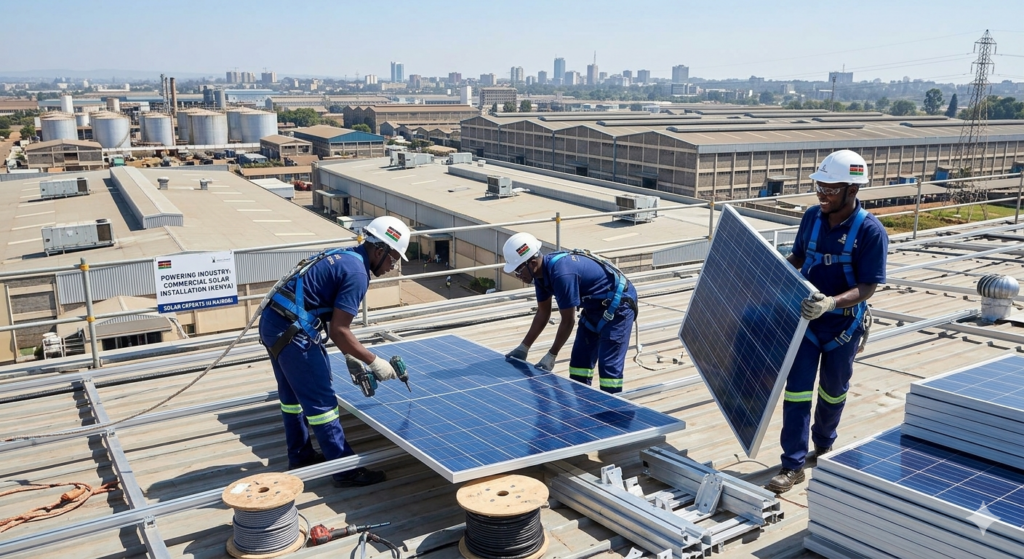
Commercial Solar Installation Services in Kenya: Power Your Business with Reliable, Cost-Effective Energy Introduction: Why Businesses in Kenya Are Rapidly Switching to Solar Energy Energy reliability and cost control have become top priorities for businesses across Kenya. Frequent power outages, rising electricity tariffs, and the need for operational stability are pushing companies to explore alternative energy solutions. As a result, solar power has emerged as one of the most practical and cost-effective options for businesses seeking long-term energy independence. Companies are no longer viewing solar as a luxury but as a strategic investment that supports growth and resilience. Modern businesses depend heavily on electricity to run operations, serve customers, and protect productivity. When power interruptions occur, the consequences can include lost sales, delayed production, and equipment downtime. Solar systems provide a dependable backup and reduce reliance on the national grid. This reliability is especially valuable for industries where continuous power is essential, such as manufacturing, healthcare, hospitality, and retail. Professional commercial solar installation services in Kenya enable businesses to generate their own electricity, reduce operating costs, and maintain consistent operations. A well-designed system can significantly lower monthly energy bills while providing stable power during outages. Over time, the savings generated by solar energy can be reinvested into business expansion, equipment upgrades, or workforce development. In this way, solar energy becomes both an operational tool and a financial asset. Working with an experienced installer like Vinsol Kenya ensures that commercial solar systems are properly engineered, safely installed, and optimized for performance. From system design to installation and maintenance, professional expertise plays a critical role in achieving reliable energy outcomes. Businesses that invest in professional solar installation gain confidence in the durability and efficiency of their energy systems. This foundation supports long-term operational success. What Is Commercial Solar Installation? Commercial solar installation involves designing and installing solar power systems specifically for business and industrial environments. Unlike residential systems, commercial installations typically require larger energy capacity and more advanced system configurations. These systems are built to support heavy electrical loads and operate continuously throughout the day. As a result, they require careful planning and professional execution. Commercial solar systems can be installed in several locations depending on available space and operational requirements. Common installation sites include building rooftops, warehouses, parking structures, and open land areas. Each location requires different mounting techniques and structural considerations. Proper site assessment ensures safe installation and maximum energy generation. The goal of commercial solar system installation in Kenya is to provide reliable electricity while reducing dependence on expensive grid power. Businesses benefit from predictable energy costs and improved power stability. This reliability allows companies to plan operations more effectively and avoid disruptions caused by power shortages. Ultimately, commercial solar systems support operational efficiency and financial stability. Types of Businesses That Benefit from Solar Power Solar energy is suitable for a wide range of commercial and industrial operations. Any business that relies on electricity can benefit from installing a solar system. The level of benefit typically depends on energy consumption patterns and operational hours. Businesses with high daytime electricity usage often achieve the greatest savings. Manufacturing and Industrial Facilities Factories and industrial plants consume significant amounts of electricity for machinery, lighting, and production processes. Energy costs can represent a large portion of operational expenses in these environments. Installing industrial solar power systems in Kenya helps reduce energy bills and improve cost control. Reliable solar power also minimizes production interruptions caused by outages. Offices and Commercial Buildings Office buildings require consistent electricity to support computers, lighting, air conditioning, and communication systems. Power interruptions can disrupt business operations and reduce employee productivity. Solar systems provide stable electricity and reduce dependence on the grid. Over time, energy savings can significantly improve business profitability. Hotels and Hospitality Businesses Hotels depend on reliable electricity to provide guest comfort and maintain service quality. Power outages can affect lighting, refrigeration, and security systems, leading to customer dissatisfaction. Solar power ensures uninterrupted service and improves operational reliability. It also enhances the hotel’s reputation for sustainability and environmental responsibility. Retail Shops and Supermarkets Retail businesses rely on electricity for lighting, refrigeration, and payment systems. Even short power interruptions can result in product loss or sales disruptions. Solar energy provides dependable backup power and protects business revenue. Reliable electricity also improves customer experience. Hospitals and Healthcare Facilities Healthcare facilities require continuous electricity to operate medical equipment and maintain patient safety. Power outages in hospitals can have serious consequences. Solar systems provide reliable backup power and improve operational resilience. This reliability is essential for maintaining high-quality healthcare services. Key Components of a Commercial Solar System A commercial solar system consists of several essential components that work together to generate and distribute electricity. Each component plays a critical role in system performance and reliability. Understanding these components helps businesses make informed decisions when planning a solar installation. Solar Panels Solar panels capture sunlight and convert it into electrical energy. They are typically installed on rooftops or open land areas where sunlight exposure is maximum. High-quality panels produce more electricity and last longer than low-quality alternatives. Investing in efficient panels improves long-term system performance. Inverters The inverter converts solar energy into usable electricity for business operations. It also manages power flow between the solar system, batteries, and the electrical grid. A reliable inverter ensures stable energy supply and protects equipment from electrical fluctuations. Proper inverter selection is essential for system efficiency. Battery Storage Batteries store excess solar energy for use during nighttime or power outages. This stored energy ensures continuous electricity supply when sunlight is unavailable. High-capacity batteries improve system reliability and operational flexibility. Businesses that require uninterrupted power often prioritize battery storage. Mounting Structures Mounting structures secure solar panels to rooftops or ground surfaces. These structures must withstand weather conditions such as wind and heavy rainfall. Durable mounting systems protect panels and maintain proper alignment. Stable mounting improves safety and energy production. Monitoring Systems Monitoring systems track solar energy production and system performance in real time. They allow technicians to