Solar Powered RO Water Purification Systems in Kenya: Reliable Off-Grid Water Treatment for Homes, Businesses, and Communities
Reliable access to clean water is no longer guaranteed by grid electricity alone. Across Kenya, many boreholes and water treatment plants operate in areas where power outages, high electricity costs, or remote locations make conventional systems expensive to run. That is why solar powered RO water purification systems in Kenya are becoming the preferred solution for water vending stations, factories, farms, and homeowners seeking independence from unreliable power supply.
This guide explains how solar-powered reverse osmosis systems work, where they are most effective, how much they cost locally, and how to choose the right system for your specific water source and production needs.
What is a Solar Powered RO Water Purification System
Solar powered RO water purification systems are water treatment systems that use solar energy to power reverse osmosis membranes, pumps, and filtration components. They remove dissolved salts, bacteria, heavy metals, and contaminants from borehole, brackish, or seawater without relying on grid electricity. These systems are widely used in off-grid communities, water refilling stations, farms, and industries across Kenya.
Why Solar Powered Reverse Osmosis Systems Are Growing Rapidly in Kenya
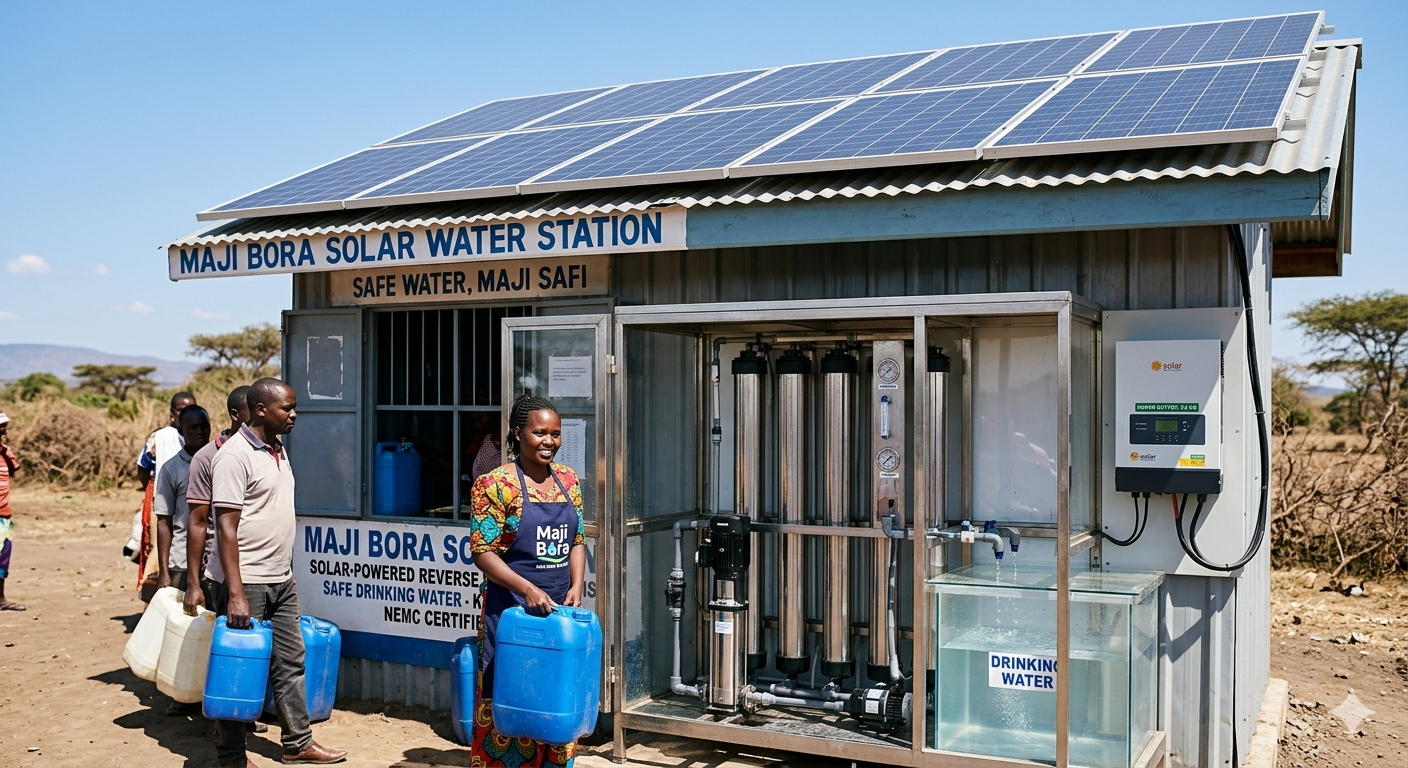 Demand for solar powered reverse osmosis systems has increased sharply due to three realities on the ground. Electricity costs continue to rise, rural electrification is still uneven, and many regions rely on borehole water with high salinity or mineral content.
From field experience, installers frequently encounter the following situations:
- Boreholes in Kajiado, Machakos, Kilifi, and Turkana producing brackish water
- Water vending businesses facing high monthly electricity bills
- Farms operating in remote locations without reliable grid power
- Manufacturing plants requiring consistent water quality for production
A properly designed off-grid solar water treatment system solves all of these challenges while reducing operating costs over the long term.
Key Benefits of Our Solar RO Solutions
- Lower operating costs compared to diesel or grid-powered systems
- Reliable performance during power outages
- Environmentally sustainable water treatment
- Scalable capacity for homes, businesses, and communities
- Compliance with KEBS, WHO, and Ministry of Health water quality standards
Pro Tip:
Always test your water before selecting a system. The Total Dissolved Solids level, iron content, and hardness determine membrane size, pump capacity, and pretreatment requirements.
How Solar Reverse Osmosis Systems Work for Borehole and High-Salinity Water
A solar reverse osmosis system for borehole water combines solar panels, energy storage, and advanced filtration to remove contaminants from groundwater.
The process follows a clear sequence:
- Raw water enters the pretreatment stage
- Sediment and carbon filters remove particles and chlorine
- High-pressure pumps push water through RO membranes
- Dissolved salts and contaminants are separated
- Clean water is stored in tanks for distribution
This process is particularly effective for:
- High-salinity groundwater
- Brackish borehole water
- Fluoride-contaminated water
- Hard water with excess minerals
- Industrial process water
Components of a Typical Solar Powered System
- Solar panels
- Charge controller
- Inverter
- High-pressure pump
- RO membrane housing
- Pre-filtration units
- Storage tanks
- Monitoring and control system
These components are engineered to meet standards set by:
- KEBS (Kenya Bureau of Standards)
- WHO drinking water guidelines
- EPRA energy safety regulations
Pro Tip:
Installers often oversize pumps without adjusting membrane capacity. A balanced design improves efficiency and extends membrane lifespan.
Applications of Water Refilling Stations Solar Reverse Osmosis Systems
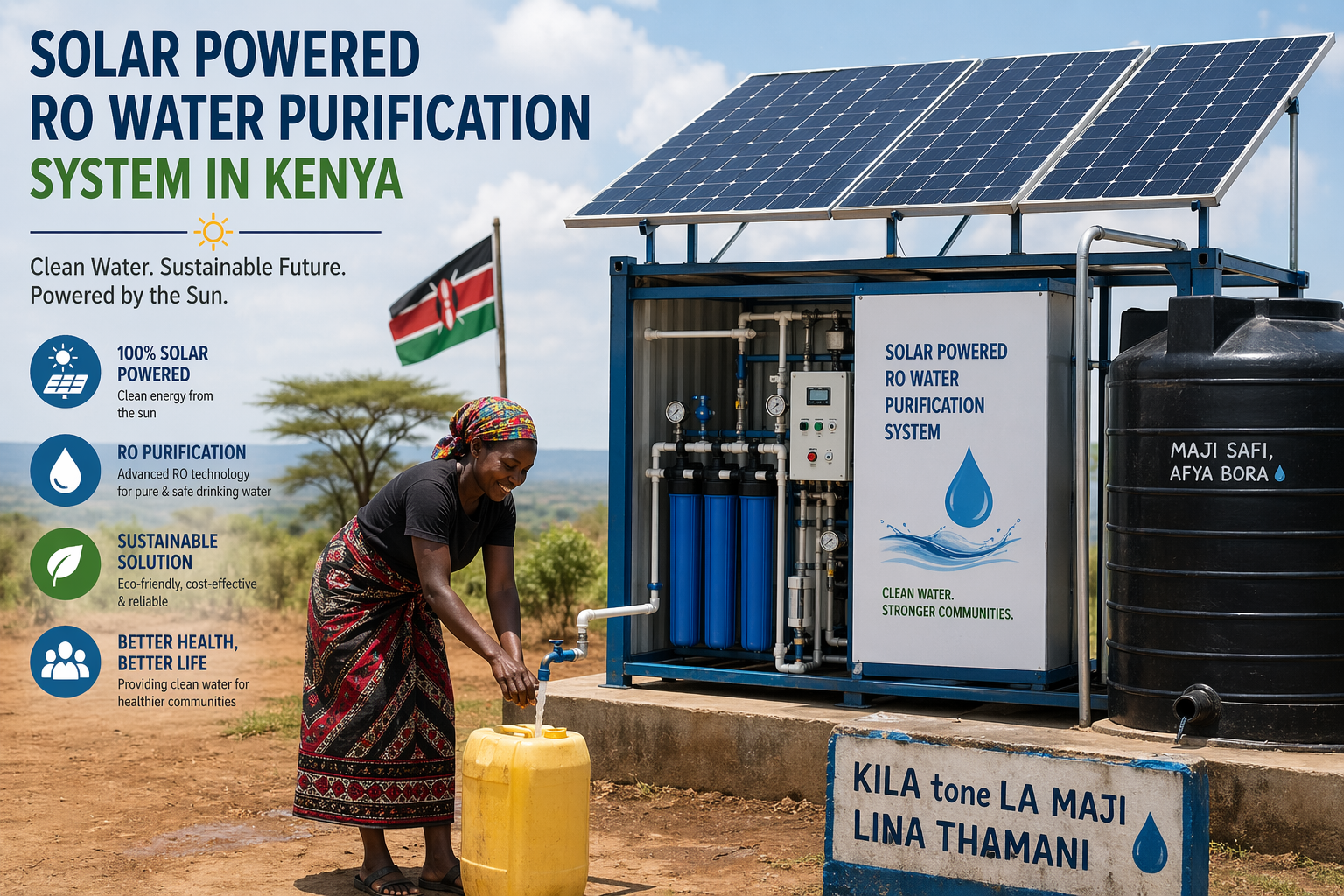 Solar-powered treatment is now the backbone of many water refilling stations solar reverse osmosis systems across Kenya. These businesses depend on consistent production and predictable operating costs.
Common Applications
- Water Vending and Refill Stations
Many entrepreneurs operate kiosks that sell purified drinking water. Solar systems reduce dependence on grid electricity and increase profit margins. - Residential Homes
Homeowners in peri-urban areas use solar powered home RO systems to ensure safe drinking water even during blackouts. - Agriculture and Irrigation
Farmers use treated water to protect crops from salinity damage and improve yields. - Manufacturing and Processing Plants
Industries such as food processing and beverage production require stable water quality for compliance and product safety. - Healthcare Facilities and Schools
Reliable purification ensures safe water for patients and students in remote areas.
Pro Tip:
For water vending businesses, design the system around daily demand, not maximum capacity. Oversizing increases capital cost without improving profitability.
Comparison Table: Solar vs Grid vs Diesel Water Treatment Systems
| Feature | Solar RO System | Grid-Powered RO | Diesel-Powered RO |
| Operating Cost | Very Low | Moderate to High | Very High |
| Reliability | High | Medium | Medium |
| Environmental Impact | Low | Medium | High |
| Maintenance | Low | Moderate | High |
| Suitable for Off-Grid Areas | Yes | No | Yes |
| Long-Term Savings | Excellent | Moderate | Poor |
This comparison is often cited in feasibility studies for water treatment projects in Kenya.
Cost of Solar Powered RO Water Purification Systems in Kenya
The cost of a solar-powered system depends heavily on water quality, production capacity, and site conditions. Boreholes with high salinity require stronger pumps and specialized membranes, which increases system cost.
Typical price ranges of solar-powered systems in Kenya
| System Capacity | Estimated Cost Range (KES) | Common Use |
| 250 Litres per Hour | 250,000 to 450,000 | Homes and small businesses |
| 500 Litres per Hour | 450,000 to 850,000 | Water vending kiosks |
| 1,000 Litres per Hour | 850,000 to 1,600,000 | Medium commercial operations |
| 2,000 Litres per Hour and above | 1,600,000 to 4,500,000+ | Industrial and municipal use |
These figures reflect typical installations in Nairobi, Kiambu, Nakuru, and Mombasa markets.
Factors That Affect Cost
- Water salinity and contamination level
- System capacity and production rate
- Solar panel size and battery storage
- Installation location and site preparation
- Automation and monitoring features
While the initial investment is higher than conventional systems, operating costs are significantly lower.
In many projects, clients recover the investment within 18 to 36 months.
Choosing the Right Solar Desalination System for Your Needs
Selecting the correct system requires technical evaluation, not guesswork. Engineers must analyze water chemistry, daily demand, and energy requirements before designing the system.
Key Questions to Ask Before Installation
- What is the Total Dissolved Solids level of the water
- How many litres per day are required
- Is the location connected to grid electricity
- What level of automation is required
- Is future expansion expected
A professional assessment prevents costly redesigns later.
Signs You Need a Solar-Powered High-Salinity Groundwater Treatment System
- Water tastes salty or bitter
- White scale forms on pipes or kettles
- Borehole water stains fixtures
- Crops show signs of salt damage
- High electricity bills from existing treatment systems
Common Mistakes Buyers Make When Installing Solar RO Systems
Many system failures are caused by design errors rather than equipment defects. Understanding these mistakes helps buyers protect their investment.
Most Frequent Mistakes
- Choosing a system without water testing
Water chemistry determines membrane selection and pretreatment requirements. - Buying undersized solar panels
Insufficient energy supply reduces production capacity and system reliability. - Ignoring maintenance requirements
Filters and membranes require periodic replacement to maintain water quality. - Using low-quality components
Cheap pumps and membranes fail quickly under high pressure. - Hiring unqualified installers
Improper installation leads to leaks, poor performance, and safety risks.
Avoiding these mistakes significantly improves system lifespan and performance.
Why Businesses and Communities Are Switching to Solar RO Solutions
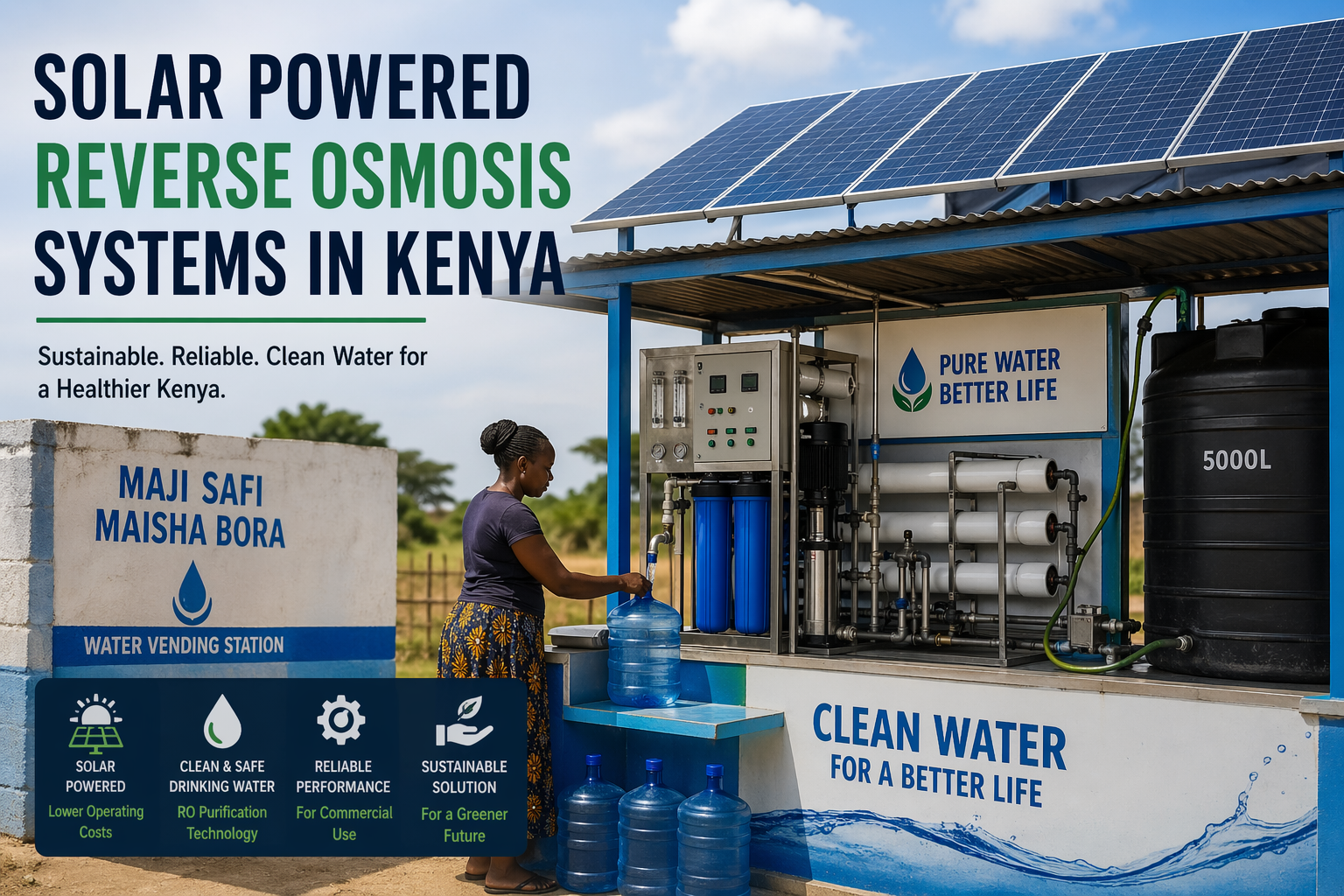 From a practical standpoint, the shift to solar water treatment is driven by reliability and cost control. In areas where electricity outages occur weekly, water production stops unless backup power is available.
Solar energy provides:
- Predictable operating costs
- Continuous water production
- Reduced environmental impact
- Independence from grid power
- Long-term financial savings
For water vending businesses, this reliability directly translates into higher revenue and customer trust.
Solar powered RO water purification systems in Kenya- Conclusion
Access to safe, reliable water is essential for homes, businesses, and institutions across Kenya. Solar powered RO water purification systems in Kenya provide a dependable solution where grid electricity is unreliable, expensive, or unavailable. They deliver consistent water quality, reduce operating costs, and support long-term sustainability for water vending stations, farms, industries, and households.
Choosing the right system requires proper design, water testing, and professional installation. When these factors are handled correctly, solar-powered treatment systems operate efficiently for many years with minimal running costs.
Get Expert Off-grid Solar Water Treatment System Installation and Support from Vinsol Kenya
If you are planning to start a water vending business, upgrade your borehole treatment system, or install an off-grid purification solution, professional guidance makes the difference between success and costly mistakes.
Vinsol Kenya has built a strong reputation in Kenya for designing and installing reliable solar-powered water treatment systems tailored to local conditions.
Why Choose Vinsol Kenya
- Proven expertise in solar-powered reverse osmosis system design and installation
- Systems built to meet KEBS, WHO, and international quality standards
- Custom solutions for homes, businesses, farms, and industries
- Reliable after-sales support and maintenance services
- Experienced engineers familiar with Kenyan water conditions
Whether your water source is a borehole, river, or municipal supply, the team evaluates your needs and recommends the most efficient system.
Are you in the market for a solar powered reverse osmosis system?
Vinsol Kenya is a market leader in solar powered water purification systems in Kenya and solar RO solutions in Kenya. Our systems meet European, American as well as KEBS quality standards. If you are looking for experts to install for you a reliable and efficient off-grid solar water treatment system then look no further.
Contact Details
- Call/WhatsApp Us: +254 715 01 45 10
- Email: inquiries@vinsol.co.ke | info@vinsol.co.ke
- Contact Form: Fill out the contact form here.
- Visit Our Branches:
- Ruiru Branch: Next to Total Petrol Station – Kihunguro, Ruiru
- Eldoret Branch: Rehema Complex, opposite Japara Ltd., along Oloo Street, Eldoret.
Reach out today to discuss your requirements and receive a professional quotation tailored to your water treatment needs.
Frequently Asked Questions About Solar Powered RO Systems in Kenya
- How much does a solar powered reverse osmosis system cost in Kenya?
A typical solar-powered RO system in Kenya costs between KES 250,000 and KES 4,500,000, depending on capacity, water quality, and solar requirements. Small home systems are less expensive, while industrial systems with high production capacity require larger investments. - Can a solar reverse osmosis system treat salty borehole water?
Solar RO systems are specifically designed to remove dissolved salts and minerals from brackish or saline groundwater. They are widely used in regions such as Kajiado, Kilifi, and Turkana where borehole water often contains high salinity levels. - How long do solar powered home RO systems last?
Most systems last 10 to 15 years with proper maintenance. Solar panels typically operate for more than 20 years, while membranes and filters require periodic replacement depending on water quality and usage levels. - What is the difference between a solar RO system and a normal water filter?
A standard water filter removes particles and some bacteria, while a solar RO system removes dissolved salts, heavy metals, and microscopic contaminants. Reverse osmosis provides a much higher level of purification and is suitable for drinking water production. - Where can I find solar powered RO system installers near me in Kenya?
Qualified installers are available in major cities such as Nairobi, Kiambu, Nakuru, and Mombasa. Choosing a certified company ensures compliance with safety regulations and reliable system performance. - Is a solar desalination system suitable for water vending businesses?
Solar desalination systems are widely used in water refilling stations because they reduce electricity costs and ensure consistent production even during power outages. This reliability improves profitability and customer satisfaction.