

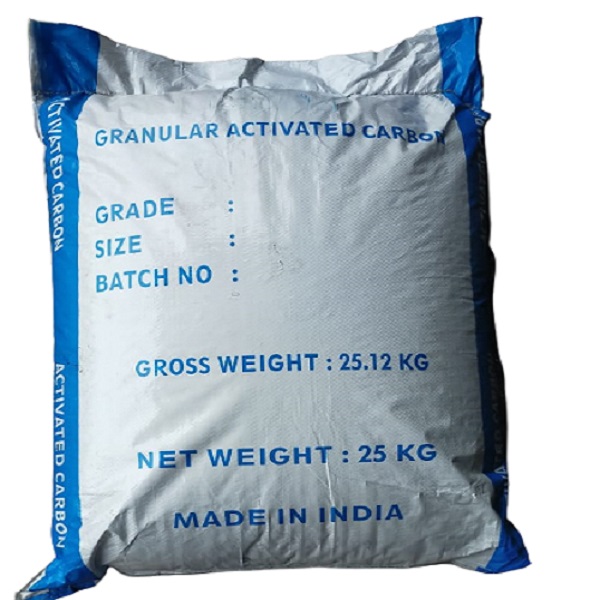
Description
Activated Carbon– GAC Pool Filter Media & Adsorbent
Product Data
| Attribute | Verified Information |
| Product Name | Activated Carbon |
| Chemical Category | Filter Media / Adsorbent |
| Active Ingredient | Activated Carbon (C — highly porous activated form) |
| Chemical Formula | C (activated porous form) |
| Alternative Names | Activated Charcoal; Carbon Media; GAC (Granular Activated Carbon); PAC (Powdered Activated Carbon); Active Carbon |
| Primary Purpose | Adsorption of organic compounds, chloramines, odours, colour, and certain micropollutants from pool or water treatment systems through filtration. |
| Typical Usage | Filtration support in carbon filter vessels; inline carbon filters; water pre-treatment before reverse osmosis; de-chlorination of fill water; treatment of heavily chemically dosed water |
Activated Carbon – Granular Activated Carbon (GAC) Filter Media
Product Overview
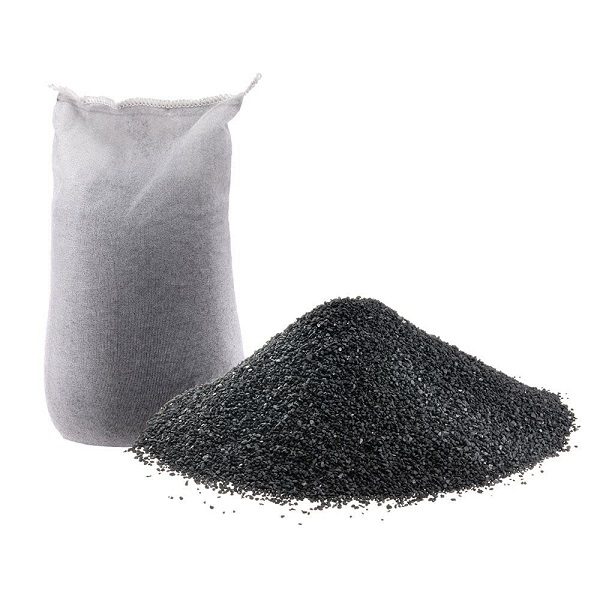 Activated Carbon is a highly porous form of carbon used as a filtration media and adsorbent in swimming pool and water treatment systems. It is produced by heating carbonaceous materials such as coconut shell, coal, or wood in a steam or CO₂ atmosphere, creating an extremely porous structure with a very high surface area (typically 500–1,200 m²/g).
Granular Activated Carbon (GAC) is the most commonly used form in swimming pool filtration. Its microporous structure allows it to adsorb a wide range of contaminants from water through physical adsorption — organic molecules and certain inorganic species bind to the carbon surface by Van der Waals forces.
Activated Carbon is not a standard day-to-day pool treatment chemical. It is a filtration medium primarily used in dedicated carbon filter vessels or for specific treatment scenarios such as de-chlorination and organic compound removal.
How It Works
Activated Carbon removes contaminants from water through a process called adsorption. Contaminant molecules are attracted to and held on the surface of the carbon particles.
The adsorption process involves:
- Physical adsorption – Organic molecules and certain inorganic species bind to the carbon surface by Van der Waals forces
- Surface area – The enormous surface area (500–1,200 m²/g) provides countless binding sites for contaminants
- Microporous structure – Tiny pores trap contaminants, removing them from the water stream
- Chlorine removal – Activated carbon effectively removes free chlorine and chloramines from water
- Organic compound removal – Adsorbs volatile organic compounds (VOCs), disinfection by-products, and other organic contaminants
The removal of chloramines is a purely chemical-catalytic reaction on the carbon surface. Both free and combined chlorine removal efficiencies decrease over time as the carbon becomes saturated.
Why It Matters
- Chlorine smell and odour complaintsare common in swimming pools. Activated Carbon removes the chloramines responsible for these odours, significantly improving the swimming environment.
- Chemical taste in watercan deter swimmers and affect the pool experience. Activated Carbon removes taste and odour compounds, providing more pleasant water.
- Disinfection by-productssuch as trihalomethanes (THMs) and haloacetic acids (HAAs) are formed when chlorine reacts with organic matter introduced by bathers. Activated Carbon adsorbs these potentially harmful compounds.
- Chloramine reductionis essential for swimmer comfort. Chloramines cause eye and skin irritation and the characteristic “chlorine smell.” Activated Carbon effectively reduces chloramine levels.
- Organic contaminationfrom bathers, cosmetics, and environmental sources increases chlorine demand. Removing organics with activated carbon reduces chlorine consumption.
- Cyanuric acid managementis a growing concern. Research has shown that granular activated carbon can achieve up to 28.4% reduction in cyanuric acid in a single filtration. This offers an alternative to draining and refilling pools with over-stabilised water.
Key Benefits 
- Excellent Broad-Spectrum Adsorbent for Organic Compounds
Activated Carbon effectively removes a wide range of organic contaminants, including VOCs, disinfection by-products, and chlorinated compounds. - Removes Taste, Odour, and Colour
Activated Carbon eliminates unpleasant tastes, odours, and discolouration from pool water. - Reduces Chlorine and Chloramine Levels
Activated Carbon effectively removes free chlorine and chloramines, improving water quality and swimmer comfort. - No Chemical Additions to Water
Adsorption is a physical process that does not introduce chemicals into the water, making it safe and environmentally friendly. - Reusable (Can Be Regenerated)
Some activated carbons can be thermally regenerated in industrial settings, extending their service life. - Effective Against Disinfection By-Products
Activated Carbon removes THMs, HAAs, and other disinfection by-products, improving water safety.
Problem-Solution Table
| Problem | Likely Cause | How Activated Carbon Helps | Expected Outcome |
| Chlorine smell/odour complaints | Chloramines in pool water | Adsorbs chloramines and organic compounds | Odour-free water |
| Chemical taste in water | Disinfection by-products | Removes taste-causing compounds | Improved taste |
| Eye and skin irritation | Chloramines and DBPs | Reduces chloramine and DBP levels | Swimmer comfort |
| Organic contamination | Bathers introducing organics | Adsorbs organic compounds | Reduced chlorine demand |
| High cyanuric acid levels | Over-stabilisation | GAC can remove up to 28.4% CYA | Reduced CYA without dilution |
| Disinfection by-products | Chlorine reacting with organics | Adsorbs THMs, HAAs and other DBPs | Safer swimming water |
Dosage & Application Guidance
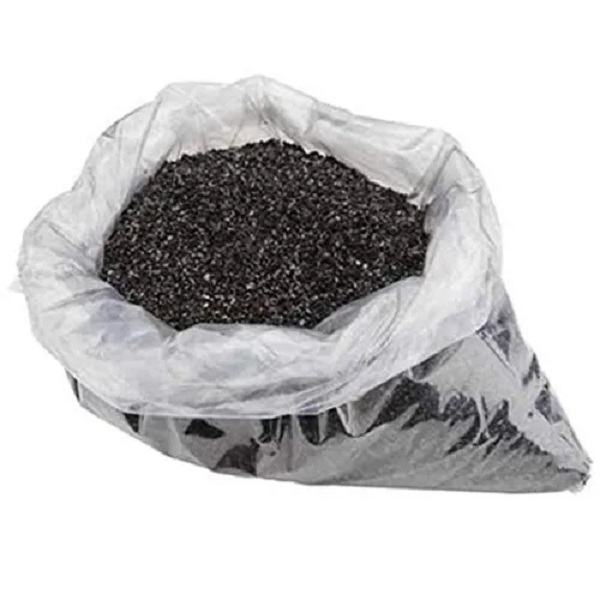 Dosage requirements vary depending on manufacturer specifications, filter design, flow rate, contaminant load, water chemistry, and treatment objectives. Always follow product label instructions and professional engineering specifications.
Based on the reference guide and industry guidance:
- As filter media: Load into dedicated carbon filter vessel per manufacturer specification
- Bed depth: Minimum 600 mm; recommended 1000 mm for organic removal
- Service flow rate: 3–9 m/hr for organic removal; 7–15 m/hr for chlorine removal
- Powdered Activated Carbon (PAC) treatment: 5–20 g/m³ for acute organic contamination treatment, then filter out
Important: Activated Carbon removes free chlorine — supplement chlorination after carbon treatment. Do not use in active pool filter media where residual chlorine must be maintained.
Water Balance Reference Table
The values below represent general swimming pool industry guidance and are not specifications of the product described on this page. Actual operating targets may vary depending on local regulations, pool type, water source, equipment design, and operating objectives.
| Parameter | Recommended Range | Notes |
| Free Chlorine | 1.0–3.0 mg/L | Activated Carbon removes chlorine — dose after carbon treatment |
| Combined Chlorine | < 0.5 mg/L | Activated Carbon helps reduce chloramines |
| pH | 7.2–7.6 | Carbon does not affect pH |
| Cyanuric Acid | 30–50 mg/L | GAC can help reduce high CYA levels |
Step-by-Step Application Guide
As Filter Media (GAC):
Before Installation:
- Determine filter vessel size and required carbon volume
- Select appropriate GAC grade (8×30 mesh is common)
- Ensure minimum bed depth of 600 mm
- Gather required PPE: dust mask, gloves, goggles
During Installation:
- Rinse GAC thoroughly to remove fine particles and dust
- Load carbon into filter vessel according to manufacturer specifications
- Backwash to settle the media bed and remove remaining fines
- Commission the filter by running water through it until effluent is clear
Operation:
- Monitor pressure differential across the carbon bed
- Backwash regularly according to manufacturer recommendations
- Test effluent for chlorine, organic compounds, and other target contaminants
- Replace or regenerate carbon when adsorption capacity is exhausted
As Batch Treatment (PAC):
- Calculate required PAC dosage based on water volume and contamination level
- Add PAC to pool water with pump running
- Allow contact time for adsorption
- Remove PAC by filtration (sand filter or dedicated carbon filter)
Usage Guide for Kenya & East Africa Region
- Chlorine Smell in Hotel Pools
Many hotels and resorts in Kenya experience complaints about chlorine smell. Activated Carbon filtration effectively removes chloramines, improving guest satisfaction. - High Organic Load
Kenya’s warm climate and high tourist numbers mean high bather loads, introducing significant organic matter. Activated Carbon removes these organics, reducing chlorine demand. - Cyanuric Acid Build-Up
Many pools in Kenya use stabilised chlorine products (TCCA), leading to CYA accumulation. GAC filtration offers a solution for reducing high CYA levels without draining the pool. - Water Scarcity
In regions where water is scarce, draining and refilling pools to reduce CYA or other contaminants is problematic. GAC offers a water-saving alternative. - Coastal Pools
Coastal areas experience salt spray and organic contamination. Activated Carbon pre-treatment protects downstream equipment and improves water quality.
Commercial Applications
- Hotels, Resorts & Safari Lodges
Carbon filtration removes chloramines and organic compounds, improving guest comfort and reducing chlorine demand. Particularly valuable for pools with high bather loads. - Waterparks
Large water volumes and high organic loads benefit from carbon filtration to reduce chlorine consumption and improve water quality. - Competition Pools & Public Pools
Carbon filtration helps meet regulatory requirements for disinfection by-product reduction. - Water Treatment Plants
Activated Carbon is widely used in municipal water treatment for removing organic contaminants and disinfection by-products.
Residential Applications
- Advanced Filtration Setups
Homeowners with advanced filtration systems may use GAC for organic removal and water polishing. - Fill Water Treatment
Activated Carbon can be used to pre-treat fill water, removing chlorine and organic contaminants before they enter the pool.
Safety & Handling
Storage Conditions
- Store in a dry location
- Keep away from strong oxidisers — can ignite under certain conditions
- Prevent moisture absorption which reduces performance
- Shelf life: Indefinite when stored dry (performance depends on adsorptive capacity)
Personal Protective Equipment (PPE)
- Dust mask when handling powdered form
- Gloves and goggles standard practice
Mixing Precautions
- DO NOT store near strong oxidisers or chlorine compounds – risk of ignition
- Avoid inhalation of fine dust (PAC)
Spill Response
- Sweep up dry product
- Avoid creating dust
- Can cause slip hazard if spilled
First Aid
- Inhalation: Move to fresh air
- Skin contact: Wash with soap and water
- Eye contact: Rinse with water
- Ingestion: Rinse mouth; seek medical attention
Important Safety Disclaimer
The safety information contained here is provided for general reference purposes only. Always refer to the official Safety Data Sheet (SDS) and Technical Data Sheet (TDS) provided by the product manufacturer before handling any chemical. Local health, safety, and environmental regulations must be observed at all times. The dosage guidance provided is indicative only — always test pool water and adjust dosages based on actual test results.
Product Comparison
| Feature | Activated Carbon (GAC) | Sand Filter Media |
| Primary Mechanism | Adsorption | Physical filtration |
| Removes | Organics, chlorine, chloramines, odours | Particles and sediments |
| Surface Area | 500–1,200 m²/g | Minimal |
| Backwashing | Required | Required |
| Regeneration | Thermal regeneration possible | Not applicable |
Cross-Selling Recommendations
- Chlorine 65% (Calcium Hypochlorite)
If using carbon filtration for de-chlorination, supplement chlorine after carbon treatment to maintain disinfection residual. - Stabiliser (Cyanuric Acid)
For high CYA levels, GAC can help reduce CYA. Monitor CYA levels and adjust stabiliser dosing accordingly. - Flocculant
For heavily contaminated water, use flocculant to remove suspended particles before carbon filtration to extend carbon life.
FAQs- Activated Carbon
- What is Activated Carbon used for in swimming pools?
Activated Carbon is a filtration media used to adsorb organic compounds, chloramines, odours, and disinfection by-products from pool water. - How does Activated Carbon work?
Activated Carbon works through physical adsorption — contaminants bind to the enormous surface area of the carbon particles, removing them from the water. - Does Activated Carbon remove chlorine?
Activated Carbon effectively removes free chlorine and chloramines from water. Do not use in active pool filtration where chlorine residual must be maintained. - Can Activated Carbon remove cyanuric acid?
Research shows that granular activated carbon can achieve up to 28.4% reduction in cyanuric acid in a single filtration. - How long does Activated Carbon last?
Activated Carbon performance depends on adsorptive capacity. When saturated, it must be replaced or regenerated. Service life varies with contaminant load and flow rate. - Is Activated Carbon suitable for all pools?
Activated Carbon is not a standard day-to-day pool treatment. It is primarily used in dedicated carbon filter vessels for specific treatment scenarios. - Can I add Activated Carbon directly to my pool?
Powdered Activated Carbon (PAC) can be added for batch treatment, then filtered out. Do not add granular carbon directly to pool water.
Summary / Conclusion
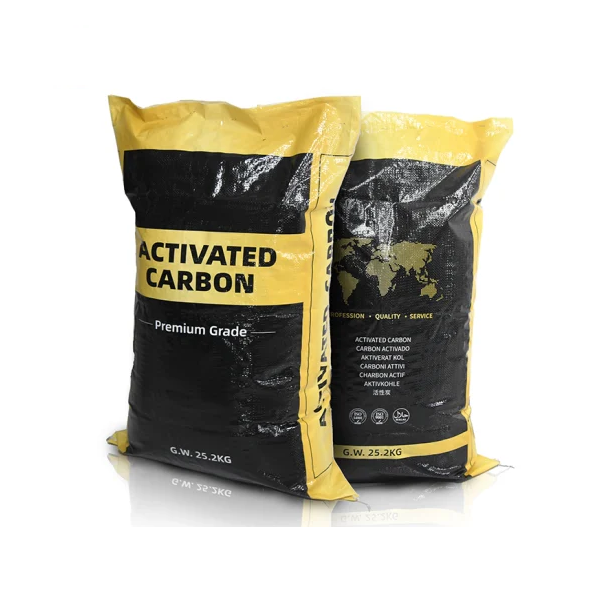 Activated Carbon is a highly porous filtration media used to adsorb organic compounds, chloramines, odours, and disinfection by-products from pool water. It is produced from carbonaceous materials such as coconut shell, coal, or wood, creating an extremely porous structure with very high surface area (500–1,200 m²/g). Granular Activated Carbon (GAC) is the most commonly used form in swimming pool filtration. Activated Carbon is not a standard day-to-day pool treatment chemical — it is primarily used in dedicated carbon filter vessels for specific treatment scenarios such as de-chlorination and organic compound removal. It must not be added directly to active pool water intended to maintain a chlorine residual, as it will rapidly consume free chlorine. Suitable for commercial and advanced residential filtration systems.
Need Activated Carbon for your pool or facility?
Vinsol Kenya is your trusted supplier of swimming pool chemicals and water treatment solutions across Kenya and East Africa. Whether you manage a hotel pool, school facility, waterpark, or residential pool, we have the products and technical expertise to keep your water crystal clear and safe.
Contact us today for bulk orders, commercial supply contracts, or expert technical advice.
- 📞 Call/WhatsApp: +254 715 01 45 10
- 📧 Email: inquiries@vinsol.co.ke | info@vinsol.co.ke
- 📍 Ruiru Branch: Next to Total Petrol Station – Kihunguro, Ruiru
- 📍 Eldoret Branch: Rehema Complex, opposite Japara Ltd., along Oloo Street, Eldoret
- 🕐 Working Hours: Mon – Sat 8:30AM – 5PM
References:
- Publisher Source: World Health Organization (WHO)
Article Title: Guidelines for Safe Recreational Water Environments, Vol. 2: Swimming Pools and Similar Environments
URL: https://www.who.int/publications/i/item/9241546808
Access Date: August 4, 2026 - Publisher Source: Centers for Disease Control and Prevention (CDC)
Article Title: Healthy Swimming: Pool Chemical Safety
URL: https://www.cdc.gov/healthywater/swimming/
Access Date: August 4, 2026 - Publisher Source: Pool Water Treatment Advisory Group (PWTAG)
Article Title: Swimming Pool Water: Treatment and Quality Standards for Pools and Spas
URL: https://www.pwtag.org/standards/
Access Date: August 4, 2026 - Publisher Source: University of Bristol, School of Chemistry
Article Title: Swimming Pool Water – Deozonation
URL: https://www.chm.bris.ac.uk/~paulmay/webprojects2001/morgan/deozonation.htm
Access Date: August 4, 2026 - Publisher Source: Davis & Shirtliff
Article Title: Dayliff Water Treatment Media
URL: https://www.uganda.davisandshirtliff.com/products-and-solutions/product/dayliff-water-treatment-media
Access Date: August 4, 2026 - Publisher Source: Universidad Santiago de Cali
Article Title: Desarrollo de un filtro de carbón activado para la eliminación de ácido cianúrico, subproducto de la desinfección del agua de piscinas
URL: https://repositorio.usc.edu.co/items/7e043520-34e1-4ed4-80d1-72d18e9c8757
Access Date: August 4, 2026 - Publisher Source: Watch Water® Germany
Article Title: ACTIVESORB 200 – Product Information
URL: https://watchwater.com/activesorb-200/
Access Date: August 4, 2026


Reviews
There are no reviews yet.