

Description
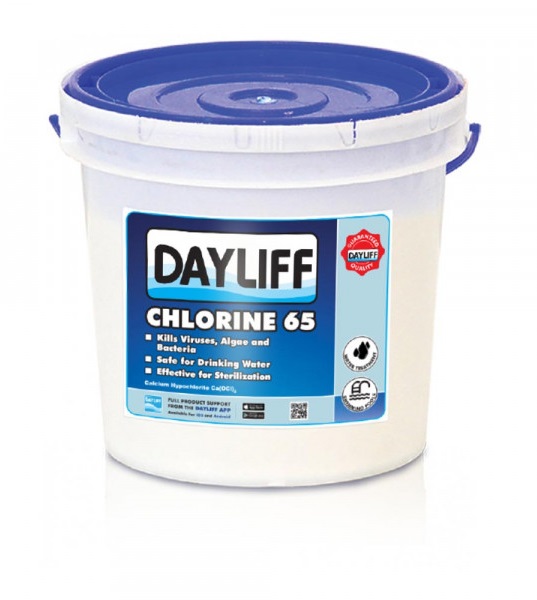
Chlorine 65% – Calcium Hypochlorite Pool Sanitiser
Product Data
| Attribute | Verified Information |
| Product Name | Chlorine 65% |
| Chemical Category | Sanitiser / Disinfectant / Shock Chlorinator |
| Active Ingredient | Calcium Hypochlorite (Ca(OCl)₂) |
| Chemical Formula | Ca(OCl)₂ |
| Alternative Names | Cal Hypo; Calcium Chlorohypochlorite; Granular Chlorine; Shock Chlorine; Pool Chlorine |
| Primary Purpose | Primary pool water sanitisation and shock treatment. Kills bacteria, viruses, and algae through the release of hypochlorous acid (HOCl) upon dissolution. |
| Typical Usage | Daily chlorination; superchlorination (shock treatment); commercial pools; municipal pools; hotel pools; hospital pools; school pools |
Chlorine 65% – Calcium Hypochlorite Pool Sanitiser & Shock Treatment
Product Overview
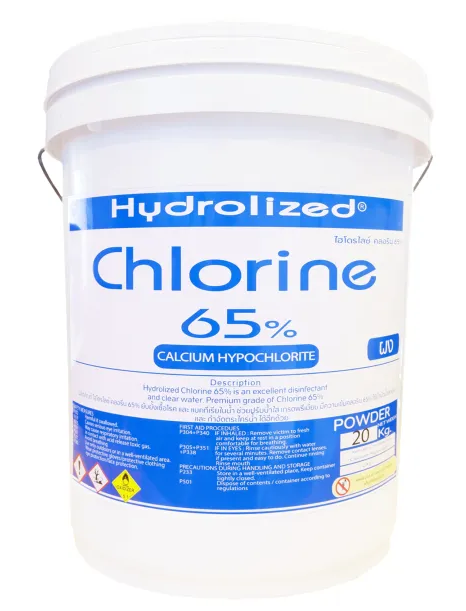 Chlorine 65% is a granular calcium hypochlorite swimming pool sanitiser and shock chlorinator used for primary pool water disinfection and superchlorination. It is an inorganic hypochlorite salt containing 65% available chlorine by weight, making it one of the most concentrated solid chlorine compounds in common pool use.
Calcium Hypochlorite (Ca(OCl)₂) is manufactured by chlorinating calcium hydroxide (slaked lime) and is classified as a UN Class 5.1 oxidising solid. When dissolved in water, it undergoes hydrolysis to produce hypochlorous acid (HOCl) — the primary biocidal species responsible for disinfection — and calcium ions (Ca²⁺).
This product is widely used across commercial pools, waterparks, municipal pools, hotels, hospitals, schools, and water treatment facilities. It is also suitable for residential pools when handled correctly.
How It Works
Chlorine 65% works through a straightforward chemical process. When calcium hypochlorite granules are dissolved in water, the compound hydrolyses to release hypochlorous acid (HOCl).
The disinfection process involves:
- Cell wall penetration – HOCl molecules are small and electrically neutral, allowing them to penetrate bacterial cell walls and algal membranes
- Enzyme disruption – Once inside, HOCl oxidises essential enzymes and proteins, disrupting metabolic processes
- Cell death – Microorganisms including bacteria, viruses, and algae are inactivated or destroyed
- Organic oxidation – HOCl also oxidises organic contaminants such as sweat, urine, and sunscreen residues
The pH of a calcium hypochlorite solution is alkaline (approximately 10.8), which may require pH adjustment after dosing. At typical pool pH levels (7.2–7.6), the equilibrium favours HOCl, maximising disinfection effectiveness.
Why It Matters
- Health protectionis the primary reason Chlorine 65% matters. Without adequate sanitisation, swimming pools become breeding grounds for pathogens including coli, Pseudomonas, Legionella, and viruses that cause gastroenteritis, respiratory infections, and skin conditions.
- Water sanitationthrough consistent chlorination ensures that bathers are protected from waterborne diseases. The Centres for Disease Control and Prevention (CDC) identifies adequate free chlorine levels as the single most important factor in recreational water safety.
- Swimmer comfortis directly affected by water chemistry. Proper chlorination prevents the formation of chloramines (combined chlorine) which cause eye irritation, red eyes, and the characteristic “chlorine smell” that many swimmers find unpleasant.
- Pool longevityis extended when water is properly sanitised. Uncontrolled microbial growth can lead to biofilm formation on pool surfaces and equipment, causing staining, degradation, and costly repairs.
- Regulatory complianceis mandatory for commercial pools. Health departments and local authorities require documented water quality monitoring and adequate sanitiser residuals. Using a reliable product like Chlorine 65% helps facilities meet these requirements.
Key Benefits 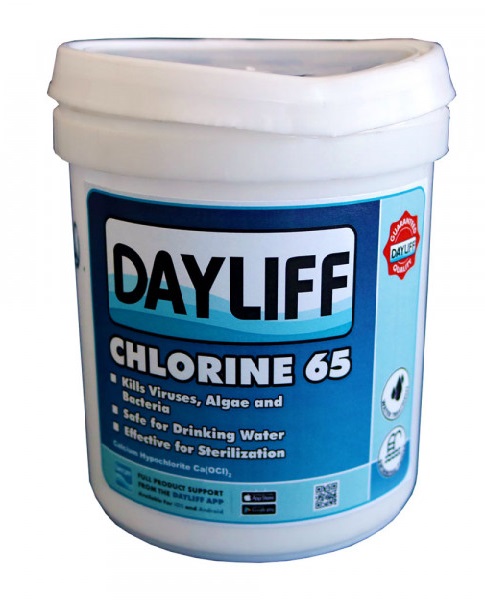
- High Available Chlorine Content (65%)
At 65% available chlorine, this is one of the most concentrated solid chlorine products available for pool use. This high concentration means less product is required per dose, making it cost-effective for large-volume pools and commercial facilities. - No Cyanuric Acid Build-Up
Unlike stabilised chlorine products (such as Trichlor), Chlorine 65% does not add cyanuric acid to pool water. This prevents over-stabilisation (“chlorine lock”) which occurs when CYA levels exceed 80 mg/L and reduce chlorine efficacy. - Versatile Application
Chlorine 65% serves dual purposes: daily chlorination and shock treatment (superchlorination). This versatility reduces the number of different chemicals a facility needs to stock. - Cost-Effective for Large Pools
The high concentration and competitive pricing make Chlorine 65% an economical choice for commercial pools, municipal facilities, waterparks, and hotels. - Widely Available and Proven Track Record
Calcium hypochlorite has been used for decades in pool sanitation and water treatment, with a well-documented safety and efficacy record. - Suitable for Pools Without UV Stabiliser Systems
Because it does not contain cyanuric acid, Chlorine 65% is appropriate for indoor pools and pools equipped with UV or ozone systems where stabiliser is not required. - Effective Against a Broad Spectrum of Contaminants
Chlorine 65% addresses bacterial contamination, algae growth, viral pathogens, combined chlorine (chloramines), cloudy water, and low free chlorine readings.
Problem-Solution Table
| Problem | Likely Cause | How Chlorine 65% Helps | Expected Outcome |
| Green or cloudy water | Algae bloom or bacterial growth | Superchlorination (shock treatment) oxidises algae and bacteria | Clear water within 24–48 hours |
| Strong chlorine smell | Combined chlorine (chloramines) | Breakpoint chlorination oxidises chloramines | Elimination of odour; improved swimmer comfort |
| Low free chlorine readings | High bather load or UV degradation | Daily dosing maintains free chlorine at 1.0–3.0 mg/L | Consistent sanitisation |
| Eye and skin irritation | Chloramines or imbalanced pH | Proper chlorination prevents chloramine formation | Reduced irritation |
| Bacterial contamination | Inadequate sanitiser residual | Primary disinfection eliminates pathogens | Safe swimming water |
| Algae on walls and floor | Insufficient chlorine residual | Shock treatment and daily chlorination prevent algae establishment | Algae-free surfaces |
Dosage & Application Guidance
Dosage requirements vary depending on manufacturer specifications, pool volume, contaminant load, water chemistry, bather load, environmental conditions, and treatment objectives. Always follow product label instructions and professional water test results.
Based on the reference guide, typical guidance includes:
- Initial dosage (new pool or after shock): 150–200 g per 10,000 litres
- Maintenance dosage: 70–100 g per 10,000 litres daily
- Target free chlorine: 1.0–3.0 mg/L (ppm)
- Method: Pre-dissolve in a bucket of pool water before broadcasting
Important: Adjust dosages based on actual test results. Factors such as bather load, temperature, sunlight exposure, and rainfall all influence chlorine demand.
Water Balance Reference Table
The values below represent general swimming pool industry guidance and are not specifications of the product described on this page. Actual operating targets may vary depending on local regulations, pool type, water source, equipment design, and operating objectives.
| Parameter | Recommended Range | Notes |
| Free Chlorine | 1.0–3.0 mg/L | Minimum 0.5 mg/L for disinfection |
| Combined Chlorine | < 0.5 mg/L | > 0.5 mg/L indicates chloramine issues |
| pH | 7.2–7.6 | Outside this range reduces chlorine efficacy |
| Total Alkalinity | 80–120 mg/L | Provides pH buffering |
| Calcium Hardness | 200–400 mg/L | Important when using calcium-based chlorine |
| Cyanuric Acid | 30–50 mg/L (outdoor) | Not required for indoor pools |
Step-by-Step Application Guide
Before Treatment:
- Test pool water for free chlorine, combined chlorine, pH, total alkalinity, and calcium hardness
- Ensure pH is within 7.2–7.6 range (chlorine is most effective at this pH)
- Calculate required dosage based on pool volume and test results
- Gather required PPE: chemical-resistant gloves, safety goggles, dust mask
During Treatment (Daily Chlorination):
- Fill a clean plastic bucket with pool water (not fresh water)
- Add the measured Chlorine 65% granules to the bucket water — always add chemical to water, never water to chemical to prevent violent reactions
- Stir gently until the granules are fully dissolved
- With the pool pump running, broadcast the solution evenly around the pool perimeter
- Allow the pump to run for at least 4–6 hours for proper circulation
During Treatment (Shock Treatment):
- For shock treatment, use 150–200 g per 10,000 litres (or as directed by product label)
- Best performed in the evening or at dusk to minimise UV degradation
- Pre-dissolve as described above
- Broadcast across the pool surface with pump running
- Leave pump running overnight for best results
After Treatment:
- Retest free chlorine after 4–6 hours (or next morning for shock treatment)
- Adjust pH if necessary (calcium hypochlorite solution is alkaline, ~pH 10.8)
- Retest combined chlorine to confirm breakpoint chlorination has been achieved
- Document test results for commercial compliance records
Usage Guide for Kenya & East Africa Region
- High UV Exposure
Kenya’s tropical location means intense UV radiation year-round. Chlorine 65% is unstabilised, meaning it degrades rapidly under direct sunlight. For outdoor pools in Kenya, the reference guide specifically recommends the addition of cyanuric acid (stabiliser) to reduce chlorine degradation. - Rainy Seasons
During Kenya’s long and short rains, heavy rainfall can dilute pool water, reduce chlorine levels, and introduce organic contaminants. Increased chlorine demand is common during these periods, requiring more frequent testing and dosing. - Dust and Organic Contamination
Dust storms and wind-blown debris introduce organic matter that consumes chlorine. Facilities in arid or semi-arid regions of Kenya should anticipate higher chlorine consumption and adjust dosing accordingly. - Coastal Pools
Coastal areas such as Mombasa and Diani experience high humidity, salt air, and warm temperatures — all of which increase chlorine demand. Salt air can also accelerate equipment corrosion, making proper water balance particularly important.
Commercial Applications
- Hotels, Resorts & Safari Lodges
Guest expectations for crystal-clear water are high. Chlorine 65% provides reliable disinfection for high-turnover pools. Its cost-effectiveness makes it suitable for large hotel complexes with multiple pools. - Airbnb Properties
Short-term rental properties require simple, effective pool maintenance. Chlorine 65% can be used for both daily chlorination and shock treatment, reducing the number of products owners need to manage. - Schools & Universities
Educational facilities must meet stringent health and safety standards. Chlorine 65% provides reliable disinfection for school pools used by children and young adults. - Competition Pools & Public Pools
Municipal and competition pools require consistent water quality to meet regulatory standards. The high concentration of Chlorine 65% makes it suitable for large-volume facilities. - Waterparks
Waterparks present unique challenges: high bather loads, warm water temperatures, and extensive water surfaces. Chlorine 65% is used for primary disinfection and shock treatment in many waterpark facilities.
Residential Applications
- Private Pools
Homeowners appreciate the simplicity and effectiveness of Chlorine 65%. It can be used for routine chlorination and as a shock treatment, reducing the number of chemicals needed. - Holiday Homes
Properties that are occupied intermittently benefit from the long shelf life (2 years when stored correctly) of Chlorine 65%. - Apartment Complex Pools
Multi-unit residential complexes require pool maintenance that is both effective and cost-efficient. Chlorine 65% meets both criteria.
Safety & Handling
Storage Conditions
- Store in a cool, dry, well-ventilated area away from direct sunlight
- Keep away from flammable materials, reducing agents, and other pool chemicals
- Store in original sealed container
- Optimum storage temperature below 30°C
- Shelf life: 2 years when stored correctly
Personal Protective Equipment (PPE)
- Chemical-resistant gloves
- Safety goggles or face shield
- Dust mask or respirator (P2 rating)
- Protective clothing
Mixing Precautions
- DO NOT mix with acids – risk of chlorine gas release
- DO NOT mix with Trichlor (TCCA) – causes violent exothermic reaction, fire, or explosion
- DO NOT mix with other chlorinating agents, ammonia compounds, flammable materials, or organic matter
- Always add chemical to water, never water to chemical
- Pre-dissolve before adding to pool
Important Safety Disclaimer
The safety information contained here is provided for general reference purposes only. Always refer to the official Safety Data Sheet (SDS) and Technical Data Sheet (TDS) provided by the product manufacturer before handling any chemical. Local health, safety, and environmental regulations must be observed at all times. The dosage guidance provided is indicative only — always test pool water and adjust dosages based on actual test results.
Product Comparison
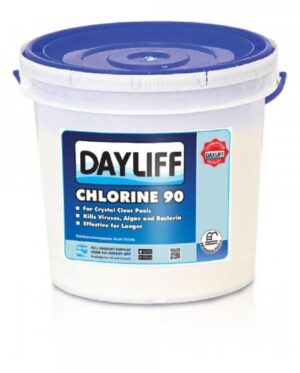
| Feature | Chlorine 65% (Cal Hypo) | Chlorine 90% (TCCA / Trichlor) |
| Active Ingredient | Calcium Hypochlorite (Ca(OCl)₂) | Trichloroisocyanuric Acid (C₃Cl₃N₃O₃) |
| Available Chlorine | 65% | 90% |
| Stabiliser Content | None – unstabilised | Contains cyanuric acid (stabiliser) |
| Primary Purpose | Sanitisation and shock treatment | Continuous slow-release disinfection |
| Effect on Calcium Hardness | Raises calcium hardness | Does not add calcium |
| pH of Solution | Alkaline (~10.8) | Acidic (~2.8) |
| Mixing Compatibility | DO NOT mix with Trichlor | DO NOT mix with Cal Hypo |
Cross-Selling Recommendations
- Stabiliser (Cyanuric Acid)
For outdoor pools in Kenya’s high-UV climate, adding cyanuric acid stabiliser is recommended to reduce chlorine degradation. This extends the life of free chlorine in the water and reduces overall chlorine consumption. - pH Plus (Sodium Carbonate)
Because Chlorine 65% solution is alkaline (~pH 10.8), pH adjustment is often required after dosing. pH Plus raises pH if it has dropped too low. - pH Minus (Sodium Bisulphate)
If pH rises too high after Chlorine 65% application, pH Minus brings it back into the optimal 7.2–7.6 range. - Algaecide
While Chlorine 65% kills algae, an algaecide provides additional prevention, particularly during Kenya’s warm, rainy seasons when algae growth is most active. - Flocculant
For severely cloudy water, a flocculant can be used after shock treatment to coagulate and settle dead algae and debris, accelerating water clarity.
FAQs- Chlorine 65%
- What is Chlorine 65% used for in swimming pools?
Chlorine 65% is a calcium hypochlorite sanitiser used for primary pool disinfection and shock treatment, killing bacteria, viruses, and algae. - How much Chlorine 65% should I add to my pool?
Maintenance dosage is 70–100 g per 10,000 litres daily; shock treatment requires 150–200 g per 10,000 litres. Always test water and follow label instructions. - Can I mix Chlorine 65% with other chlorine products?
Never mix Chlorine 65% with Trichlor (TCCA) — this causes violent exothermic reactions, fire, or explosion. - Does Chlorine 65% contain cyanuric acid?
Chlorine 65% is unstabilised and does not add cyanuric acid to pool water. For outdoor pools, add stabiliser separately. - Is Chlorine 65% suitable for residential pools?
Chlorine 65% is suitable for residential pools when handled correctly. - Why does Chlorine 65% raise calcium hardness?
Calcium Hypochlorite releases calcium ions (Ca²⁺) when dissolved, which increases calcium hardness over time. - How should I store Chlorine 65%?
Store in a cool, dry, well-ventilated area below 30°C, away from sunlight, flammable materials, and other pool chemicals.
Summary / Conclusion
Chlorine 65% is a granular calcium hypochlorite swimming pool sanitiser and shock treatment containing 65% available chlorine. It provides primary disinfection by releasing hypochlorous acid to kill bacteria, viruses, and algae. Suitable for both commercial and residential pools, it is cost-effective for large volumes and does not add cyanuric acid to pool water. For outdoor pools in Kenya’s high-UV climate, the addition of cyanuric acid stabiliser is recommended to protect chlorine from UV degradation. Always pre-dissolve before adding, never mix with Trichlor, and store in a cool, dry place.
Need Chlorine 65% for your pool or facility?
Vinsol Kenya is your trusted supplier of swimming pool chemicals and water treatment solutions across Kenya and East Africa. Whether you manage a hotel pool, school facility, waterpark, or residential pool, we have the products and technical expertise to keep your water crystal clear and safe.
Contact us today for bulk orders, commercial supply contracts, or expert technical advice.
- 📞Call/WhatsApp: +254 715 01 45 10
- 📧Email: inquiries@vinsol.co.ke | info@vinsol.co.ke
- 📍Ruiru Branch: Next to Total Petrol Station – Kihunguro, Ruiru
- 📍Eldoret Branch: Rehema Complex, opposite Japara Ltd., along Oloo Street, Eldoret
- 🕐Working Hours: Mon – Sat 8:30AM – 5PM
References:
- Publisher Source:World Health Organization (WHO)
Article Title: Guidelines for Safe Recreational Water Environments, Vol. 2: Swimming Pools and Similar Environments
URL: https://www.who.int/publications/i/item/9241546808
Access Date: August 3, 2026 - Publisher Source:Centers for Disease Control and Prevention (CDC)
Article Title: Healthy Swimming: Pool Chemical Safety
URL: https://www.cdc.gov/healthywater/swimming/
Access Date: August 3, 2026 - Publisher Source:NSF International
Article Title: NSF/ANSI Standard 50: Equipment for Swimming Pools, Spas, Hot Tubs and Other Recreational Water Facilities
URL: https://blog.ansi.org/ansi/nsf-ansi-50-2025-equipment-swimming-pools/
Access Date: August 3, 2026 - Publisher Source:Pool Water Treatment Advisory Group (PWTAG)
Article Title: Swimming Pool Water: Treatment and Quality Standards for Pools and Spas
URL: https://www.pwtag.org/standards/
Access Date: August 3, 2026 - Publisher Source:American Chemical Society (ACS)
Article Title: The Chemistry of Swimming Pool Maintenance
URL: https://pubs.acs.org/doi/10.1021/ed084p1124
Access Date: August 3, 2026 - Publisher Source:PubChem (National Library of Medicine)
Article Title: Calcium Hypochlorite – Compound Summary
URL: https://pubchem.ncbi.nlm.nih.gov/compound/Calcium-hypochlorite
Access Date: August 3, 2026 - Publisher Source:International Organisation for Standardisation (ISO)
Article Title: ISO 15714: Method of Evaluating the UV Dose to Airborne Microorganisms
URL: https://www.iso.org/obp/ui/#iso:std:iso:15714:ed-1:v1:en:fig:1
Access Date: August 3, 2026
Chlorine 65%
Chlorine 65% is a granular calcium hypochlorite pool sanitiser and shock treatment containing 65% available chlorine. It kills bacteria, viruses, and algae through the release of hypochlorous acid. Ideal for commercial pools, hotels, schools, and residential pools. Cost-effective, widely available, and does not add cyanuric acid. Important: Pre-dissolve before adding, never mix with Trichlor, and store in a cool, dry place. Available in 1 kg, 5 kg, 20 kg, and 45 kg packaging.
Verified Chemical Technical Specifications
| Specification | Detail |
| Product Name | Chlorine 65% |
| Generic Chemical Name | Calcium Hypochlorite |
| Chemical Formula | Ca(OCl)₂ |
| Active Ingredient | Calcium Hypochlorite (Ca(OCl)₂) |
| Typical Strength / Concentration | 65% available chlorine (w/w) |
| Chemical Family | Inorganic Hypochlorite Salt |
| Physical Form | Granular or tablet/prill solid |
| Colour / Appearance | White to off-white granules or pellets; slight chlorine odour |
| Packaging Sizes | 1 kg; 5 kg; 20 kg; 45 kg |
| Shelf Life | 2 years when stored correctly in sealed, dry containers |
| UN Classification | Class 5.1 oxidising solid |
To order contact us now:
- 📞Call/WhatsApp: +254 715 01 45 10
- 📧Email: inquiries@vinsol.co.ke | info@vinsol.co.ke
- 📍Ruiru Branch: Next to Total Petrol Station – Kihunguro, Ruiru
- 📍Eldoret Branch: Rehema Complex, opposite Japara Ltd., along Oloo Street, Eldoret
- 🕐Working Hours: Mon – Sat 8:30AM – 5PM
Meta Description
Buy Chlorine 65% calcium hypochlorite pool sanitiser in Kenya. Granular pool chlorine for disinfection & shock treatment. Available 1kg-45kg. Call Vinsol Kenya +254 715 01 45 10.


Reviews
There are no reviews yet.